Secular Homeschool Curriculum: A Complete Guide


More families choose secular homeschool curriculum each year as they seek education grounded in science, critical thinking, and practical life skills. This approach focuses on evidence-based learning across subjects from math and science to financial literacy programs for youth and digital skills. Parents who select secular materials want their children to develop independent reasoning, explore diverse perspectives, and gain competencies that translate directly to college, careers, and everyday challenges.
What Makes a Curriculum Secular
A secular homeschool curriculum teaches academic subjects without religious doctrine or faith-based content. These programs present scientific theories like evolution as established science rather than contested belief. History lessons examine multiple cultural perspectives without promoting specific religious interpretations. Literature selections may include diverse voices and worldviews rather than exclusively faith-centered texts.
The defining characteristic centers on methodology. Secular programs emphasize observation, evidence, and critical analysis over acceptance of religious authority. Learners encounter questions that encourage investigation rather than memorization of predetermined answers.
Key features of secular curricula include:
- Science instruction based on peer-reviewed research and the scientific method
- History taught through multiple perspectives and primary sources
- Literature from diverse authors across cultures and belief systems
- Ethics and character education rooted in humanistic values
- Critical thinking skills applied across all subject areas
Many families appreciate how secular homeschool curriculum aligns with their values while meeting rigorous academic standards. The focus remains on developing capable, thoughtful individuals who can navigate complexity.

Building Real-World Skills Through Secular Learning
Traditional academic subjects form the foundation, but the most effective secular homeschool curriculum extends beyond textbooks. Young people need competencies that translate directly to adult responsibilities. Financial literacy, digital fluency, career exploration, and personal development all deserve dedicated attention.
Financial Education in Secular Contexts
Money management rarely appears in conventional religious curricula, yet it represents one of the most practical skills learners can develop. Secular programs integrate personal finance naturally within math, social studies, and life skills courses.
Learners explore topics like budgeting, saving, investing, and entrepreneurship through hands-on projects. They might track expenses, compare banking options, or analyze investment scenarios. This preparation builds confidence for financial independence.
Youth financial education programs that reward learning with actual earnings create powerful motivation. When young people earn money through educational tasks, they immediately apply concepts they've learned. The connection between effort and reward becomes tangible rather than abstract.
Career Readiness and Digital Skills
Secular homeschool curriculum often includes career exploration components that expose learners to diverse professional paths. This might involve interviewing professionals, completing industry-specific projects, or developing workplace skills like communication and collaboration.
Digital literacy has become essential across virtually every field. Programs teaching Microsoft Office, coding basics, data analysis, and AI education for kids prepare learners for technology-driven workplaces. These skills complement traditional academics while opening doors to emerging opportunities.
| Skill Category | Examples | Real-World Application |
|---|---|---|
| Financial Literacy | Budgeting, investing, taxes | Personal money management |
| Digital Tools | Microsoft Office, Google Workspace | Professional communication |
| AI & Technology | Prompt engineering, data analysis | Future workplace readiness |
| Career Skills | Networking, project management | Employment success |
Choosing the Right Secular Program
Selecting materials requires understanding your learner's needs, learning style, and educational goals. No single curriculum works for everyone. Families succeed when they match programs to individual circumstances rather than following generic recommendations.
Evaluating Curriculum Options
Start by identifying your priorities. Do you value structured lesson plans or prefer flexible, interest-led learning? Does your learner thrive with textbooks or prefer hands-on projects? Consider time availability, budget constraints, and long-term educational objectives.
Research providers carefully. Read comprehensive guides on secular homeschool curriculum that compare programs across subjects and grade levels. Look for reviews from families with similar values and educational philosophies.
Questions to ask when evaluating curricula:
- Does this program align with science-based, evidence-driven education?
- How much daily preparation and teaching time does it require?
- Can learners work independently or does it need constant supervision?
- What support resources come with the program (answer keys, teaching guides, forums)?
- Does it prepare learners for standardized tests if needed?
- How does it handle controversial topics like evolution, climate science, or history?
Accreditation Considerations
Some families prioritize accredited secular homeschool curriculum to provide official transcripts and grade verification. Accreditation matters most for high school learners planning to attend competitive colleges or seeking scholarships.
Other families find that well-documented portfolios, standardized test scores, and community college credits serve equally well for college admission. Research requirements for your learner's likely educational path before investing in accredited programs.

Subject-Specific Curriculum Recommendations
Different subjects require different approaches. Building a complete secular homeschool curriculum often means combining materials from multiple publishers rather than relying on a single all-in-one program.
Science and Mathematics
Science curricula should present material through inquiry and experimentation. Look for programs that include hands-on labs, encourage questioning, and teach the scientific method as a thinking tool. Evolution, climate science, and other evidence-based theories should appear as mainstream science rather than controversial alternatives.
Mathematics programs vary from traditional textbook approaches to mastery-based systems. Secular options focus on problem-solving skills and real-world applications rather than rote memorization. Programs incorporating financial math, statistics, and data analysis prepare learners for practical decision-making.
Language Arts and Literature
Reading and writing instruction in secular programs draws from diverse literary traditions. Learners encounter authors from various cultures, time periods, and perspectives. Critical analysis skills help them evaluate arguments, identify bias, and form independent conclusions.
Writing curricula emphasize clear communication, persuasive reasoning, and research skills. Programs might explore creative writing, technical writing, and analytical essays without religious themes constraining topic selection.
History and Social Studies
Secular history curricula present events through multiple perspectives rather than single narratives. Learners examine primary sources, compare interpretations, and develop historical thinking skills. Topics like colonization, civil rights, and global conflicts receive balanced treatment acknowledging complexity.
Geography, economics, civics, and cultural studies round out social science education. These subjects provide context for current events and help learners understand interconnected global systems.
Enrichment and Life Skills
Beyond core academics, secular homeschool curriculum should include subjects that develop well-rounded capabilities. This might encompass arts, music, physical education, and practical life skills.
Specialized interests deserve attention too. A learner passionate about chess might benefit from resources like Chess Cheat Sheets that provide structured learning paths for strategic thinking. These pursuits build patience, planning skills, and analytical reasoning that transfer to academic work.
Personal development resources help learners navigate adolescence, build healthy habits, and develop self-awareness. Programs like DoReset offer structured approaches to habit formation and mindset development that complement academic learning with practical life transformation.
Online and Digital Secular Resources
Technology expands curriculum options dramatically. Online secular homeschool curriculum programs offer interactive lessons, automatic grading, and progress tracking that reduce parent workload while maintaining educational quality.
Benefits of Digital Learning
Online platforms adapt to individual learning paces, provide immediate feedback, and often cost less than traditional textbooks. Multimedia presentations engage visual and auditory learners. Discussion forums connect homeschoolers across geographic boundaries.
Digital resources also stay current more easily than printed materials. Science and technology content updates regularly without purchasing new editions. Current events and contemporary issues receive timely coverage.
Advantages of online secular curricula:
- Self-paced progression accommodates different learning speeds
- Automated grading reduces parent teaching burden
- Multimedia content engages diverse learning styles
- Regular updates keep material current
- Built-in assessments track progress objectively
- Community features reduce isolation
Blended Approaches
Many successful homeschool families combine online and offline materials. They might use digital math programs while reading physical books for literature. Hands-on science kits complement video demonstrations. This flexibility allows customization to individual preferences and circumstances.
The most effective approach recognizes that different subjects and learners benefit from different delivery methods. Experimentation helps identify what works best for each situation.
Integrating Practical Learning Experiences
The strongest secular homeschool curriculum extends beyond traditional academics into real-world application. Young people learn best when concepts connect to tangible outcomes and personal relevance.
Project-Based Learning
Projects that solve actual problems or create real products engage learners more deeply than abstract exercises. A learner studying economics might start a small business. Someone learning environmental science could design a home composting system. These experiences build confidence and competence simultaneously.
Micro-learning platforms break complex skills into manageable tasks that learners complete for immediate rewards. This approach maintains motivation while building capabilities incrementally.
Earning While Learning
Programs that compensate learners for educational work create direct incentives for engagement. When young people earn actual money through skill-building tasks, they experience immediate validation of their efforts. This connection reinforces the value of learning beyond grades or future promises.
Financial rewards funded by parents or sponsors make education tangible. Learners see their knowledge translating into purchasing power, savings growth, or investment opportunities. This experience teaches both academic content and financial responsibility simultaneously.

Addressing Common Concerns
Families transitioning to secular homeschool curriculum often face specific challenges and questions. Understanding these issues helps with planning and decision-making.
Socialization and Community
The socialization question appears frequently. Secular homeschoolers build community through co-ops, sports leagues, arts programs, volunteer work, and special interest groups. Many areas have homeschool networks specifically for non-religious families.
Online communities also provide connection. Discussion forums, virtual study groups, and social media networks help learners and parents find like-minded peers regardless of geography.
College Preparation
Secular homeschool curriculum can prepare learners exceptionally well for higher education. Colleges increasingly recognize homeschool applicants and many have specific admission processes for them.
Strong portfolios demonstrating academic achievement, standardized test scores, community college transcripts, and extracurricular involvement build competitive applications. The independent learning skills homeschoolers develop often translate to college success.
Balancing Multiple Children
Families with multiple learners face scheduling and attention challenges. Multi-level curricula that allow siblings to study similar topics at different depths help. Independent programs reduce the need for constant parent instruction.
| Challenge | Practical Solutions |
|---|---|
| Different grade levels | Multi-level programs, unit studies, independent work |
| Limited teaching time | Auto-graded online programs, self-directed projects |
| Varying learning styles | Mix of curriculum types, flexible scheduling |
| Budget constraints | Library resources, free online programs, used materials |
| Parent knowledge gaps | Online instructor support, tutorial videos, co-op classes |
Staying Current with Standards
While homeschoolers aren't bound by state standards, awareness of typical grade-level expectations helps with college preparation and potential school re-entry. Many secular curricula align with Common Core or other recognized frameworks while maintaining flexibility.
Regular assessment through standardized tests, portfolio reviews, or outside evaluations provides objective feedback on progress. This information helps identify strengths and areas needing additional attention.
Creating Your Custom Secular Curriculum
Most successful homeschool families eventually customize their approach rather than following a single program rigidly. This flexibility represents one of homeschooling's greatest advantages.
Starting Points for Customization
Begin with a core curriculum for foundational subjects. Add specialized programs for areas where learners show particular interest or need. Incorporate real-world learning through projects, internships, volunteer work, or entrepreneurial ventures.
Resources like those found in homeschool curriculum guides provide starting frameworks you can adapt. Test materials through trial periods before committing to full-year programs.
Steps for building custom secular curricula:
- List required subjects based on state laws and college preparation goals
- Identify learner's strengths, interests, and challenges
- Research program options for each subject area
- Request samples or trial periods before purchasing
- Combine materials from multiple sources as needed
- Build in regular assessment and adjustment periods
- Include both structured academics and experiential learning
Adjusting as Learners Grow
Educational needs change as children mature. Elementary learners need foundational skills and broad exposure. Middle school years allow deeper interest exploration. High school focuses on college preparation, career readiness, and specialized knowledge.
Secular homeschool curriculum should evolve with these developmental stages. What worked for a seven-year-old may bore or frustrate a thirteen-year-old. Regular evaluation and willingness to change programs maintains engagement and progress.
Measuring Success Beyond Test Scores
Secular education often emphasizes holistic development over narrow academic metrics. Success includes critical thinking ability, creative problem-solving, ethical reasoning, and practical capability alongside subject mastery.
Alternative Assessment Methods
Portfolios documenting work samples, projects, and accomplishments provide rich evidence of learning. Written reflections help learners articulate growth and identify areas for improvement. Real-world application through internships, volunteer work, or business ventures demonstrates competence more convincingly than test scores alone.
Parent observation remains valuable. You notice daily whether your learner asks thoughtful questions, solves problems independently, pursues interests with dedication, and applies knowledge to new situations.
Long-Term Outcomes
The true test of any curriculum appears years later. Did it prepare learners for their chosen paths? Did it foster curiosity and love of learning? Did it build confidence and capability for navigating adult challenges?
Programs teaching life skills curriculum alongside academics often produce young adults who transition smoothly to independence. They handle finances responsibly, communicate effectively, solve problems creatively, and adapt to changing circumstances.
Supporting Secular Homeschool Success
Building a thriving secular homeschool experience requires more than good curriculum. Support systems, resources, and ongoing parent development all contribute to positive outcomes.
Finding Community and Support
Connect with other secular homeschooling families through local groups, online forums, and social media. These connections provide practical advice, curriculum recommendations, co-op opportunities, and social activities.
Organizations dedicated to homeschool families often provide resources ranging from curriculum reviews to legal guidance. Take advantage of these support structures rather than navigating alone.
Parent Learning and Growth
Homeschooling parents continuously learn alongside their children. You'll research unfamiliar subjects, explore new teaching methods, and develop skills you never anticipated needing. This growth mindset models lifelong learning for your learners.
Professional development through conferences, workshops, and online courses helps parents improve their teaching effectiveness. Understanding child development, learning differences, and pedagogical approaches makes you more capable and confident.
Resource Management
Homeschooling costs vary widely based on curriculum choices and activity involvement. Many excellent secular resources cost little or nothing. Public libraries, free online programs, community resources, and used materials stretch budgets significantly.
Prioritize spending on areas where quality materials make the biggest difference. Invest in strong math and language arts programs while using library books for literature and free resources for some enrichment subjects.
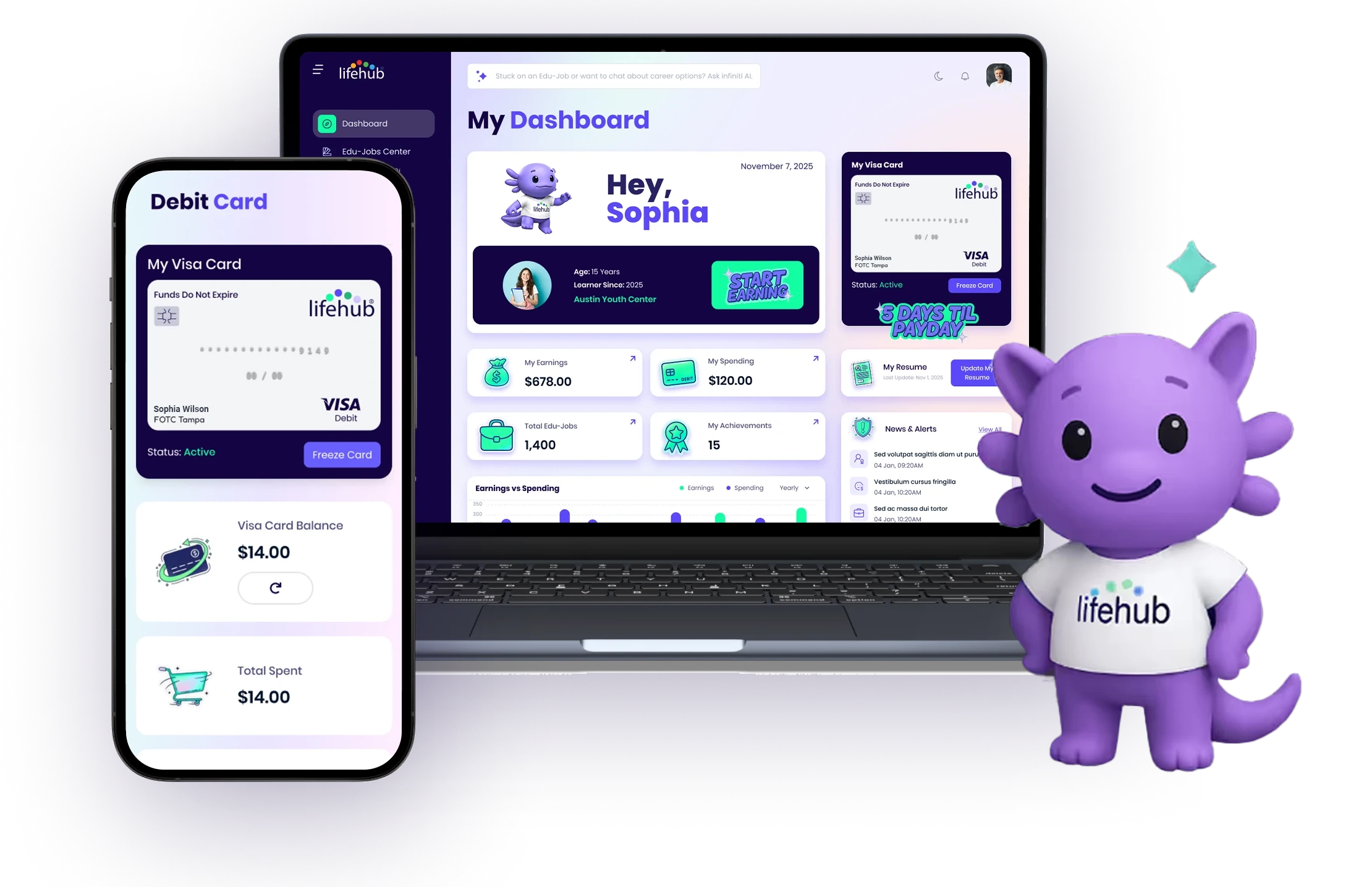
Choosing secular homeschool curriculum that builds both academic knowledge and practical capability prepares young people for success in college, careers, and life. The flexibility to combine rigorous academics with real-world skill development creates engaged learners who see the relevance of their education. Life Hub extends this approach by offering paid micro-learning tasks that develop money skills, digital literacy, career readiness, and practical competencies across subjects from core academics to AI and financial education. When learners earn real rewards for building real skills, education becomes immediately meaningful and motivating.


Related Content
Ready to Chat about Life Hub?
Whether you're parents, or a homeschool family, Life Hub is your partner to help you
raise super strong kids.

.svg)

.svg)


.svg)
.svg)

.svg)