Youth Financial Education Guide: Empowering Teens in 2026


Did you know most teens today feel unprepared to handle money confidently, even as the world changes faster than ever? In 2026, knowing how to manage finances is not just a skill, it is a superpower for the future.
This youth financial education guide is here to help both teens and parents build real money skills step by step. We will explore why learning these lessons early matters, what every teen should know, the latest digital tools, and the challenges you might face along the way.
Ready to become empowered, avoid debt, and reach your dreams? Let us dive in and start your journey to financial confidence together!
Why Youth Financial Education Matters in 2026
The world teens are growing up in is changing fast. With rising costs and a digital-first economy, understanding money is more important than ever. Youth financial education gives teens tools to navigate these changes, shaping not just their wallets but their future choices and opportunities.

The Growing Importance of Financial Literacy for Teens
In 2026, the stakes for youth financial education are higher than ever. Teens face steeper living costs and college tuition, making it crucial to build smart habits early. Research shows that only 28% of teens in a 2023 study felt confident managing money. This confidence gap can hold young people back.
The rise of gig work and digital payments means teens need new skills to thrive. Early financial habits can shape the rest of a teen’s life, influencing savings, spending, and even their future careers. Studies link youth financial education to better savings rates and less debt, giving teens a real advantage.
Consequences of Poor Financial Literacy
Ignoring youth financial education can lead to tough consequences. Teens without these skills are at higher risk for debt and financial stress. Poor financial choices can damage credit scores, making it harder to get loans or even rent an apartment.
Financial stress also takes a toll on mental health and school performance. Some young adults end up facing bankruptcy or struggling with student loan defaults because they missed out on early lessons. The cost of not learning about money is more than dollars, it affects well-being and future options.
The Role of Schools, Families, and Communities
Everyone plays a part in youth financial education. By 2025, 24 states will require financial literacy classes in schools, reflecting how vital these lessons are. Teens often copy their parents’ habits, so families have a big influence.
Community groups and youth organizations offer support and real-world practice. Many schools now partner with banks and nonprofits to bring programs into classrooms. Schools and districts can find helpful resources through Financial education for schools and districts, making it easier to build strong foundations for every teen.
Case for Early and Ongoing Financial Education
The best time to start youth financial education is before age 18. Habits formed early are the hardest to change later. Teens who learn to manage money build confidence, set goals, and make smart choices about spending, saving, and investing.
Long-term, these skills open doors to wealth building, entrepreneurship, and even giving back to the community. Research from CEE and NCUA shows that starting young leads to better financial outcomes for life. Empowered teens are ready to face whatever the future brings.
Core Concepts Every Teen Should Master
Understanding the basics of youth financial education can feel overwhelming, but everyone can master these skills one step at a time. Teens today face unique money challenges, and learning the essentials builds confidence and independence. Did you know that 93% of teens believe financial knowledge is key to reaching their goals? (Survey: 93% of Teens Value Financial Knowledge). Let’s jump into the core concepts every teen should know.

Budgeting Basics: Income, Expenses, and Goal-Setting
Budgeting is the foundation of youth financial education. Start by listing all sources of income, like allowances, part-time jobs, or gig work. Next, track where your money goes each month. Divide spending into “needs” (like food and transportation) and “wants” (like snacks or entertainment).
Set clear goals for your money. Do you want to save for a new phone or build a college fund? Use a simple budget worksheet or app to map out your spending and set targets. Remember, the earlier you practice budgeting, the easier it gets.
- List all sources of income
- Separate expenses into needs and wants
- Set short and long-term financial goals
Learning to budget helps you make smart decisions and avoid overspending.
Saving Strategies for Teens
Saving is a superpower in youth financial education. The earlier you start putting money aside, the more it grows thanks to compound interest. Even small, regular deposits add up over time.
Open a youth savings account at a bank or credit union. Many accounts have no fees and offer cool digital features. Set up automatic transfers so you never forget to save. Aim to build an emergency fund for unexpected expenses, like a lost phone or sudden trip.
- Open a savings account designed for teens
- Set up automatic transfers from checking to savings
- Build an emergency fund for surprises
Saving regularly gives you freedom and peace of mind, no matter what life throws your way.
Smart Spending and Avoiding Debt
Making wise choices about spending is a key part of youth financial education. Before you buy, ask yourself if it’s truly needed or just a passing want. Watch out for impulse buys and peer pressure, especially when shopping online or with friends.
Understand the basics of credit and debt. Credit cards and loans let you buy now and pay later, but interest charges can pile up quickly. Compare the real cost of paying with cash versus taking on debt.
| Payment Method | Pros | Cons |
|---|---|---|
| Cash | No debt, simple | Easy to overspend |
| Credit Card | Builds credit | Risk of interest, debt |
Learning to spend wisely means enjoying life without regrets or debt stress.
Introduction to Banking and Digital Money Management
Banking is central to youth financial education today. Checking and savings accounts help you keep your money safe and organized. Debit cards, mobile wallets, and online banking make managing cash quick and easy.
Explore digital tools like account alerts and budgeting features. Always protect your personal details—never share your PIN or passwords. Use strong passwords and enable security features in your banking apps.
- Open a checking account with digital access
- Use eBanking tools to track spending and savings
- Keep your personal information secure
Getting comfortable with online banking prepares you for the digital economy.
Credit Scores, Loans, and the Path to Financial Independence
Credit scores are a big deal in youth financial education. They show lenders how well you manage borrowed money. Start building credit early by using student cards or becoming an authorized user on a parent’s account.
If you’re considering student loans, read all the terms and know how repayment works. Paying bills on time and keeping balances low helps your credit score grow.
- Learn what affects your credit score
- Review your credit report regularly
- Understand loan terms before borrowing
A strong credit score opens doors to better jobs, apartments, and financial freedom as you step into adulthood.
Step-by-Step Guide to Building Financial Skills in 2026
Getting started with youth financial education is easier than it seems. By breaking the process into manageable steps, teens and families can build a solid foundation for financial success. Let’s walk through each stage together.

Step 1: Assessing Your Current Financial Knowledge
Before diving in, it’s important to know where you stand. Self-assessment helps you identify strengths and areas for growth in youth financial education.
Try using quizzes, surveys, or interactive platforms to measure your skills. For instance, the Life Hub® youth financial education app offers engaging modules and instant feedback, making learning fun and effective.
- Take a quick quiz on income, saving, and spending.
- Ask yourself: What do I know about budgeting, banking, and credit?
- Explore digital tools to track your progress and celebrate improvements.
Understanding your financial starting point sets the stage for real growth.
Step 2: Setting Personal Financial Goals
Setting goals is a cornerstone of youth financial education. Think about what you want to achieve in the short and long term. Maybe you want to save for a concert, a new device, or even your first car.
Use the SMART framework:
- Specific: What exactly do you want?
- Measurable: How will you track it?
- Achievable: Is it realistic?
- Relevant: Does it matter to you?
- Time-bound: When do you want to reach it?
Digital goal trackers can help you stay on course and visualize your progress. Revisiting and updating your goals keeps you motivated and focused.
Step 3: Creating and Managing a Budget
Budgeting is the heart of youth financial education. It’s about planning how you’ll use your money, so you reach your goals without stress.
Choose a method that fits your style:
- Envelope system: Physically separate cash for spending, saving, and giving.
- Digital apps: Automate tracking and get reminders.
- Spreadsheets: Customize your categories.
A simple table can help organize your budget:
| Category | Planned | Actual | Difference |
|---|---|---|---|
| Needs | $ | $ | $ |
| Wants | $ | $ | $ |
| Savings | $ | $ | $ |
Review your budget every month. Adjust as your needs change and celebrate small wins.
Step 4: Opening and Using a Bank Account
A bank account is your gateway to modern money management in youth financial education. Most banks offer teen-friendly checking and savings accounts with easy access and low fees.
Steps to get started:
- Visit a bank or credit union with a parent or guardian.
- Compare account features: fees, mobile apps, ATM access.
- Learn how to deposit, withdraw, and check balances securely.
Digital banking tools offer alerts and transaction histories, making it simple to keep tabs on your money. Remember to keep your information private and never share your PIN or passwords.
Step 5: Practicing Safe Spending and Earning
Smart spending is a key part of youth financial education. Use debit cards, mobile wallets, or cash carefully to avoid overspending.
Earning money can come from part-time jobs, online gigs, or micro-tasks. Always research opportunities to ensure they’re legitimate.
- Never share personal details with unknown contacts.
- Look for signs of scams: requests for upfront payments or too-good-to-be-true offers.
- Talk to a trusted adult before accepting new jobs or gigs.
Safe habits help you keep what you earn and avoid costly mistakes.
Step 6: Understanding Credit and Loans
Credit is a powerful tool, but it comes with responsibility. Youth financial education teaches you to use credit wisely and avoid debt traps.
Learn the basics:
- Credit cards: Understand interest rates, fees, and payment schedules.
- Borrowing: Only take loans you can repay, and know the terms.
- Monitoring: Check your credit report annually for errors.
A good credit history opens doors to future opportunities, like lower loan rates or easier apartment rentals.
Step 7: Building Long-Term Habits and Reviewing Progress
Consistency is the secret to success in youth financial education. Make a habit of monthly check-ins to review your budget, savings, and goals.
- Reflect on what worked and what didn’t.
- Turn setbacks into learning moments.
- Seek advice from parents, teachers, or mentors when you need support.
Use digital tools or journals to track your journey. Celebrate milestones, no matter how small. Over time, these habits will lead to confidence and financial independence.
Leveraging Technology and Apps for Teen Financial Success
Technology is transforming the way we approach youth financial education. Teens today have access to powerful digital tools that make learning about money interactive and fun. With the right apps and platforms, financial skills can be practiced and refined every day, helping teens become confident decision-makers.
Best Financial Education Apps and Tools for Teens
Finding the right app can make youth financial education both exciting and practical. Top-rated apps like Greenlight and MyCreditUnion.gov give teens real-time experience with budgeting, saving, and spending. Many offer features such as parental controls, interactive lessons, and goal tracking.
Gamification is common, turning learning into a rewarding challenge. Some apps even provide badges or small rewards for reaching savings milestones. For a thorough comparison of the latest tools, check out the Best Financial Literacy Apps for Teens 2025. These platforms help make financial habits stick, setting teens up for lifelong success.
Life Hub®: The Learn-to-Earn Super App for Youth
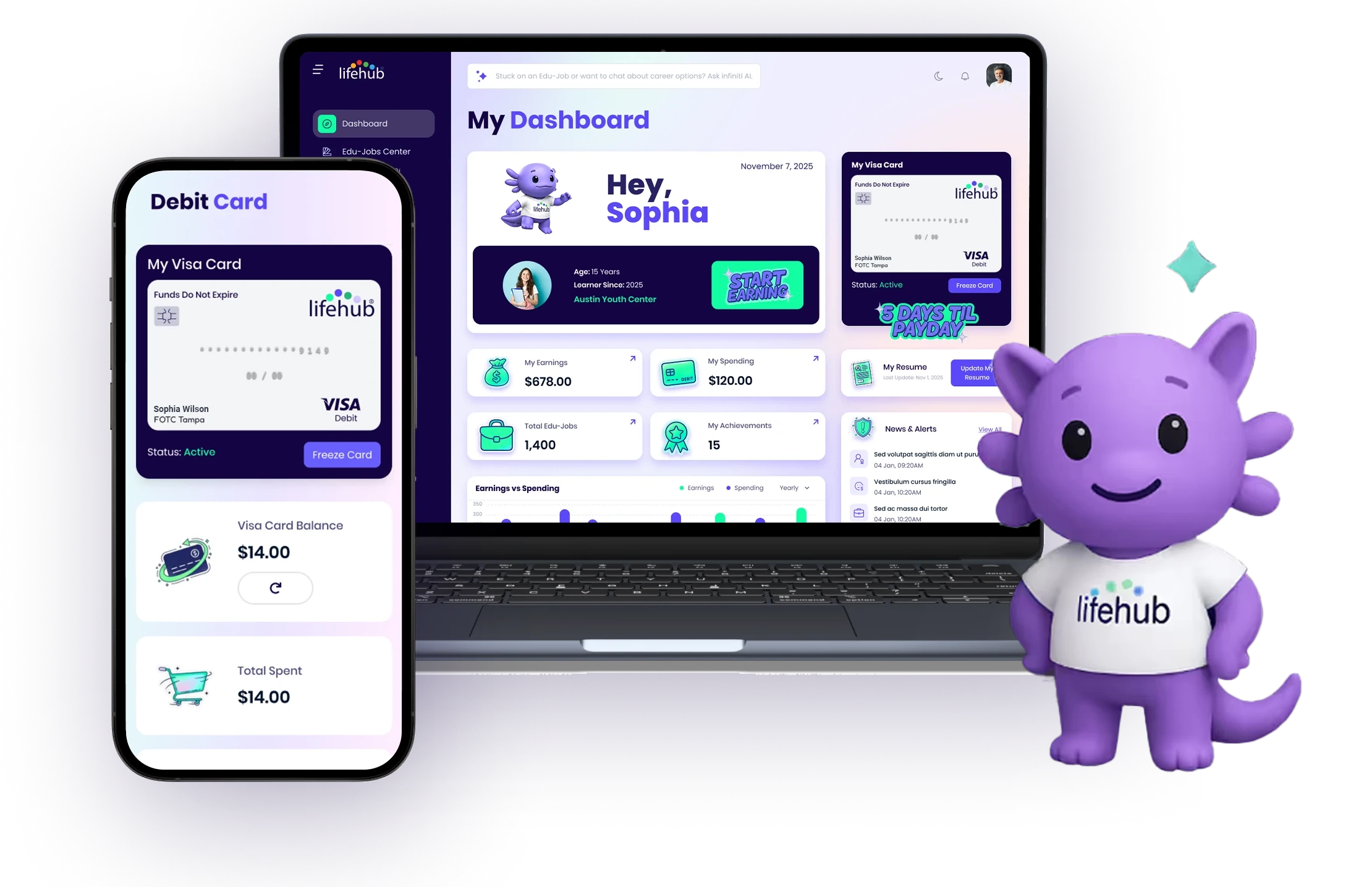
Life Hub® is a standout platform in the youth financial education space. This app blends micro-learning with real-world money management, empowering teens to earn real cash by completing educational modules called Edu-Jobs. With a secure Visa debit card and personalized learning journeys, Life Hub® adapts to each teen’s goals.

Parents and educators can track progress with built-in analytics, making it easier to support growth. Life Hub® goes beyond saving and spending, building entrepreneurship and career skills too. It’s a one-stop shop for financial confidence, giving teens a toolkit for the digital economy.
Digital Banking and eWallet Solutions
Digital-only banks are making youth financial education more accessible. Many offer teen checking accounts with no minimum balance, easy-to-use mobile apps, and built-in spending limits. Parental oversight features allow adults to monitor transactions and set controls, helping teens learn responsibility in a safe environment.
Security is a top priority. Features like instant alerts, card locks, and real-time monitoring protect personal information. Teens can manage their accounts, transfer money, and set savings goals right from their phones, making financial management a daily habit.
Online Resources for Parents and Educators
Supporting youth financial education doesn’t stop with apps. Parents and teachers have access to a wealth of online resources. The Council for Economic Education (CEE) offers free lesson plans, while NCUA provides interactive guides and engaging videos for all grade levels.
At home, families can use financial fun packs to make learning collaborative and enjoyable. Community programs and youth organizations also offer workshops and clubs that build real-world skills. With these resources, adults can guide and encourage teens on their financial journeys.
Overcoming Modern Financial Challenges for Teens
Today's teens face a fast-changing landscape when it comes to money. New technology, social media, and the gig economy create both opportunities and obstacles. With strong youth financial education, teens can build the skills they need to overcome these modern challenges and thrive.
Navigating Social Media Influences and Peer Pressure
Social media is everywhere, shaping the way teens view money and spending. Influencers and viral trends can spark sudden urges to buy the latest gadgets or clothes. Ads blend seamlessly with real content, making it hard to spot the difference.
Youth financial education helps teens recognize when they're being targeted by marketing or peer pressure. It encourages critical thinking, teaching teens to pause before making impulsive purchases. Setting clear boundaries and following trusted sources can make a big difference.
Did you know that nearly 60% of teens admit to making purchases after seeing them online? For more insights, check out these Youth Financial Capability Facts to see how digital culture impacts money habits.
Managing Gig Economy and Entrepreneurial Opportunities
The gig economy is booming for teens. One in five now earns money online, whether through freelance work, reselling, or content creation. This flexibility is exciting, but it comes with new responsibilities.
With youth financial education, teens can learn how to track gig income, manage taxes, and plan for irregular paychecks. Building simple spreadsheets or using budgeting apps makes it easier to keep earnings organized. Teens can also explore entrepreneurship by starting small businesses or side hustles.
It's important to remember that every dollar earned is a chance to practice smart money habits. Youth financial education empowers teens to turn opportunities into long-term growth and confidence.
Avoiding Scams, Fraud, and Identity Theft
Teens are frequent targets for online scams and fraud. Phishing messages, fake job offers, and identity theft attempts are everywhere in 2026. Recognizing the warning signs is a key part of youth financial education.
Practical tips include:
- Never sharing personal info with strangers
- Double-checking links before clicking
- Using strong, unique passwords
Support is available if something goes wrong. Teens can connect with youth-oriented organizations and resources for guidance and protection. Staying alert and informed helps keep both money and identity safe.
Balancing Spending, Saving, and Giving
Finding the right balance between spending, saving, and giving is challenging at any age. Teens often want to enjoy their money, help others, and plan for the future all at once.
Youth financial education encourages healthy habits by setting priorities and tracking goals. Digital apps can make it fun to save for something special or donate to a cause. Creating a simple chart or checklist helps teens see where their money goes each month.
By learning to balance fun, savings, and generosity, teens build lifelong skills that support financial wellness and community impact.
Resources and Support Systems for Ongoing Financial Growth
Building strong support systems is crucial for lasting success in youth financial education. Teens, parents, and educators all play a part in creating an environment where financial skills can flourish. Let’s explore the key resources and programs that empower young people to thrive.
Programs and Initiatives for Youth Financial Education
National and local programs provide a solid foundation for youth financial education. Across the country, initiatives like Greenlight Classrooms and the Council for Economic Education (CEE) offer interactive lessons that make learning about money engaging. Many schools now include financial literacy as part of their core curriculum, giving students hands-on experience with real-world scenarios.
Community workshops and youth clubs also offer fun, social ways to build money skills. These programs often partner with banks or credit unions to give teens practical exposure. According to the CFPB Financial Literacy Annual Report 2025, early involvement in financial education leads to better savings habits and greater confidence.
Parental Engagement: Tools and Strategies for Families
Families are a teen’s first teachers, and their habits shape the way youth financial education takes root. Setting up regular family money meetings creates a safe space to discuss spending, saving, and setting goals together. Parents can choose between cash or digital allowance systems, making it easier to teach budgeting in a way that fits their lifestyle.
Modeling positive financial behaviors is just as important as formal lessons. For those seeking extra support, Family and kids financial literacy programs offer tools and activities designed to bring families closer while building money skills. These resources help parents guide their teens with confidence.
Teacher and School Resources
Educators are key partners in youth financial education. Free classroom lesson plans from CEE make it simple to introduce financial concepts at every grade level. Teachers can use interactive games and videos to make lessons memorable and fun, reaching students from kindergarten through high school.
Professional development opportunities keep teachers up to date on best practices. Many schools also invite financial experts to lead workshops or Q&A sessions, creating a well-rounded experience for students. These resources ensure that every teen has access to quality financial education, no matter where they live.
Where to Find Help: Counseling, Credit Unions, and Online Communities
Support goes beyond the classroom and the home. Credit counseling services are available to help families and teens navigate tough financial situations and build healthy habits. Many banks and credit unions now offer youth-friendly accounts, providing safe, easy ways for teens to manage their money and practice what they learn.
Online forums and peer support groups connect young people with others on the same journey. These communities are great places to ask questions, share tips, and celebrate milestones in youth financial education. With so many resources available, every teen has the opportunity to grow and succeed.
Article written using RankPill.


Related Content
Ready to Chat about Life Hub?
Whether you're parents, or a homeschool family, Life Hub is your partner to help you
raise super strong kids.

.svg)

.svg)


.svg)
.svg)

.svg)