Homeschooling in Florida: Laws, Growth & Resources


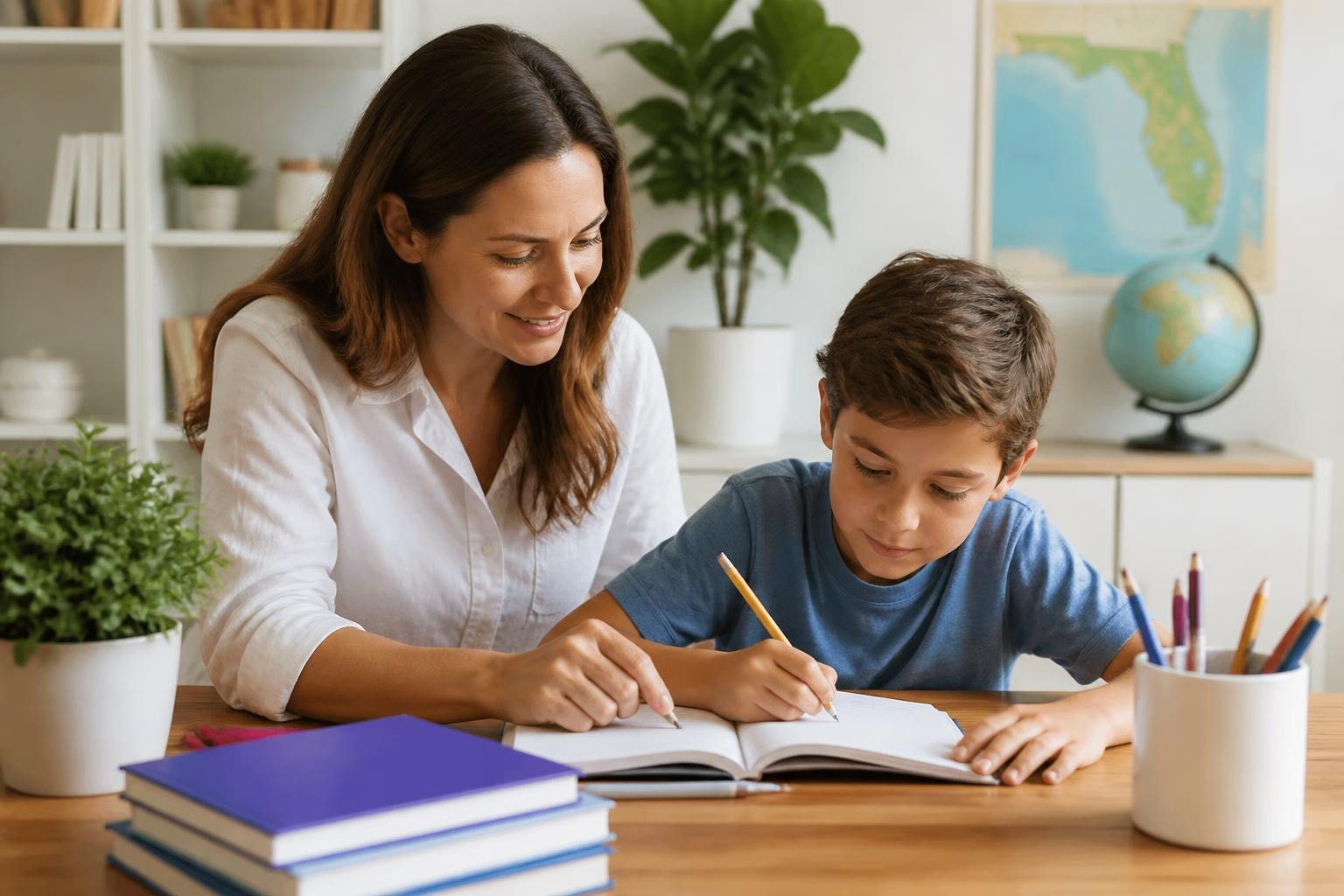

Florida has become one of the most homeschool-friendly states in America. Families who choose homeschooling in Florida benefit from flexible laws, minimal oversight, and a growing community of support. The state has seen explosive growth in home education over the past five years, with homeschooling increasing nearly 70 times faster than public school enrollment. This shift reflects families seeking more control over their children's education, personalized learning paths, and the ability to integrate practical skills like financial literacy and career readiness into daily learning.
Understanding Florida's Homeschool Laws
Florida makes it relatively simple to start homeschooling. The state's homeschooling laws require parents to notify their local school district within 30 days of establishing a home education program. You'll send a written notice to the superintendent, and that's your primary registration step.
Parents must maintain a portfolio of records for each learner. This portfolio should include:
- A log of educational activities
- Samples of work in various subjects
- Records of evaluations or assessments
Annual Assessment Requirements
Florida requires an annual educational evaluation. You can choose from several options:
- A teacher-certified evaluation
- Standardized testing administered by a certified teacher
- A portfolio review by a certified teacher
- Any other method mutually agreed upon with the district
The flexibility here matters. You pick the assessment method that works best for your child's learning style and your teaching approach. These nine essential steps provide a solid framework for getting started, from notification through record-keeping.

Why Homeschooling Growth Exploded in Florida
The numbers tell a compelling story. Between 2019 and 2024, Florida's homeschool population grew significantly while traditional school enrollment remained relatively flat. Families cite flexibility as the primary driver, allowing them to customize education around individual needs, family schedules, and learning styles.
Key reasons families choose homeschooling in Florida:
- Personalized pace: Learners move faster in strong subjects and take extra time where needed
- Family schedule control: Travel, work arrangements, and family time align with learning
- Safety concerns: Some families prefer the controlled home environment
- Special needs accommodation: Custom approaches for learners with unique requirements
- Values alignment: Education reflects family beliefs and priorities
School Choice Programs and Financial Support
Florida offers several school choice programs that may benefit homeschooling families. The state has expanded scholarship options, though most direct funding goes to private schools rather than home educators. However, families can combine homeschooling with part-time enrollment in virtual schools or co-op programs.
| Program Type | Availability | Benefits |
|---|---|---|
| Florida Virtual School | Free to all residents | Online courses, certified teachers, flexible scheduling |
| Dual Enrollment | High school age | College credits while homeschooling |
| Homeschool Co-ops | Community-based | Group classes, socialization, shared teaching |
| Private Online Programs | Paid subscription | Structured curriculum, grading, transcripts |
The growth in community opportunities means homeschooling families in Florida have more support networks, social groups, and shared resources than ever before.
Building a Curriculum That Works
Choosing curriculum represents one of the biggest decisions in homeschooling. Florida law doesn't mandate specific curriculum or subjects, giving families complete freedom to design their educational approach.
Most families structure their homeschool around core academics: reading, writing, mathematics, science, and social studies. Beyond these basics, you can add whatever skills matter most to your family's goals.
Integrating Real-World Skills
Smart homeschool curriculum goes beyond traditional academics. Financial literacy, career exploration, and practical technology skills prepare young people for actual life demands. Youth financial education builds money management habits early, teaching budgeting, saving, and earning principles through hands-on practice.
Consider mixing traditional subjects with practical applications:
- Math through budgeting: Track household expenses, plan purchases, calculate interest
- Writing through real communication: Business emails, project proposals, blog posts
- Science through cooking: Chemistry in action, measurements, hypothesis testing
- History through current events: Connect past to present, develop critical thinking
Schools that teach life skills recognize that practical knowledge sticks better than abstract concepts. Homeschooling lets you build this experiential learning into every day.

Creating Structure Without Rigidity
Successful homeschooling in Florida balances structure with flexibility. You need enough routine to make progress but enough adaptability to capitalize on learning opportunities and accommodate life's unpredictability.
Sample daily framework:
Morning Block (8:00-12:00)
- Core academic subjects requiring focus
- Math, reading, writing instruction
- Scheduled video lessons or online programs
Afternoon Block (1:00-3:00)
- Hands-on projects and experiments
- Art, music, physical education
- Interest-driven exploration
Flexible Time
- Field trips and educational outings
- Community service and volunteer work
- Social activities with other homeschoolers
Record-Keeping That Simplifies Compliance
Florida requires a portfolio, but this doesn't mean overwhelming paperwork. Smart organization makes annual evaluations straightforward.
Keep a simple log noting:
- Date
- Subject or activity
- Brief description
- Time spent (optional but helpful)
Save work samples quarterly rather than trying to compile everything at year-end. Take photos of projects, save digital work automatically, and scan paper assignments periodically. Many homeschool families use apps or cloud storage to organize portfolios digitally.
Specific Florida statutes define what constitutes adequate record-keeping, giving you clear guidelines to follow without second-guessing your documentation.
Socialization and Community Connections
The socialization question comes up constantly with homeschooling. Florida's large homeschool community offers abundant opportunities for connection and group learning.
Social opportunities for Florida homeschoolers:
- Homeschool co-ops meeting weekly for classes and activities
- Sports leagues specifically for homeschoolers
- 4-H clubs, Scouting troops, and youth organizations
- Community service projects and volunteer groups
- Library programs and museum classes
- Online communities and virtual meetups
Many families find their children get more diverse social interaction through homeschooling than traditional school provides. Instead of spending most time with same-age peers, homeschooled learners interact with various ages through community activities, family events, and interest-based groups.
Technology Tools and Digital Learning
Modern homeschooling relies heavily on technology. Florida families have access to excellent digital resources that enhance home education.
Florida Virtual School offers free courses to Florida residents, providing high-quality instruction in nearly every subject. These courses come with certified teachers, structured lessons, and official transcripts that colleges recognize.
AI and digital literacy matter more each year. Teaching young people to use technology productively, understand AI tools, and develop digital citizenship skills prepares them for modern careers and daily life.
| Tool Category | Examples | Primary Use |
|---|---|---|
| Learning Management | Google Classroom, Canvas | Organizing assignments and schedules |
| Video Instruction | Khan Academy, Crash Course | Subject explanation and review |
| Interactive Practice | Duolingo, Prodigy Math | Skill building through engagement |
| Creative Tools | Canva, GarageBand | Project creation and expression |
| Productivity | Microsoft Office, Notion | Real workplace skills |
Micro-learning platforms break complex topics into manageable chunks, making learning less overwhelming and more effective. Short, focused tasks build skills incrementally while maintaining engagement.

Financial Considerations and Earning Opportunities
Homeschooling costs vary dramatically based on chosen curriculum and resources. Some families spend less than $500 annually using library books and free online resources. Others invest thousands in structured programs, tutors, and materials.
Budget-conscious approaches that work:
- Library resources and interlibrary loan systems
- Used curriculum swaps through homeschool groups
- Free online courses and educational videos
- Nature-based learning and community resources
- Shared co-op expenses splitting costs among families
Teaching Financial Responsibility Through Real Earnings
One powerful homeschool advantage involves connecting learning directly to real-world outcomes. When learners complete educational tasks and earn actual money, abstract concepts become concrete motivation.
Building 21st century learning skills requires more than traditional academics. Young people need financial literacy, work ethic, goal-setting abilities, and the connection between effort and reward. Homeschooling provides the flexibility to integrate these lessons naturally.
Some families pay learners for completed work in specific subjects, teaching both the content and the value of effort. Others connect learning achievements to allowance increases or special opportunities. The key is making the connection between work, learning, and earning explicit and meaningful.
High School Homeschooling Considerations
Homeschooling through high school requires additional planning. Florida allows home education through graduation, but families need to think about transcripts, college preparation, and career readiness.
High school homeschool checklist:
- Create official transcripts documenting courses and grades
- Track volunteer hours and extracurricular activities
- Research college admission requirements early
- Consider dual enrollment for college credits
- Prepare for standardized tests (SAT, ACT, CLT)
- Document portfolios showcasing skills and projects
Understanding assessment options helps you plan appropriate evaluations that meet both state requirements and college expectations.
Career exploration becomes critical during high school years. Exposing learners to various fields through internships, job shadowing, online courses, and project-based learning helps them discover interests and aptitudes before committing to college paths.
Special Needs and Flexible Learning Paths
Homeschooling in Florida works exceptionally well for learners with special needs. The individualized approach allows customization impossible in most classroom settings.
Parents can:
- Adjust pacing to match processing speeds
- Incorporate therapeutic activities into daily routines
- Use multi-sensory teaching methods
- Take breaks when needed without disrupting others
- Focus intensively on challenge areas
- Accelerate in strength areas regardless of grade level
Florida law requires annual evaluation for all homeschoolers, but parents choose the method. For special needs learners, portfolio review by a certified teacher often works better than standardized testing, allowing demonstration of growth without test anxiety or format barriers.
Combining Structure and Freedom
The beauty of homeschooling in Florida lies in the balance between legal simplicity and educational freedom. You meet minimal state requirements while creating exactly the education your family needs.
Successful homeschoolers often:
- Start with clear goals for the year
- Build flexible schedules around family rhythms
- Adjust approaches based on what works
- Connect with other homeschool families
- Use community resources extensively
- Document consistently without overcomplicating
- Focus on growth rather than perfection
Different seasons bring different needs. Some months you'll follow a structured schedule closely. Other times, life demands flexibility or learners dive deep into passionate projects. The freedom to adapt represents one of homeschooling's greatest strengths.
Resources and Support Networks
Florida offers robust support for homeschooling families. State and local organizations provide guidance, legal information, social events, and encouragement.
Connect with these resource types:
- County homeschool support groups: Local connections and activities
- Statewide homeschool organizations: Legal updates and advocacy
- Subject-specific co-ops: Group classes in science, art, foreign languages
- Online forums and Facebook groups: Daily support and idea sharing
- Curriculum fairs and conventions: Hands-on material review and workshops
Many families join multiple groups, finding different benefits from each. Some provide social opportunities, others offer academic enrichment, and still others focus on specific educational philosophies or religious perspectives.
Planning Your Homeschool Journey
Starting homeschooling in Florida requires more courage than complexity. The legal requirements stay minimal, giving you room to focus on actual education rather than bureaucratic compliance.
Begin by:
- Researching curriculum options that match your teaching style
- Sending notification to your school district
- Setting up a simple record-keeping system
- Connecting with local homeschool groups
- Starting with basics and adding gradually
You don't need everything figured out before beginning. Most homeschool families evolve their approach over time, discovering what works through experience rather than perfect planning.
The flexibility to incorporate practical skills throughout your curriculum makes homeschooling particularly valuable. When learners see direct connections between what they study and how they'll use those skills, motivation increases naturally. Teaching financial concepts through real money management, career exploration through actual projects, and technology through productive creation builds confidence and capability simultaneously.
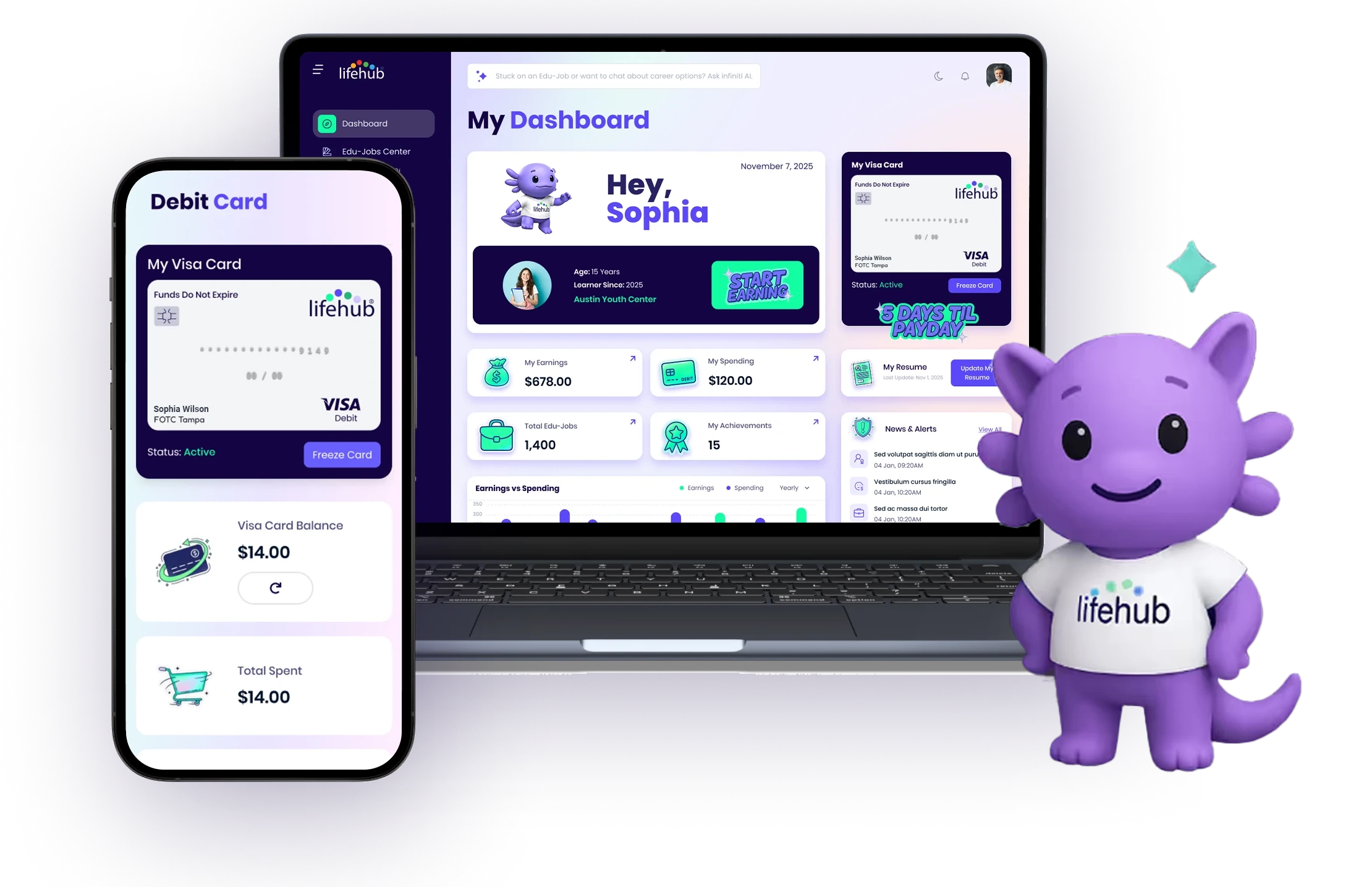
Homeschooling in Florida offers remarkable freedom to create education that truly fits your family's needs and your learner's potential. The state's supportive legal framework and growing community make this option more accessible than ever. Whether you focus on academics, life skills, or both, the flexibility lets you build something meaningful. Life Hub supports homeschool families by turning learning into earning through practical Edu Jobs that build money skills, career readiness, and real-world capability while rewarding effort with real earnings. If you want learning that connects directly to motivation and results, Life Hub provides the tools to make education both practical and rewarding.


Related Content
Ready to Chat about Life Hub?
Whether you're parents, or a homeschool family, Life Hub is your partner to help you
raise super strong kids.

.svg)

.svg)


.svg)
.svg)

.svg)