Essential Guide to 21st Century Learning Skills for 2026



The pace of change in education and the workplace is faster than ever before. New technology, global challenges, and evolving jobs demand more from every learner.
To thrive in 2026, mastering 21st century learning skills is not optional—it is essential. These skills help prepare learners to adapt, solve problems, and communicate in a complex world.
By developing these future-ready abilities, learners unlock new opportunities in school, careers, and daily life. They gain the confidence to take on whatever comes next.
Explore this essential guide to discover which skills matter most, how to build them, and why they will shape success for years to come.
Understanding 21st Century Learning Skills: Definition and Evolution
As we look ahead to 2026, 21st century learning skills are more important than ever. These skills go beyond memorizing facts. They are about preparing learners to thrive in a world shaped by rapid change and new technology.

What Are 21st Century Learning Skills?
21st century learning skills are the abilities and mindsets needed to succeed in a fast-paced, technology-driven world. These skills are sometimes called “deeper learning,” “soft skills,” “transferable skills,” or “college and career readiness.”
Key frameworks, like the P21 Framework, UNESCO’s competencies, and reports from the National Academies, all highlight these skills. Unlike traditional academic skills that focus on memorization and recall, 21st century learning skills emphasize thinking, doing, and adapting.
Examples include critical thinking, collaboration, communication, and creativity. These skills blend with core subjects such as reading, math, and science. Learners may analyze a science problem, work in teams, or present findings, all while building 21st century learning skills.
Traditional learning often meant repeating information. Today, success relies on applying knowledge in real situations.
The Evolution of Learning Skills in the Digital Age
The focus of education has shifted from memorizing facts to applying, analyzing, and solving problems. Digital transformation and globalization have changed what skills matter. Many jobs now demand the ability to adapt, use technology, and think across subjects.
Automation and AI reshape the workplace. According to the World Economic Forum's Future of Jobs Report 2025, many roles will require new types of expertise, including digital and social skills. Interdisciplinary and lifelong learning are now key for keeping up with change.
Classrooms are adopting project-based learning. Learners collaborate to solve real-world challenges. This approach builds resilience and adaptability. Continuous upskilling is essential for staying relevant, as new tools and knowledge emerge quickly.
Why 21st Century Skills Matter in 2026 and Beyond
Employers increasingly seek higher-order thinking, communication, and digital skills. Research from the National Academies shows that motivation, persistence, and learning how to learn are vital for long-term success. Many surveys report gaps in critical thinking and digital literacy among new hires.
21st century learning skills also support responsible citizenship and ethical choices. As more jobs require digital skills by 2026, learners who master these abilities will be ready for complex challenges. These skills help people become informed consumers, engaged community members, and adaptable professionals.
In a world full of uncertainty, 21st century learning skills are the foundation for navigating change and making a positive impact.
The Core Categories of 21st Century Learning Skills
Mastering 21st century learning skills is key for anyone who wants to thrive in a fast-changing world. These skills go beyond memorizing facts. They help learners solve problems, work with others, and use technology wisely.

The “4 Cs”: Critical Thinking, Communication, Collaboration, and Creativity
The “4 Cs” are the foundation of 21st century learning skills. Each skill plays a unique role in education and the workplace.
Many education standards, like Common Core and NGSS, highlight these skills. Teachers and business leaders agree that the “4 Cs” drive adaptability and innovation. By practicing these, learners prepare for the demands of 2026. The “4 Cs” are essential in 21st century learning skills, supporting growth across all subjects.
Digital Literacy and Technology Fluency
Digital literacy is a major part of 21st century learning skills. It means using and creating digital content safely and responsibly. Learners need to know how to find information online, evaluate its reliability, and use digital tools to share their ideas.
Technology fluency goes further. It is about adapting to new software, platforms, and even artificial intelligence. For example, coding, making digital presentations, and working in online teams are now common classroom activities.
Cybersecurity awareness is also key. Knowing how to protect personal data and use technology ethically is a must. As classrooms grow more digital, learners need these skills to keep up and stay safe.
Social and Emotional Learning (SEL) and Cultural Competence
Social and emotional learning (SEL) helps learners build self-awareness, manage emotions, and make good choices. SEL skills include:
Cultural competence is about respecting diversity and understanding different cultures. Global awareness and empathy are vital for working in a connected world.
The CASEL framework shows that SEL boosts both academic performance and well-being. Activities like conflict resolution or multicultural projects help learners practice these skills. Research links strong SEL skills to better grades and happier lives. These abilities are a core part of 21st century learning skills.
Financial Literacy and Real-World Problem Solving
Financial literacy is another pillar of 21st century learning skills. It means understanding money, budgeting, and smart spending. Many young people lack basic financial skills, making this area more important than ever.
Real-world problem solving lets learners apply what they know to everyday challenges. School programs often include entrepreneurship or money management projects. These practical lessons prepare learners for life beyond the classroom.
Incentives can boost engagement, as seen in Financial Rewards in Education, which explores how rewards help learners build crucial skills.
Integrating 21st Century Skills into Education
Bringing 21st century learning skills into education means more than adding new subjects. It involves rethinking how learners experience every part of their education. Schools now focus on building these skills through their teaching methods, assessment tools, and learning environments.

Curriculum Design and Instructional Strategies
Curriculum design is at the heart of integrating 21st century learning skills. Teachers use project-based learning, inquiry-based lessons, and interdisciplinary units to help learners connect knowledge across subjects. For example, a STEM challenge might require teamwork, communication, and creativity to solve real problems. Debate clubs and design challenges encourage learners to think critically and express ideas clearly.
Professional development is vital. Educators need training to foster 21st century learning skills in daily lessons. Schools invest in workshops on digital tools, social and emotional learning, and flexible teaching strategies. Research shows that active learning methods, like group projects and hands-on tasks, can improve outcomes for all learners.
Flexibility is key. Allowing learners to follow their interests or work at their own pace supports deeper learning. For more strategies and evidence-based guides, educators can visit Resources and Research on Education.
Assessment of 21st Century Skills
Measuring 21st century learning skills is challenging. Traditional tests do not always capture skills like creativity or collaboration. Schools are now using performance tasks, digital portfolios, and peer feedback to assess real-world abilities.
For instance, rubrics can track growth in critical thinking or teamwork during group projects. Combining new assessments with traditional grades gives a fuller picture of each learner’s strengths. Research suggests that balanced systems help educators see progress in both content and skills.
The Role of Informal and Non-Traditional Learning Environments
21st century learning skills also grow outside the classroom. After-school programs, internships, and community projects give learners real-world practice. Makerspaces and coding clubs let them experiment and solve problems in creative ways.
Service learning connects academic goals with community needs. Research finds these experiences boost confidence and skill development. Partnerships among schools, families, and organizations help make these opportunities available to more learners.
Overcoming Barriers to Implementation
Schools face barriers when building 21st century learning skills. Common challenges include limited resources, pressure from standardized tests, and hesitation to change. Solutions may involve policy updates, funding for new programs, and engaging all stakeholders in planning.
Pilot programs and grants offer a way to try new ideas before scaling up. Some districts have shown success by sharing their results and working with community partners. Over time, these efforts can help more learners gain the skills they need for the future.
The Impact of Technology and Artificial Intelligence on Learning Skills
Technology and artificial intelligence are transforming how learners gain 21st century learning skills. From classrooms to workplaces, digital tools and AI are shaping what, how, and why we learn. As the pace of change increases, these skills are more important than ever for staying adaptable and future-ready.

How AI and Emerging Technologies Are Shaping Education
AI and new technologies are changing the face of learning. Classrooms now use smart platforms that adjust lessons to each learner’s needs. AI tutors, chatbots, and adaptive learning apps help explain concepts in real time. These tools can offer instant feedback and suggest ways to improve.
For example, AI-driven programs can analyze how a learner solves math problems, then recommend practice tailored to their strengths. Many schools use virtual reality for science labs, or coding platforms that teach logic step by step. This hands-on approach supports 21st century learning skills by making lessons interactive and personal.
Research shows that AI can boost engagement and help learners master new skills faster. Still, it also raises questions about privacy and equal access. To learn more about tools supporting these changes, visit AI Tools for Learning Skills. With thoughtful use, technology can help every learner develop the skills they need for tomorrow.
Building Digital and AI Literacy for Future Readiness
Learning digital and AI literacy is becoming a must for 21st century learning skills. Digital literacy means understanding how to use devices, apps, and the internet safely. AI literacy goes further, teaching how intelligent systems work and how to spot bias in algorithms.
Schools are adding coding, robotics, and data analysis to their lessons. Learners might build simple chatbots, explore how search engines rank results, or ask why certain ads appear online. These activities help learners think critically about technology and its impact.
Digital and AI literacy also include knowing how to protect personal data and use technology ethically. When learners can question how digital tools work, they become better problem solvers and more responsible citizens. In 2026, these skills will open doors in almost every field.
Preparing Learners for the Future of Work
The world of work is shifting fast, and 21st century learning skills are key to success. Automation, remote work, and the gig economy are changing what employers need. Skills like adaptability, digital communication, and complex problem solving top the list.
Career readiness programs now use real-world simulations and online teamwork to practice these skills. For example, learners might join virtual internships or work on global projects with peers in other countries. These experiences build confidence and prepare learners for jobs that may not yet exist.
Surveys show that employers want people who can learn new tools quickly and work well with others. By focusing on 21st century learning skills, learners build habits that help them thrive in any career path. Adapting to change and seeking out new knowledge will always be in demand.
Practical Steps for Students, Educators, and Parents
Adopting 21st century learning skills does not require a complete overhaul of daily routines. Small, intentional steps can make a real difference for learners, educators, and families. Here are practical ways to build these essential skills for success in 2026 and beyond.
Actionable Strategies for Students
To develop 21st century learning skills, learners can start by setting personal goals and tracking their progress. Reflecting after each project helps to identify strengths and areas for growth.
Joining clubs, volunteering, or taking part in online courses can boost collaboration, communication, and creativity. Digital tools like shared documents or video platforms encourage teamwork on creative projects.
Consider these steps:
Cultivating resilience and a growth mindset prepares learners to adapt when challenges arise. These habits are essential for thriving in a changing world.
Guidance for Educators: Fostering 21st Century Skills in the Classroom
Educators play a vital role in nurturing 21st century learning skills. Creating an inclusive environment where learners feel safe to share ideas is key.
Try integrating project-based and collaborative assignments. Encourage learners to work in teams, solve real-world problems, and present their findings.
Effective strategies include:
Regularly updating digital and social-emotional teaching methods helps educators stay current. Innovation labs and debate clubs can further inspire skill mastery.
Empowering Parents and Caregivers
Parents and caregivers support 21st century learning skills by staying engaged in their child's learning journey. Hosting family discussions about digital safety or money management builds important life skills.
Consider using educational apps or attending cultural events together. Partnering with schools and community groups can open new learning opportunities.
For more ideas on supporting your child's skill growth, explore Building Skills for Kids and Families. Modeling curiosity and lifelong learning encourages children to do the same.
Building Real-World Capability with Life Hub®
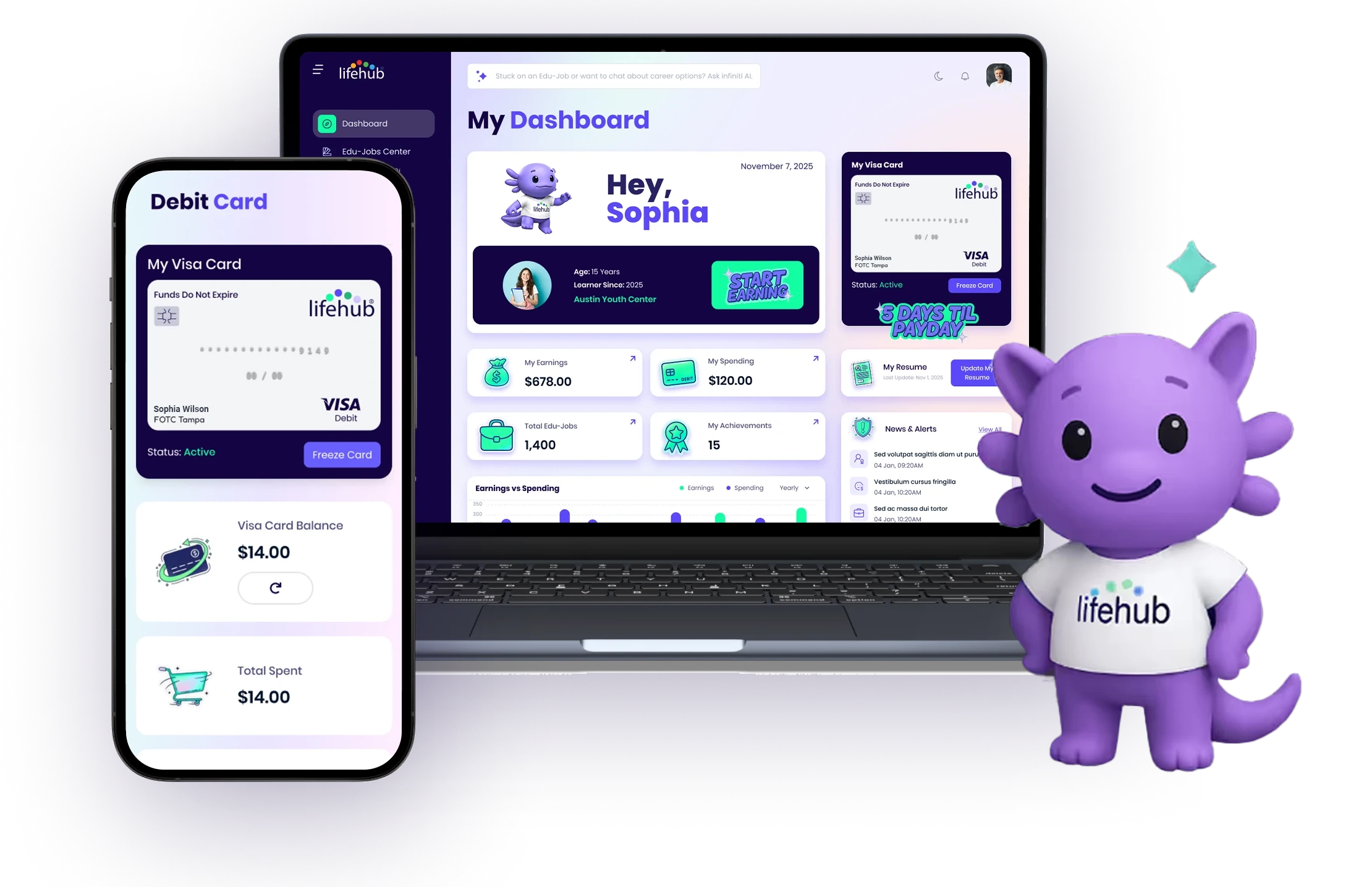
Life Hub® offers an innovative way for young people to practice 21st century learning skills. Learners earn real cash for completing “Edu Jobs” that cover academic, digital, and financial topics.
The platform combines AI-powered coaching, gamification, and real-world application using the Life Hub® Visa® rewards card. This hands-on approach motivates learners and helps them apply skills in daily life.
Families, schools, and youth organizations benefit from measurable impact and practical experience. Life Hub® bridges classroom learning with future-ready skills for life beyond school.
The Future of 21st Century Learning Skills: Trends and Predictions for 2026
The landscape of 21st century learning skills is evolving quickly as we move toward 2026. New trends in education and workforce development are shaping what learners need to succeed. Schools and organizations are rethinking how they teach and assess these core skills, focusing on adaptability, digital fluency, and global connections.
Emerging Trends in Education and Workforce Development
Personalized learning is becoming standard, with more learners working at their own pace using digital tools. Hybrid and remote education options allow for greater flexibility and access. Global collaboration is also rising, as international student projects and remote internships become common.
Interdisciplinary and entrepreneurial skills are in demand, helping learners solve problems across subjects. Schools are now recognizing micro-skills and awarding digital badges for achievements. For example, coding bootcamps and language apps offer badges for completion. Innovative methods, like Innovative Tangible Interactive Games for AI Literacy, are helping learners develop essential 21st century learning skills through hands-on experiences.
TrendExamplePersonalized LearningAdaptive online coursesGlobal CollaborationInternational STEM projectsMicro-credentialingDigital badges for coding skills
The Role of Policy, Equity, and Access
Policy changes are supporting 21st century learning skills by updating curricula and funding digital infrastructure. Governments and schools are working to close the digital divide, aiming to provide equal access to devices and high-speed internet for all learners. However, disparities remain, especially in underserved communities.
Public-private partnerships and open educational resources are helping address these gaps. Some districts are using grants to supply laptops and offer free Wi-Fi. According to economic forecasts like the Kiplinger Special Report: Business Costs for 2026, financial literacy and problem-solving will become even more critical as business needs shift. These efforts support an inclusive, future-focused approach to 21st century learning skills.
Preparing for Lifelong Learning and Adaptability
Lifelong learning is now a core expectation for everyone. The ability to adapt, learn new skills, and stay motivated is vital in a world where jobs and technology change rapidly. Research shows that people who embrace learning-to-learn and self-motivation have stronger career success and personal fulfillment.
Strategies like micro-credentialing, using online platforms, and joining professional networks help learners keep their skills current. Schools and workplaces are promoting a growth mindset culture, encouraging everyone to view challenges as opportunities to improve. Building these habits now will prepare learners to use 21st century learning skills throughout their lives.
As you think about helping the next generation build real skills for life, it’s important to find tools that make learning both practical and rewarding. The guide above shows how learning skills like digital literacy, financial know how, and creative problem solving can open doors for learners in 2026 and beyond. If you want to see how these ideas can come to life at home and give your family a way to learn by doing, take a look at See Life Hub for Kids and Families. You may find just what you need to help learners grow with confidence.


Related Content
Ready to Chat about Life Hub?
Whether you're parents, or a homeschool family, Life Hub is your partner to help you
raise super strong kids.

.svg)

.svg)


.svg)
.svg)

.svg)