7 Essential Elements of an Effective AI Curriculum in 2026



Artificial intelligence is changing how we learn and work. As AI becomes a part of daily life, the need for a strong ai curriculum grows. Learners must gain the right skills to thrive with smart technologies.
This article explores the 7 essential elements of an effective ai curriculum for 2026. We cover the basics, ethics, hands-on projects, and more. By following these guidelines, learners can prepare for a world shaped by AI.
The Importance of a Modern AI Curriculum
Artificial intelligence is no longer a distant promise. It is woven into daily life, business, and learning. As technology moves forward, a modern ai curriculum becomes a necessity for learners. Schools and organizations are rethinking how to prepare people for a world shaped by intelligent systems.

The Expanding Role of AI Across Industries
AI is transforming industries at a rapid pace. Market research predicts the global AI market will reach record highs by 2026, with the education sector alone expected to hit $32.76 billion by 2032, driven by personalized and AI-enabled solutions. AI in Education Market Growth
Healthcare, finance, and manufacturing are all using AI to improve outcomes, automate tasks, and open new career paths. Employers now look for candidates with ai curriculum experience and practical skills. Even executive programs, like those at Columbia University, reflect this demand, offering cross-industry AI training.
AI is not just a technical skill anymore. It is a core part of business strategy, product design, and even creative work. This shift means learners need an education that prepares them for these new realities.
Challenges in AI Education Today
Despite the need, many current programs struggle to keep pace with the evolving landscape. Traditional computer science courses often lack the real-world focus that an ai curriculum requires. Technology changes fast, and static syllabi quickly become outdated.
Key challenges include:
- Gaps between classroom theory and industry practice
- A shortage of qualified AI educators
- Limited up-to-date resources and hands-on opportunities
- The need for interdisciplinary learning, blending ethics, law, and technical skills
Experiential learning is vital for skill retention, yet many courses still rely on lectures and exams. Without practical, project-based work, learners may miss out on crucial experience. Bridging these gaps is essential for any effective ai curriculum.
The Shift Toward Skills-Based and Experiential Learning
Modern ai curriculum design is moving toward skills-based, hands-on education. Project-based assessments and real-world problem solving have taken center stage. Learners benefit from collaborative, cohort-based models and peer review, which mirror workplace dynamics.
AI-driven adaptive learning and micro-learning modules are gaining popularity. These tools personalize the learning journey, helping learners focus on their weakest areas. The adoption of digital platforms and curriculum generators is rising, making it easier to keep content current and relevant.
A strong ai curriculum now means more than mastering theory. It means learning by doing, reflecting, and adapting as new tools and challenges appear. This approach prepares learners not just for their first job, but for a lifetime of growth in the AI-powered world.
7 Essential Elements of an Effective AI Curriculum in 2026
Building a future-ready ai curriculum means weaving together theory, hands-on skills, ethics, and real-world experience. Let’s break down the seven elements every effective ai curriculum in 2026 should include. Each part plays a unique role in helping learners thrive in an AI-shaped world.

1. [Foundational AI and Machine Learning Theory]
A strong ai curriculum starts with the basics. Learners need to understand key concepts—like search algorithms, supervised and unsupervised learning, and constraint satisfaction. These are the building blocks for tackling advanced AI topics.
Columbia University’s ai curriculum, for example, covers algorithm design and performance analysis. Learners explore statistical and linear models, gaining the skills to think algorithmically. This foundation is vital when facing real-world business and industry challenges.
A solid theoretical base supports innovation and responsible AI use. It prepares learners to adapt as the field evolves, since new breakthroughs often build on these core ideas.
For those designing an ai curriculum, up-to-date research and resources are crucial. You can find the latest tools and studies at Education resources and research, which may help educators stay current.
Theory alone is not enough, but without it, innovation stalls. Theoretical knowledge gives learners the confidence to ask questions and solve problems in new ways.
2. [Hands-On Programming and Technical Skills]
An effective ai curriculum always includes practical programming. Learners work with Python, R, and new AI tools to build, train, and deploy machine learning models. Open-source frameworks like TensorFlow and PyTorch are standard.
Assignments might include writing code for neural networks, preprocessing data, or evaluating model performance. At Columbia, learners complete programming-heavy projects that mirror workplace demands.
Here’s a sample code snippet for a basic neural network in Python:
import tensorflow as tf
model = tf.keras.Sequential([
    tf.keras.layers.Dense(64, activation='relu', input_shape=(100,)),
    tf.keras.layers.Dense(10, activation='softmax')
])
model.compile(optimizer='adam', loss='categorical_crossentropy', metrics=['accuracy'])
Reproducibility and debugging are part of every workflow. Technical fluency is a must for ai curriculum graduates—employers want proof that learners can code and troubleshoot.
These skills open doors in every industry using AI. Practical work ensures learners are not just users of AI but creators.
3. [Data Literacy, Privacy, and Security]
Data is the lifeblood of any ai curriculum. Learners must know how to collect, clean, and manage data responsibly. They study legal frameworks like GDPR and HIPAA, along with global privacy standards.
Security risks are real: adversarial attacks, model vulnerabilities, and data breaches can harm people and organizations. Advanced privacy tech, including differential privacy and federated learning, is now part of many programs.
Assignments often involve ethical data use and security best practices. Columbia’s ai curriculum includes a full course on data privacy and policy.
Here’s a quick table summarizing key topics:
| Area | Example Focus |
|---|---|
| Data Cleaning | Handling missing data |
| Privacy Laws | GDPR, HIPAA |
| Security Risks | Adversarial attacks |
| Privacy Tech | Federated learning |
Responsible data handling is the backbone of trustworthy AI. It prepares learners for compliance and ethical challenges in a connected world.
4. [AI Ethics, Bias, and Societal Impact]
Ethics is central in any modern ai curriculum. Learners explore algorithmic bias, fairness, and transparency. They use real-world case studies to understand the consequences of poorly designed AI systems.
Frameworks for ethical decision-making help learners weigh legal, cultural, and societal impacts. Assignments may ask them to analyze ethical dilemmas and propose solutions.
Columbia’s ai curriculum weaves ethics into multiple courses. This approach shows that ethical literacy is as important as technical skill for anyone working with AI.
Discussing bias and societal impact builds public trust. It encourages learners to think about who benefits from AI and who might be left out.
These lessons help learners become responsible creators and users of AI, not just technicians.
5. [Specialized AI Domains: NLP, Computer Vision, and Robotics]
A future-ready ai curriculum dives deep into specialized fields. Natural language processing (NLP), computer vision, speech, and robotics are key domains.
Learners might build chatbots, experiment with language translation, or develop object recognition systems. Hands-on projects could include creating NLP models, image classifiers, or running robotic simulations.
Courses at Columbia cover these areas, exposing learners to deep learning and generative models. Specialized knowledge prepares learners for advanced AI careers and helps them innovate in high-demand sectors.
These domains are growing fast, with new job roles emerging every year. A strong ai curriculum gives learners the confidence to explore and create in these fields.
6. [Interdisciplinary and Real-World Applications]
AI does not exist in a vacuum. The best ai curriculum connects AI with business, healthcare, finance, and creative industries. Learners work on collaborative projects that simulate real-world deployments.
Partnerships with industry for capstone projects and internships are common. Cohort-based and scenario-driven learning models help learners gain practical experience.
Columbia’s ai curriculum includes business applications and cross-industry case studies. This interdisciplinary focus matches the wide impact of AI.
By tackling real-world problems, learners see how AI tools fit into daily life and work. These experiences prepare them to apply their skills in many different settings.
7. [Project-Based Assessment and Continuous Learning]
Assessment in a modern ai curriculum is project-based and portfolio driven. Learners work on iterative assignments, moving from concept through deployment to reflection.
Peer review and collaborative learning are standard. Feedback loops help learners improve and adapt. Micro-learning modules and AI-driven recommendations support ongoing skill growth.
AI curriculum generators now allow for personalized learning paths. This approach encourages lifelong learning and adaptability in a fast-changing field.
Continuous assessment keeps the ai curriculum relevant. It helps learners build a portfolio that shows real progress and prepares them for the next step in their careers.
Integrating AI Tools and Platforms Into the Curriculum
AI-powered tools are transforming how the ai curriculum is delivered and experienced. These platforms offer adaptive learning, real-time feedback, and automated content updates, bringing efficiency and personalization to both teachers and learners.

Modern ai curriculum frameworks often include platforms like Teachfloor and ChatGPT. These tools automate routine tasks, track learner progress, and provide instant, tailored feedback. This shift is clear in universities and corporate training, where adaptive learning is quickly becoming the norm.
Benefits of AI Tools in the AI Curriculum:
- Save time for educators through automated grading and content generation
- Personalize learning paths for each learner
- Scale curriculum updates to keep pace with new AI trends
For example, Infiniti AI tools for education offer a suite of classroom solutions, from assessment generators to collaborative project spaces. These platforms help align the ai curriculum with current industry needs and make it easier to introduce new content.
| Feature | Benefit | Example Platform |
|---|---|---|
| Adaptive Learning | Personalized learner pathways | Teachfloor |
| Real-Time Feedback | Immediate progress insight | ChatGPT |
| Content Generation | Faster curriculum updates | Infiniti AI Tools |
AI tools also give educators valuable analytics, revealing which topics need more attention or which projects engage learners most. In one case, a teacher used adaptive quizzes to pinpoint skill gaps, then adjusted the next lesson, improving outcomes for the whole class.
Challenges remain. Ensuring high-quality content, meeting educational standards, and keeping educator oversight are critical. Technology should support the ai curriculum, not replace the vital role of teachers. The best results come when humans and AI work together, empowering each learner to reach their goals.
Future Trends in AI Education and Curriculum Design
AI education is shifting fast. Micro-learning, gamification, and learn-to-earn models help make the ai curriculum more engaging for all ages. For instance, platforms now offer paid micro-tasks, letting learners earn as they build real-world skills. This proven impact of financial rewards in education boosts motivation and practical learning.
Digital literacy and financial skills are gaining ground as essential parts of the ai curriculum. Schools, universities, and employers want learners who can think critically, solve real challenges, and adapt to change. Demand for ai fluency now spans from primary classrooms to executive training.
As new standards and accreditation guidelines develop, flexibility and innovation will shape the future of AI learning. The best programs will keep evolving, helping learners thrive in an intelligent, connected world.

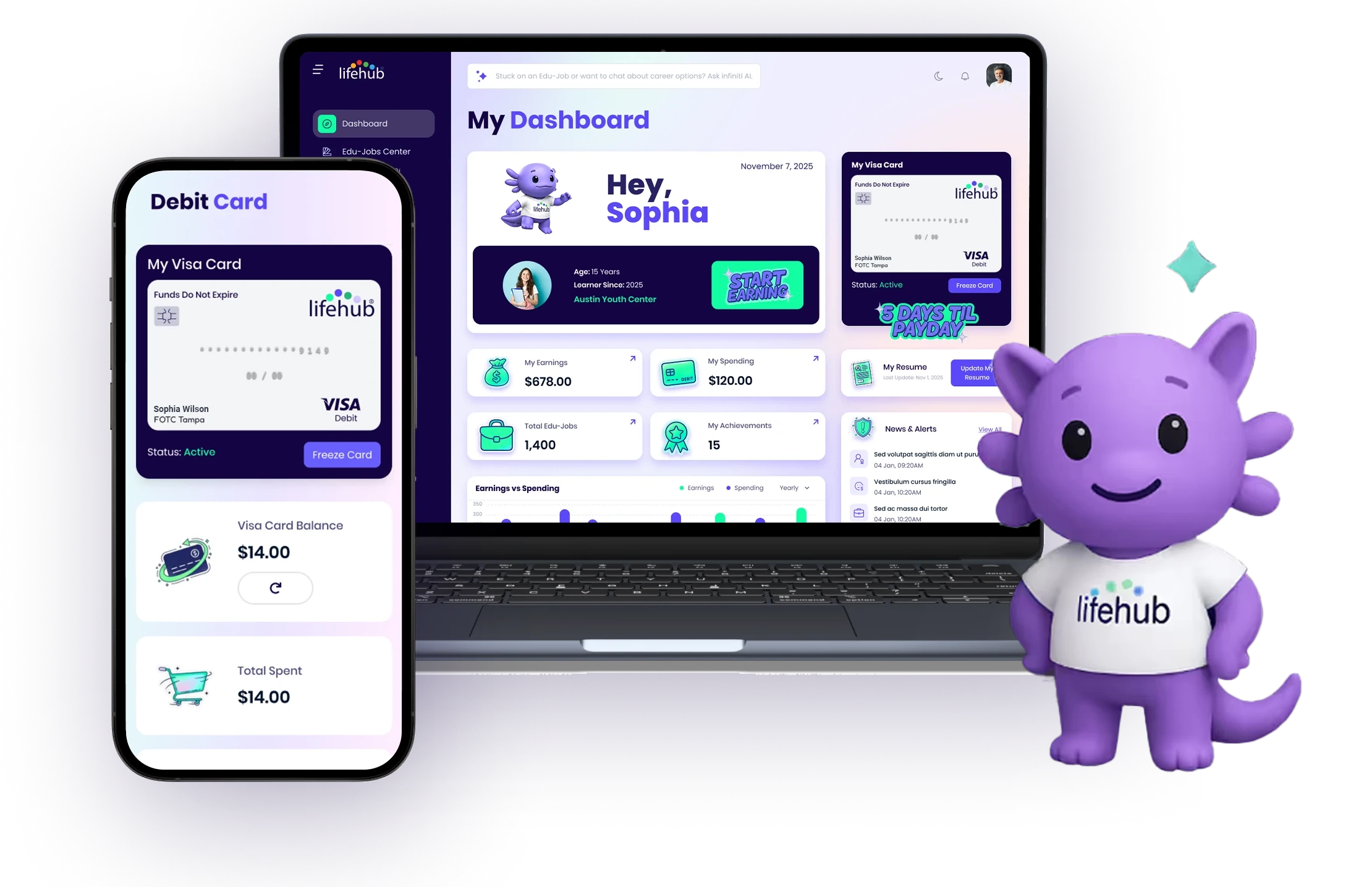
If you’re thinking about how to help young learners build real AI skills, it’s important to connect what they’re taught in class with hands-on, practical experience. We talked about how project-based learning, real-world applications, and building confidence through action can make all the difference. If you want your child or family to explore AI, digital literacy, and practical skills while earning real rewards, you might find See Life Hub for Kids and Families helpful. It’s a way for learners to grow through micro-learning tasks, build real skills, and see their progress add up in everyday life.


Related Content
Ready to Chat about Life Hub?
Whether you're parents, or a homeschool family, Life Hub is your partner to help you
raise super strong kids.

.svg)

.svg)


.svg)
.svg)

.svg)