The Sovereign Safeguard: Why the Macroeconomic Survival of the American Middle Class Demands a Scalable Solution Like Life Hub



The Erosion of the American Middle Class: A Systemic Crisis of Social Mobility
The structural integrity of the American middle class faces a profound crisis. Characterized by wealth depletion, stagnant productivity, and collapsing social mobility, this decline presents a pressing economic issue. Once the backbone of the U.S. economy, the middle class now struggles under the weight of rising living costs and an education system misaligned with the realities of modern work. A demographic study from the Brookings Institution reveals a disturbing trend: 20% to 50% of middle-class households can no longer afford basic necessities in their metropolitan areas.
This financial pressure is exacerbated by unequal wealth distribution. From 1989 to 2022, while the typical American family's wealth increased significantly, the middle class's share of national wealth plummeted, shrinking from 24% to just 8%. This indicates a massive transfer of wealth towards the upper echelons, where the wealth share for the top tier has soared from 26% to 54%.
Moreover, the core middle class has diminished in size—dropping from 36% of families in 1979 to a mere 31% in 2024. Essential upward mobility assets, including housing, healthcare, and education, have inflated dramatically, far outpacing median household income. In regions like Los Angeles, up to 57% of middle-class families struggle to afford basic living costs, a situation worsened by exorbitant housing prices and taxation.
The consequence of these economic struggles is a decline in absolute social mobility. Research led by economist Raj Chetty from Opportunity Insights indicates a severe shift in the American Dream. Only half of the children born in 1980 have surpassed their parents' income, compared to 90% of those born in 1940.
This decline is further mirrored in youth employment trends. The stark reduction in teenage work experience since the 1980s signals a lost "invisible curriculum" of soft skills critical for future work success. To explore potential solutions such as integrating learn-and-earn models, visit 21st Century Learning Skills.
The Economic Strain: A Deep Dive into Middle-Class Challenges
The American middle class, once the economic engine of the nation, is confronting unprecedented financial pressures. Rising living costs in areas like housing, healthcare, and education are outpacing income growth, leading to a gradual erosion of financial stability. According to a report by the Brookings Institution, a significant portion of middle-class households now struggles to meet basic living standards in metropolitan areas [source].
This disparity underscores a broader issue: while national wealth has grown, it is unevenly distributed. As inflation-adjusted wealth for typical families increased by over 100% from 1989 to 2022, the wealth share for the middle class plummeted dramatically. The lower-middle and core middle class, which once held 24% of the national wealth, now possess a mere 8%, exacerbating financial vulnerability.
The Cost of Social Mobility
Social mobility, a hallmark of the American Dream, is under severe threat. With housing, education, and healthcare costs skyrocketing, fewer families can afford assets that ensure upward mobility. For example, the significant rise in housing prices in cities like Los Angeles has rendered homeownership—a traditional means of wealth accumulation—unaffordable for many middle-class families.
This structural imbalance also impacts education. The inability to afford quality schooling diminishes future opportunities for children from middle-class backgrounds. A lower likelihood of attaining higher education naturally translates into restricted job prospects and stagnant wage growth, perpetuating a cycle of economic stagnation.
Electus Education: A Scalable Solution
To tackle these challenges, innovative solutions like Electus Education are vital. Electus aims to reconstruct the pathway to economic resilience for the middle class by integrating education with real-world financial tools. Their Life Hub platform empowers students to earn while they learn, aligning with John Dewey's experiential learning model, where engagement and active participation enhance learning outcomes [source].
Electus Education not only addresses educational inequities but offers a behaviorally informed model that connects learning to tangible rewards, fostering financial literacy and responsibility from a young age. This approach can potentially reverse the decline in social mobility and reinforce the structural integrity of the middle class by empowering future generations with the skills and financial acumen necessary to thrive.

The Role of Financial Education in Enhancing Economic Mobility
The financial education gap is a critical barrier facing the American middle class, limiting the potential for economic mobility and wealth accumulation. Many households, squeezed by rising costs and stagnant wages, lack the necessary skills to effectively manage and grow their finances. This absence of financial literacy can perpetuate cycles of poverty and limit access to upward mobility.
Research has shown that individuals with a strong financial education are better equipped to make informed decisions about saving, investing, and managing debt. According to the National Financial Educators Council, a lack of financial literacy costs Americans collectively over $246 billion annually. This staggering figure underscores the need for educational initiatives that incorporate financial literacy as a core component of school curriculums.
Life Hub offers a groundbreaking solution to this issue by integrating financial literacy into real-world learning experiences. Through the platform, students not only engage in educational activities but also earn real money, allowing them to practice effective money management from a young age. This approach, which translates efforts into tangible rewards, has proven to enhance motivation and comprehension in students, a benefit supported by studies conducted by behavioral economists like Roland Fryer.
Institutions like Electus Education can drive meaningful change by partnering with private enterprises and philanthropic organizations to embed financial literacy deeply into educational experiences. This collaboration could lead to the creation of scalable solutions that empower students across the nation, fostering a new generation capable of managing their finances with confidence.
Platforms like Life Hub embody this vision by offering tools that merge education with financial technology. These resources allow students to grasp financial concepts while earning and saving, thus equipping them for future economic participation and success.
For further exploration of the benefits of AI tools in education, consider visiting AI Literacy Builds Futures, a resource highlighting the transformative power of AI in enhancing educational outcomes.
The Behavioral Shift: Realigning Education with Economic Reality
As we examine the erosion of the American middle class, it's crucial to understand how traditional educational models contribute to this systemic crisis. The Life Hub initiative from Electus Education offers a revolutionary approach, designed to bridge the gap between academic learning and economic realities. By focusing on experiential learning, Life Hub ensures that students are not passive recipients of information but active participants in their own educational journey.
Transforming Learning into Earning
Life Hub's foundational concept is the "Edu-Job," which integrates real-world skills with classroom learning. This model is inspired by John Dewey's philosophy of learning by doing, ensuring students apply classroom knowledge to practical challenges. Unlike traditional methods, Life Hub's approach is built on the premise that the working is the learning, making each lesson a step toward economic empowerment.
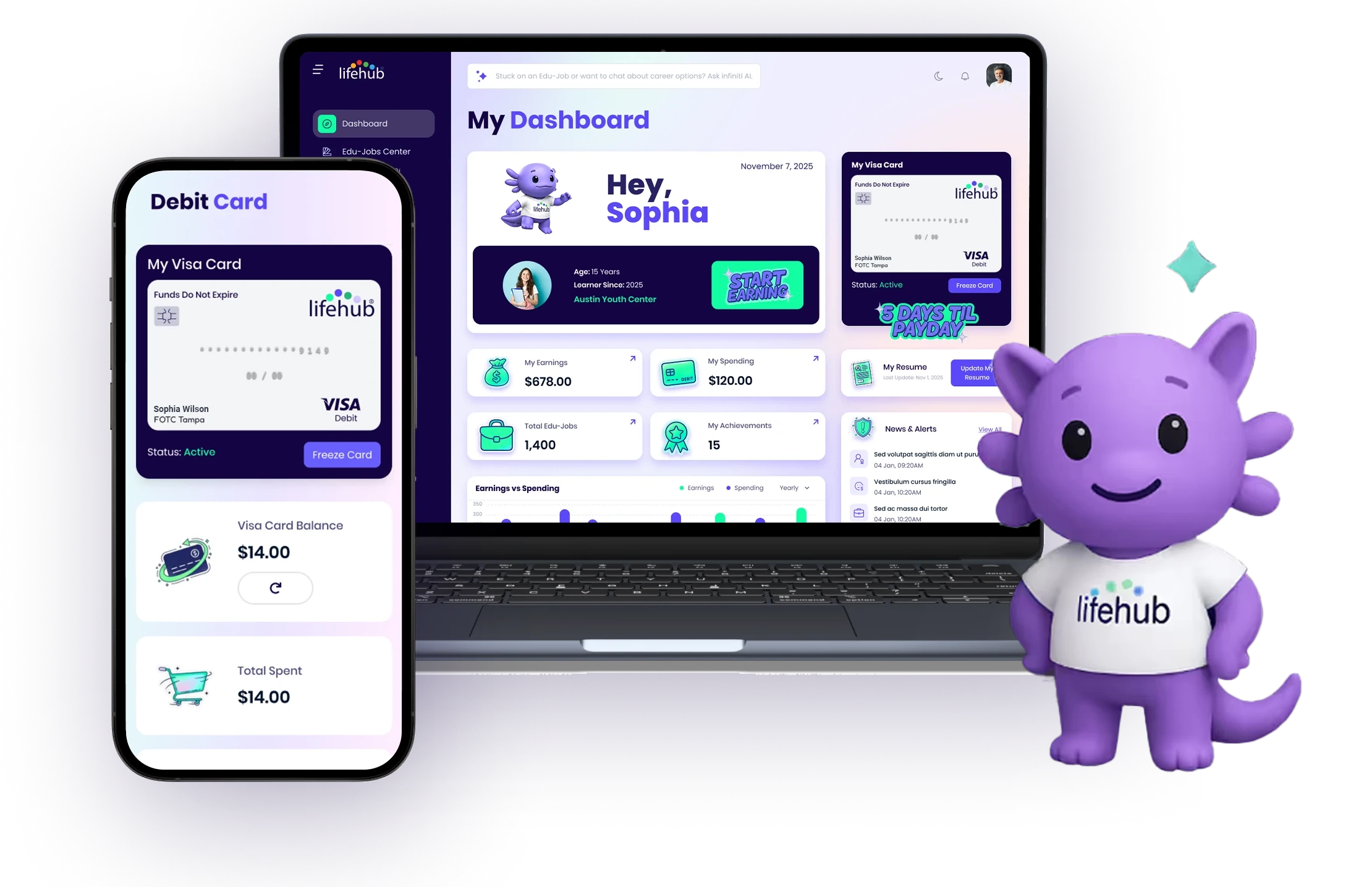
This methodology is not just theoretical. Students complete structured modules in financial literacy and entrepreneurship, gaining skills directly applicable to today's economy. By handling actual earnings through a Visa Rewards Card, they manage budgeting and saving, transforming these abstract concepts into concrete skills.
Building Economic Agency Through Direct Feedback
The platform's emphasis on real-time, tangible feedback differs significantly from traditional systems. Rather than deferring gratification, students receive immediate rewards for their efforts. This reinforces valuable behaviors like self-regulation and intrinsic motivation. Harvard economist Roland Fryer's research supports this, demonstrating that input-based incentives yield significant academic improvements.
According to studies, students participating in Life Hub's learn-and-earn model show a 66% boost in standardized cognitive testing scores. Such metrics highlight the program's effectiveness in fostering an active engagement model that outperforms passive learning frameworks.
Scaling a Sustainable Solution
Recognizing that the structural integrity of the American middle class is faltering, Life Hub's scalable solution can drastically alter educational and economic outcomes. This isn't merely about improving test scores; it addresses the larger issue of declining socio-economic mobility by equipping students with necessary life skills.
With strategic private investment and corporate partnerships, Life Hub is set to expand nationally. Aligning with the United Nations Sustainable Development Goals, Electus Education continues to address opportunity gaps, ensuring that economic participation isn't a privilege for the few but a reality for all.
For more information on Electus Education’s transformative initiatives, visit their AI Literacy Builds Futures blog.

Conclusion: Securing the Future of the American Middle Class
The macroeconomic stability of the American middle class hinges on innovative educational solutions that marry financial education with realistic work experiences. This is where Electus Education and platforms like Life Hub emerge as pivotal. By directly addressing the educational and economic gaps that have long plagued the middle class, these platforms are crafted to drive systemic change.
How Electus Education and Life Hub Lead the Way
Electus Education is not just another educational initiative; it is a revolutionary approach aligned with the demands of the 21st-century economy. By integrating work-based learning through its "Edu-Jobs" and connecting it to real-world finance with tools like the Pathward Visa Rewards Card, Electus creates an ecosystem where learning directly translates into earning. This blend of education and financial literacy is crucial in reshaping how students perceive work and education.
Successfully implementing such a scalable solution can prevent the further erosion of the middle class, enhancing social mobility while reinforcing core economic principles. By learning through doing, students foster essential skills and financial acumen, establishing a robust foundation for future success.
Take Action Now
If you are a stakeholder in education, finance, or public policy, consider the long-term impact of investing in educational platforms like Electus. The potential to rebuild the middle class and secure economic opportunities for future generations hinges on scalable solutions that bridge education with real-world financial and labor demands. To dive deeper into how these strategies can be implemented, explore the resources offered by Life Hub.
The success of such platforms not only sustains the middle class but also strengthens the entire economic infrastructure of the nation. Let’s take the cue from innovative precedents and apply integrated education and financial literacy to secure a brighter future for all Americans.


Related Content
Ready to Chat about Life Hub?
Whether you're parents, or a homeschool family, Life Hub is your partner to help you
raise super strong kids.

.svg)

.svg)


.svg)
.svg)

.svg)