Soft Skills Curriculum for Youth Success in 2026




Young people need more than academic knowledge to succeed. They need communication skills, teamwork ability, and emotional intelligence. A well-designed soft skills curriculum gives learners these capabilities through structured practice and real-world application. This approach helps bridge the gap between classroom learning and workplace expectations.
Why Soft Skills Matter More Than Ever
The modern workplace has changed dramatically. Employers now prioritize candidates who can collaborate effectively, adapt to change, and solve problems creatively. Research shows that 85% of job success depends on soft skills rather than technical knowledge alone.
Young people entering the workforce often struggle because they lack these foundational abilities. They may excel at technical tasks but find it hard to work in teams or communicate with clients. A soft skills curriculum addresses this gap by teaching practical competencies through direct experience.

What Makes Soft Skills Different
Unlike traditional subjects, soft skills can't be mastered through memorization. They require practice in real situations. A learner might understand the concept of active listening, but they need repeated opportunities to actually listen and respond thoughtfully.
The best programs build these skills through:
- Interactive scenarios where learners make decisions and see consequences
- Peer collaboration that requires negotiation and compromise
- Reflection exercises that help learners understand their own growth
- Real-world applications connected to actual career contexts
Core Components of an Effective Soft Skills Curriculum
A comprehensive soft skills curriculum should cover multiple competency areas. Each area connects to specific workplace and life situations that young people will encounter.
Communication and Presentation Skills
Communication forms the foundation of professional success. Effective communication training helps learners express ideas clearly, listen actively, and adjust their message for different audiences.
Key elements include:
- Verbal communication: Speaking clearly and confidently in various settings
- Written communication: Crafting professional emails, reports, and messages
- Nonverbal awareness: Understanding body language and tone
- Digital communication: Using appropriate channels and etiquette online
Young people need practice presenting ideas to groups, both in person and virtually. They should learn to structure arguments, use supporting evidence, and respond to questions professionally.
Collaboration and Teamwork
Most careers require working with others toward shared goals. Teamwork skills help learners contribute effectively while respecting diverse perspectives and managing conflicts constructively.
A structured soft skills curriculum teaches learners to navigate group dynamics, delegate tasks fairly, and support team members. These abilities transfer directly to workplace projects and community involvement.
| Teamwork Skill | Application | Practice Method |
|---|---|---|
| Active listening | Understanding others' viewpoints | Partner discussions with reflection |
| Conflict resolution | Managing disagreements productively | Role-play scenarios with feedback |
| Shared accountability | Meeting collective deadlines | Group projects with individual roles |
| Constructive feedback | Helping teammates improve | Peer review exercises |
Problem-Solving and Critical Thinking
Employers value people who can analyze situations, identify root causes, and develop practical solutions. These skills require both structured thinking and creative exploration.
Young people should learn to:
- Define problems clearly by gathering relevant information
- Generate multiple solutions through brainstorming and research
- Evaluate options based on feasibility and impact
- Implement decisions while monitoring results
- Adjust approaches when initial solutions don't work
Real-world scenarios make problem-solving training more effective. Learners might tackle budgeting challenges, plan events, or resolve customer service issues as part of their practical skills development.
Building Emotional Intelligence Through Practice
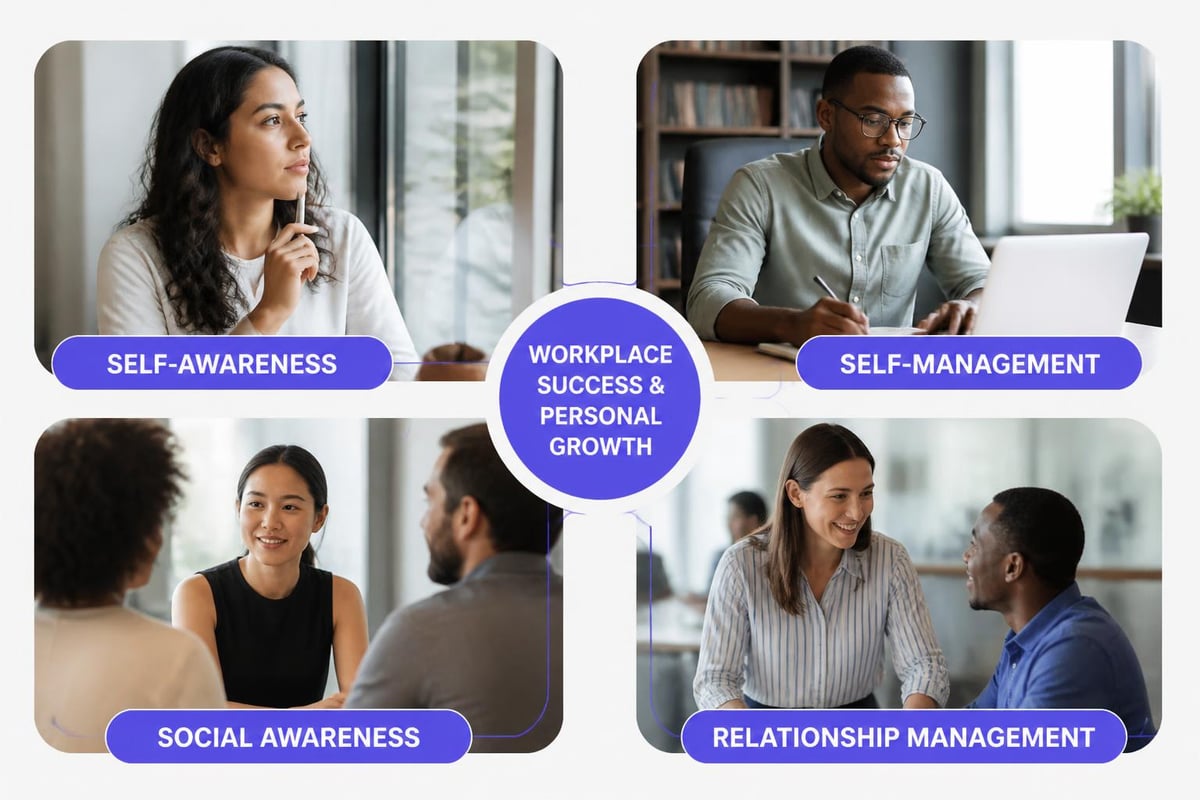
Emotional intelligence encompasses self-awareness, self-regulation, empathy, and social skills. These competencies help young people manage stress, build relationships, and navigate complex social environments.
Self-Awareness and Self-Management
Understanding your own emotions and reactions creates the foundation for professional behavior. A soft skills curriculum should help learners identify their triggers, recognize their strengths, and acknowledge areas for growth.
Self-management involves controlling impulses, maintaining focus, and adapting to changing circumstances. Young people can develop these abilities through:
- Reflection journals that track emotional responses to different situations
- Mindfulness exercises that build awareness of present-moment feelings
- Goal-setting activities that require planning and follow-through
- Stress management techniques applicable to deadlines and challenges
Social Awareness and Relationship Management
Recognizing others' emotions and responding appropriately strengthens both personal and professional relationships. Programs that integrate social and emotional learning give learners tools to read social cues and build positive connections.
Relationship management skills include:
- Building rapport with diverse personalities and backgrounds
- Showing empathy by validating others' experiences
- Managing boundaries between personal and professional interactions
- Resolving conflicts without damaging relationships
Designing Age-Appropriate Learning Experiences
A soft skills curriculum must match learners' developmental stages. What works for middle schoolers won't engage high school students preparing for careers.
Progressive Skill Development
Younger learners benefit from concrete scenarios and clear guidelines. They might practice introducing themselves, following workplace dress codes, or writing thank-you notes. These foundational skills build confidence for more complex interactions.
Older learners need sophisticated challenges that mirror real professional situations. They should practice:
- Negotiating project timelines with stakeholders
- Delivering presentations to decision-makers
- Managing team conflicts diplomatically
- Adapting communication styles for different audiences
Curriculum sequencing matters significantly. Skills should build on each other, with each new competency reinforcing previous learning.
Interactive Learning Methods
Passive instruction doesn't develop soft skills effectively. Learners need active participation through role-playing, simulations, and real projects.
Effective teaching methods include:
- Case studies that present realistic workplace dilemmas
- Peer teaching where learners explain concepts to classmates
- Video analysis of professional interactions with guided discussion
- Mentor partnerships connecting learners with working professionals
- Service projects that require planning and collaboration
Measuring Growth and Impact
Unlike standardized tests, soft skills assessment requires observing actual behavior in various contexts. A comprehensive soft skills curriculum includes clear benchmarks and multiple assessment methods.
Portfolio-Based Assessment
Portfolios let learners collect evidence of their growth over time. They might include:
- Reflection essays on challenging teamwork experiences
- Video recordings of presentations showing improvement
- Peer feedback from collaborative projects
- Self-assessments comparing current abilities to baseline skills
This approach helps learners see their own progress and identify areas needing more practice.
Rubrics and Behavioral Indicators
Clear rubrics define what proficiency looks like for each skill. A communication rubric might specify:
| Skill Level | Eye Contact | Clarity | Organization | Engagement |
|---|---|---|---|---|
| Developing | Minimal | Unclear points | Random order | One-way |
| Proficient | Consistent | Clear main ideas | Logical flow | Some interaction |
| Advanced | Natural | Precise language | Strategic structure | Active dialogue |
These tools help both instructors and learners understand expectations and track development objectively.
Connecting Skills to Career Readiness
A soft skills curriculum becomes more meaningful when learners see direct connections to their future careers. Career exploration activities should highlight which competencies matter most in different fields.
Industry-Specific Applications
Different careers emphasize different soft skills. Healthcare workers need exceptional empathy and communication. Engineers require strong problem-solving and teamwork. Marketing professionals depend on creativity and presentation abilities.
Youth financial education programs that integrate career readiness help learners understand these connections. They can explore various industries while developing transferable skills that apply across fields.
Work-Based Learning Opportunities
Real work experience accelerates soft skills development. Internships, job shadowing, and apprenticeships let learners practice professional behaviors with actual stakes.
Even simulated work environments provide value. Learners might:
- Run student enterprises that require customer service
- Complete paid micro-tasks that demand quality and deadlines
- Participate in community projects with real stakeholders
- Join mentorship programs connecting them to working professionals
Integrating Soft Skills Across Subject Areas
The most effective approach doesn't isolate soft skills in separate courses. Instead, it weaves these competencies throughout all learning experiences.
Math and Science Applications
STEM subjects offer natural opportunities for collaboration and problem-solving. Group lab experiments require teamwork and communication. Math projects can involve presenting findings to peers and defending solutions.
Research shows that early soft skills interventions in technical programs significantly improve both academic performance and team dynamics. Learners who develop communication and collaboration skills alongside technical knowledge perform better overall.
Language Arts and Social Studies
Writing assignments build communication skills when learners must consider audience and purpose. Debates develop argumentation and active listening. Historical analysis requires critical thinking about multiple perspectives.
Drama and creative subjects inherently teach valuable soft skills through performance, collaboration, and adaptive thinking.

Supporting Diverse Learners
A quality soft skills curriculum recognizes that young people develop at different rates and come from varied backgrounds. Inclusive design makes these essential competencies accessible to everyone.
Cultural Responsiveness
Communication norms vary across cultures. Eye contact, personal space, and directness mean different things in different contexts. Curriculum should acknowledge these differences and help learners navigate diverse environments respectfully.
Programs should:
- Include examples from multiple cultural perspectives
- Discuss how professional norms may differ from family expectations
- Practice code-switching appropriate to various settings
- Honor different communication styles while teaching workplace standards
Multiple Entry Points
Some learners excel at verbal communication but struggle with written expression. Others think critically but find group work challenging. Effective curriculum offers various pathways to demonstrate competency.
Micro-learning platforms can provide personalized skill-building that adapts to individual needs and pacing.
Motivating Sustained Engagement
Young people engage more deeply when they see immediate relevance and receive tangible recognition for their efforts. A soft skills curriculum should connect learning to real rewards and opportunities.
Intrinsic and Extrinsic Motivation
Building competence creates intrinsic motivation. When learners successfully resolve a team conflict or deliver a compelling presentation, they experience satisfaction that drives continued growth.
External recognition also matters. Cash rewards for completing learning tasks can increase engagement and help young people see direct value in skill development.
Combining both approaches works best:
- Recognition badges or certificates for skill milestones
- Public acknowledgment of growth and effort
- Leadership opportunities for those demonstrating proficiency
- Financial compensation for completing substantive projects
Real-World Consequences
Skills become more meaningful when they have actual impact. Learners who use communication skills to organize community service or employ teamwork to launch a small business understand why these competencies matter.
Projects with real stakeholders, deadlines, and outcomes create authentic motivation. Whether planning an event, creating content for an actual client, or solving a community problem, these experiences make abstract skills concrete.
Supporting Implementation for Educators
Teachers and parents need practical resources to deliver an effective soft skills curriculum. Comprehensive lesson plans and structured activities help educators without extensive training to facilitate meaningful learning experiences.
Ready-to-Use Resources
Quality programs provide:
- Detailed lesson plans with timing, materials, and facilitation tips
- Assessment rubrics that define skill levels clearly
- Reflection prompts that help learners process experiences
- Extension activities for learners ready for greater challenge
- Family connection guides that involve parents in skill development
These resources reduce preparation time while maintaining instructional quality.
Professional Development for Facilitators
Even with excellent materials, educators benefit from training in facilitation techniques. Soft skills instruction differs from traditional teaching because it requires creating safe spaces for practice and failure.
Effective professional development covers:
- Creating psychologically safe learning environments
- Facilitating difficult conversations about interpersonal challenges
- Providing constructive feedback that motivates growth
- Recognizing and addressing cultural differences respectfully
- Assessing subjective skills objectively and fairly
Future-Proofing Young People's Capabilities
The workplace continues to evolve rapidly. Technology changes job requirements, globalization increases diversity, and automation replaces routine tasks. The soft skills curriculum that prepares young people for 2026 and beyond must emphasize adaptability and continuous learning.
Lifelong Learning Mindset
Young people need to see skill development as ongoing rather than a fixed destination. A growth mindset helps them approach challenges as learning opportunities rather than threats.
Programs that build both technical and soft skills prepare learners to adapt as their careers evolve. They develop confidence in their ability to learn new competencies when situations demand them.
Digital Collaboration and Remote Work
Many young people will work in hybrid or fully remote environments. A current soft skills curriculum must address virtual communication, digital collaboration tools, and online professional presence.
Learners should practice:
- Running effective video meetings with clear agendas
- Collaborating on cloud-based documents asynchronously
- Building professional online profiles and networks
- Managing productivity and boundaries when working remotely
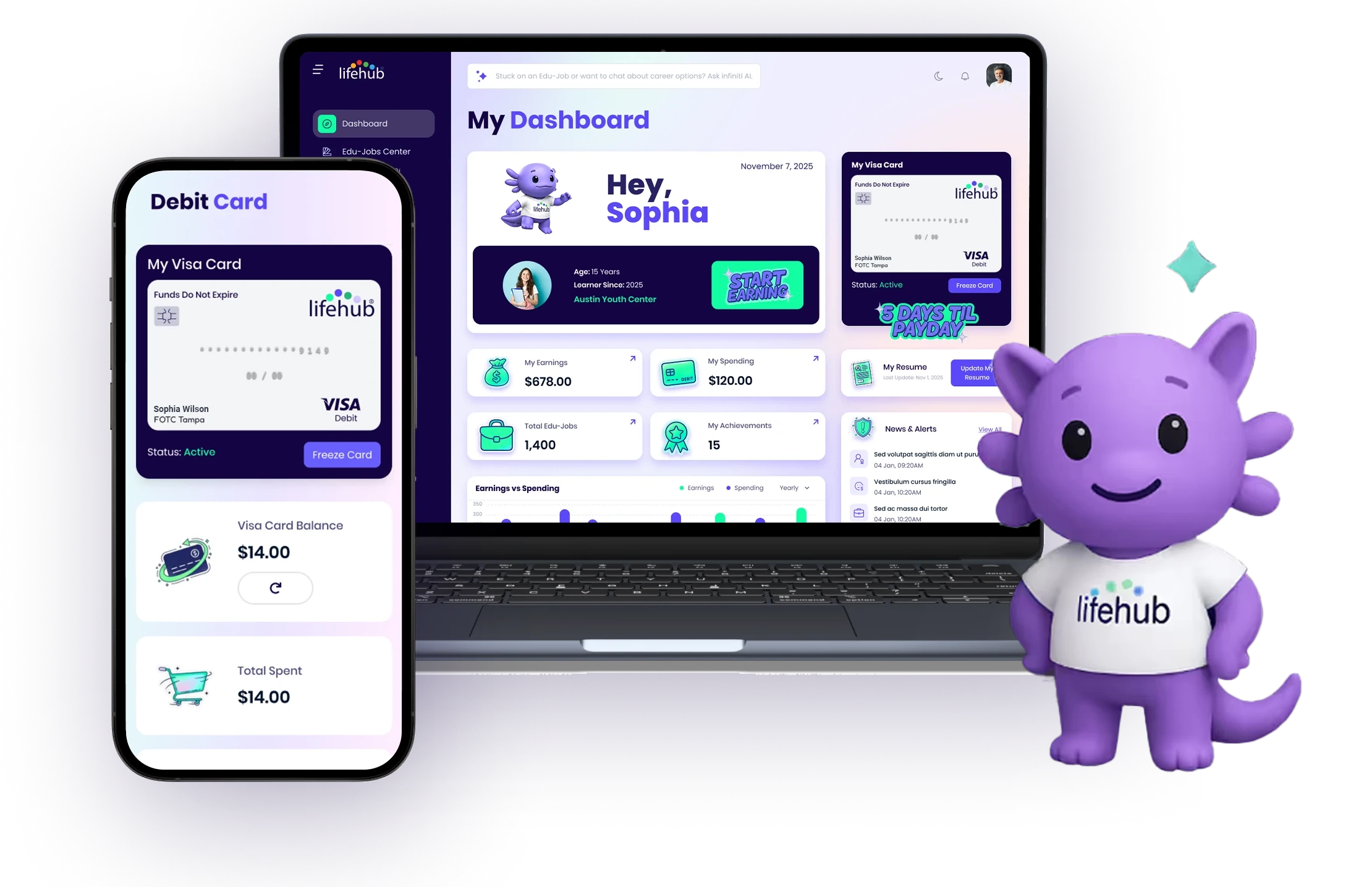
A thoughtful soft skills curriculum prepares young people for both immediate success and long-term adaptability in their careers and personal lives. By providing structured practice in communication, collaboration, problem-solving, and emotional intelligence, we give learners the tools they need to thrive in any environment. Life Hub helps young people develop these essential capabilities through paid micro-learning tasks that build real-world skills while earning actual rewards, creating a direct connection between effort, growth, and tangible outcomes.


Related Content
Ready to Chat about Life Hub?
Whether you're parents, or a homeschool family, Life Hub is your partner to help you
raise super strong kids.

.svg)

.svg)


.svg)
.svg)

.svg)