Parents today face a unique challenge. Their teens grow up in a digital economy where cash is rare and financial decisions happen with a tap or swipe. Teaching money management requires tools that match this reality. The greenlight debit card for teens has emerged as one option designed specifically to bridge the gap between traditional parenting guidance and modern financial technology. It offers a controlled environment where young people can practice spending, saving, and earning while parents maintain oversight.
What Makes the Greenlight Card Different
The greenlight debit card for teens isn't just a regular debit card with a younger user. It's designed from the ground up with financial education in mind. Parents control the card through a mobile app, setting spending limits for specific categories like groceries, gas, or entertainment. When a teen makes a purchase, parents receive instant notifications showing exactly where and how much was spent.
This level of transparency creates teaching moments. A teen who overspends on entertainment early in the month learns the natural consequence of having less money for other activities later. The card functions like training wheels, providing freedom within boundaries.
Core Features That Support Learning
Customizable spending controls form the foundation. Parents can:
- Set category-specific spending limits
- Block certain merchant types entirely
- Approve or decline transactions in real time
- Schedule automatic allowance transfers
- Create chore-based payment systems
FinanceBuzz provides an in-depth look at how these parental controls function in daily use. The flexibility means families can adjust the card's parameters as teens demonstrate responsibility and maturity.
Savings goals help teens visualize progress toward purchases they value. A teen saving for concert tickets or new headphones can watch their balance grow, connecting patience with reward. Some families match teen savings contributions to reinforce the power of compound growth.

How Greenlight Compares to Traditional Options
Many parents wonder whether a specialized teen card offers advantages over simply adding their child to an existing bank account. Greenlight's own comparison highlights several distinctions worth considering.
| Feature |
Greenlight Teen Card |
Traditional Bank Debit |
| Parental spending controls |
Category-specific limits |
Usually all-or-nothing |
| Transaction notifications |
Instant, with details |
May be delayed |
| Savings goals tracking |
Built-in with visual progress |
Requires manual tracking |
| Financial literacy tools |
Educational content included |
Typically none |
| Monthly fees |
$4.99-$14.98 depending on plan |
Often $0 for teen accounts |
The trade-off centers on cost versus control. Traditional bank accounts may charge no monthly fees but offer minimal educational support or parental oversight. The greenlight debit card for teens costs money but provides structure that helps young people develop habits.
For families prioritizing youth financial education, the investment may align with broader learning goals. The question becomes whether the teaching features justify the ongoing expense.
Real-World Applications for Teen Development
Financial capability extends beyond knowing how to budget. Teens need practice making decisions, experiencing consequences, and adjusting their approach. The greenlight debit card for teens creates a safe space for this experimentation.
Building Independence Gradually
A fifteen-year-old managing their first part-time job income faces new questions. How much should go to savings? What's reasonable to spend on social activities? Can they afford both new shoes and a birthday gift for a friend?
With Greenlight, parents can deposit job earnings directly to the card and discuss allocation together. The teen makes spending decisions independently but knows oversight exists. This balance mirrors the supervised independence teens need as they approach adulthood.
The card supports practical scenarios like:
- Calculating whether current savings cover a desired purchase
- Tracking spending patterns across different categories
- Adjusting habits when funds run low before the next allowance
- Comparing prices between stores for better value
- Setting aside money for planned future expenses
MyBankTracker's review emphasizes how these everyday transactions become teaching opportunities when parents and teens review spending together.
Connecting Effort to Earnings
Many families use Greenlight to pay for completed chores or tasks. When teens finish assigned work, parents approve payment through the app, and funds appear on the card. This creates a direct link between contribution and compensation.
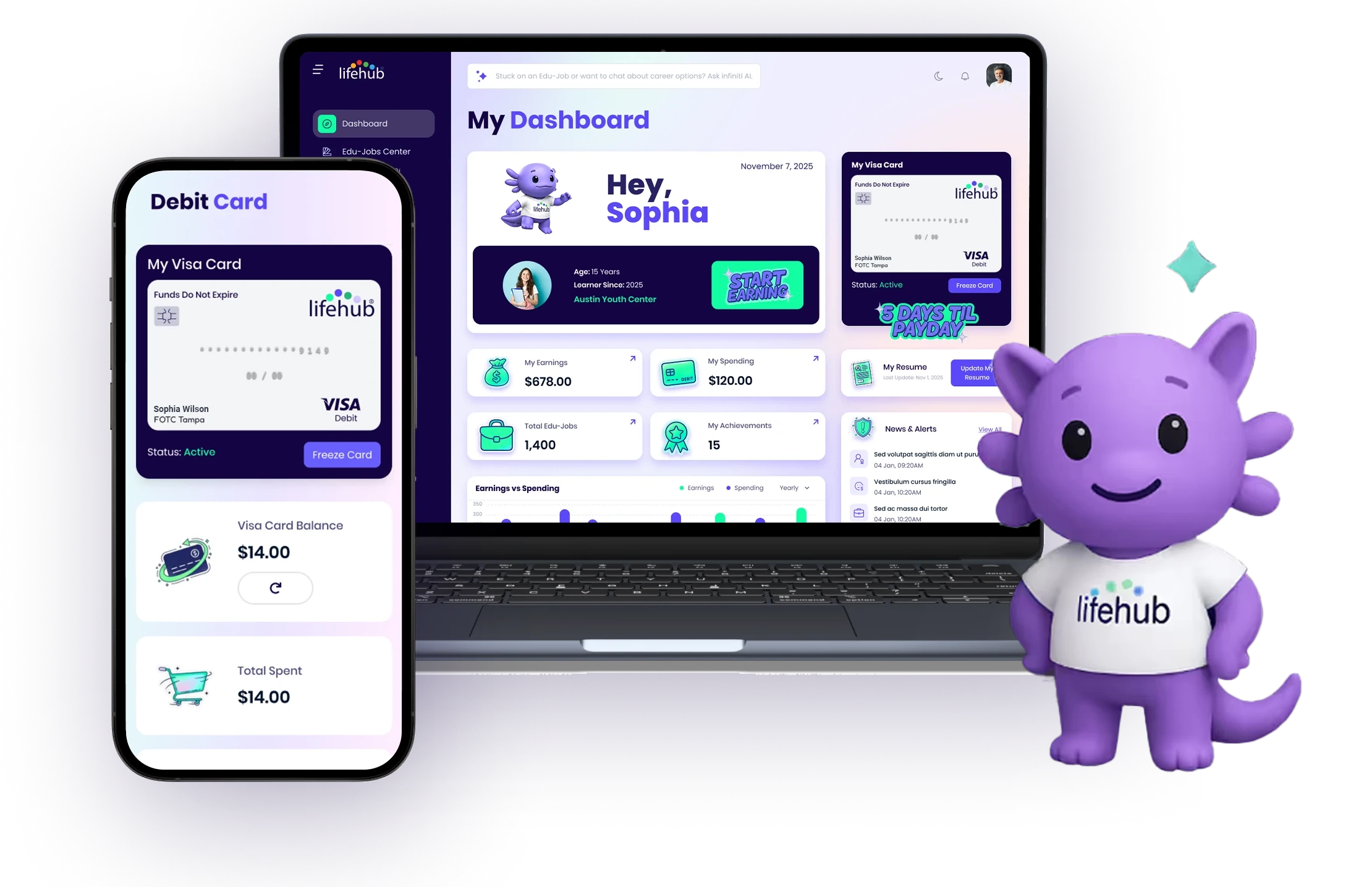
The approach aligns with how Life Hub structures learning through Edu Jobs, where young people earn real money for completing educational micro-tasks. Both systems recognize that teens respond powerfully to tangible rewards for their efforts.
Some families establish tiered payment systems. Basic household expectations remain unpaid responsibilities, but additional projects earn money. A teen might receive payment for washing the family car, organizing the garage, or helping younger siblings with homework. This teaches the difference between basic contributions to the household and work that merits compensation.

Addressing Common Parent Concerns
Any financial tool for young people raises questions about safety, cost, and actual educational value. Parents considering the greenlight debit card for teens often share similar concerns.
Security and Protection
Lost or stolen cards happen, especially with teens still developing organizational habits. Greenlight allows instant card freezing through the app. Parents can disable the card immediately, then unfreeze it when found or order a replacement if necessary. This responsiveness reduces anxiety about unauthorized use.
Fraud protection follows standard debit card protocols. The card functions as a reloadable debit card backed by a major network, offering the same purchase protections as adult cards. Teens aren't liable for fraudulent charges they didn't authorize.
Privacy concerns receive attention in the app's design. Parents see transaction details but not message histories or location tracking beyond purchase locations. The focus stays on financial activity rather than broader surveillance.
Cost-Benefit Analysis
Monthly fees range from $4.99 for basic service to higher tiers with additional features. For one child, that's roughly $60 annually at the basic level. Families with multiple teens pay extra per additional card.
Whether this represents good value depends on your family's priorities:
- Financial education matters to your household values
- Structured practice suits your teen's learning style better than abstract lectures
- Peace of mind about spending oversight justifies the cost
- Alternative approaches (cash allowances, shared bank accounts) haven't produced desired results
Finder's comprehensive review breaks down pricing tiers and helps families determine which level matches their needs. Some find the basic plan sufficient, while others value advanced features like investing accounts for older teens.
Integration with Broader Financial Education
The greenlight debit card for teens works best as one component of comprehensive money education, not a standalone solution. Cards and apps can't replace conversations about values, priorities, and long-term financial planning.
Supporting Curriculum and Learning Goals
Schools and homeschool families increasingly recognize financial literacy as essential. Programs teaching life skills often include personal finance modules covering budgeting, saving, and responsible credit use.
Greenlight provides practical application for these concepts. A teen learning about percentage-based budgeting in class can implement the 50/30/20 rule (needs, wants, savings) using their card's category controls. Theory becomes practice with real money and real consequences.
| Financial Concept |
Classroom Learning |
Greenlight Application |
| Budgeting |
Creating spending plans on paper |
Setting category spending limits |
| Saving |
Calculating interest and growth |
Tracking progress toward savings goals |
| Opportunity cost |
Discussing trade-offs |
Choosing between competing purchases |
| Delayed gratification |
Understanding future value |
Waiting until savings goal is met |
| Responsible spending |
Identifying needs vs wants |
Reviewing transaction history with parents |
Preparing for Adult Financial Responsibility
At eighteen, teens typically gain full access to credit cards, loans, and other financial products with lasting consequences. The habits and knowledge they develop beforehand shape their success or struggle with these tools.
Using the greenlight debit card for teens during high school years builds familiarity with digital payments, transaction tracking, and budget awareness. These skills transfer directly to managing checking accounts, credit cards, and eventually larger financial decisions like auto loans or apartment leases.
TechRadar's examination notes that teens who manage their own debit cards under supervision tend to ask more informed questions about finances than those who don't. This curiosity often leads to deeper learning about topics like credit scores, investment basics, and financial goal setting.

Making the Most of the Platform
Families who see the strongest results from Greenlight share common approaches. They treat the card as a teaching tool, not just a payment method.
Regular Money Conversations
Weekly or monthly reviews of spending create accountability and awareness. Parents and teens can open the app together, looking at transaction history and discussing patterns.
Questions that drive learning include:
- Which category did you spend most in this month?
- Were there any purchases you regret or would change?
- What's your progress toward your savings goal?
- Did anything surprise you about where your money went?
- What will you do differently next month?
These conversations matter more than the card itself. The technology facilitates discussion but doesn't replace it.
Adjusting Controls Over Time
As teens demonstrate responsibility, parents can gradually expand freedom. A fourteen-year-old might start with a $20 weekly allowance and strict category limits. By seventeen, they might manage a monthly budget with minimal restrictions.
This progression mirrors the natural development toward independence. The card grows with the teen, providing appropriate challenge and responsibility at each stage.
Connecting to Earning Opportunities
The greenlight debit card for teens becomes more meaningful when teens contribute to the money they manage. Beyond chore payments, families can encourage:
- Part-time employment with earnings deposited to the card
- Entrepreneurial projects like lawn care, tutoring, or online sales
- Educational earnings through platforms offering payment for learning tasks
- Gift money from relatives deposited instead of given as cash
When teens earn money, they typically spend more thoughtfully. The best debit cards for kids support this earning-to-spending connection through features that make deposits and tracking simple.
Alternatives and Complementary Approaches
Greenlight isn't the only option for teaching teen money management. Some families prefer different tools or combine multiple approaches.
Other Teen Banking Products
Several banks and fintech companies offer teen-focused accounts. Hancock Whitney Bank's partnership with Greenlight represents one hybrid approach, while other institutions provide proprietary solutions with varying features and fee structures.
Comparing options helps families find the right fit. Some prioritize no-fee accounts, others value specific educational features, and some prefer integration with their existing bank relationships.
Cash-Based Systems
Despite digital trends, some financial educators advocate for cash allowances, especially with younger teens. Physical money makes spending more tangible. Watching bills leave a wallet creates different awareness than swiping a card.
Families might use both approaches. Cash for daily spending teaches tactile money awareness, while a debit card handles online purchases and provides digital tracking practice.
Earned Income Programs
Platforms that pay young people for educational achievement or skill development offer another dimension. Life Hub's approach to youth financial education combines learning with earning, creating motivation through real compensation for completed educational tasks.
When teens earn money through verified learning rather than just chores, they connect education to income. This builds understanding that knowledge and skills translate to financial opportunity.
Practical Setup and Daily Use
Getting started with the greenlight debit card for teens involves straightforward steps, though families should plan for an adjustment period.
Initial Account Setup
Parents download the app and create an account, providing standard personal and payment information. The subscription begins immediately, with fees charged monthly.
Teen profiles are added next, with each child receiving login credentials. Parents can manage multiple children from one account, though additional cards increase the monthly cost.
Card activation happens when the physical card arrives by mail. The process takes about a week from ordering to having a functioning card.
Establishing Family Guidelines
Before handing over the activated card, families benefit from discussing expectations:
- What the card can and cannot be used for
- Weekly or monthly allowance amounts
- Required savings percentages
- Chore or task payment systems
- Consequences for overspending or unauthorized purchases
Clear guidelines prevent confusion and create shared understanding. These conversations often reveal different assumptions between parents and teens about money.
Monitoring Without Micromanaging
Parents face a balance between oversight and autonomy. Checking every transaction immediately after it happens may feel intrusive and defeat the purpose of building independence.
Many families establish a rhythm where parents review transactions weekly during scheduled money conversations rather than constantly monitoring. This approach respects privacy while maintaining accountability.
Advanced Features for Older Teens
As teens approach college age, Greenlight offers features that bridge to adult financial products.
Investment Accounts
Higher-tier plans include the ability to buy and sell stocks. Parents maintain approval authority but teens research companies, make requests, and learn about market performance.
This introduces investing concepts years before many adults first encounter them. A seventeen-year-old who has watched stock values rise and fall understands market volatility better than someone learning these lessons at thirty.
Savings Account Interest
Money in Greenlight savings earns interest, though rates vary. While not competitive with high-yield savings accounts, the feature introduces the concept of money growing over time without additional effort.
Teens can watch their savings goals increase slightly each month from interest, reinforcing the benefit of letting money sit rather than spending immediately.
Financial Literacy Content
The app includes educational articles, quizzes, and videos about money topics. Content covers budgeting, credit scores, debt management, and other essential concepts.
Parents can assign specific lessons or suggest topics based on questions their teen asks. This integrated learning supports financial education curricula families may use elsewhere.
Long-Term Impact on Financial Habits
The greenlight debit card for teens aims to shape habits that persist into adulthood. While research on long-term outcomes remains limited given the product's relatively recent introduction, early indicators suggest positive effects.
Teens who manage their own money with parental guidance report feeling more confident about financial decisions. They develop awareness of spending patterns and recognize emotional triggers for impulse purchases. These insights prove valuable when managing larger budgets later.
Parents notice teens asking better questions about family finances, college costs, and career earnings. The card often sparks broader interest in financial topics that might otherwise seem abstract or boring.
Most importantly, teens learn that mistakes with money aren't catastrophic when caught early. A fifteen-year-old who overspends their monthly allowance and runs out of money for three weeks learns a lesson that costs nothing but temporary inconvenience. That same mistake at twenty-five might mean overdraft fees, missed bill payments, or credit damage.
Teaching teens to manage money requires tools that match their digital reality while building timeless financial skills. The greenlight debit card for teens offers one structured approach to this challenge, providing supervised independence that grows with your young person's capability. For families seeking comprehensive financial education, Life Hub extends this learning through paid educational tasks that help young people build money skills, career readiness, and real-world capability while earning deposits to their own debit card. When effort connects directly to earnings and learning translates to tangible rewards, financial education becomes something young people experience rather than just study.






.avif)















.png)

.svg)

.svg)


.svg)
.svg)

.svg)