From Screen Time to Skill Time: How Phygital and Monetized Learning Unlocks the Potential of Neurodivergent Minds




Unlocking New Learning Approaches for Neurodivergent Youth
In today's digital era, educational challenges are amplified for children diagnosed with ADHD, autism, or dyslexia. Traditional schooling, with its emphasis on prolonged sitting, verbal instruction, and deferred grading, can overwhelm neurodivergent learners. These children often experience sensory overload and emotional frustration, making conventional learning methodologies less effective.
Fortunately, advancements in cognitive science and educational technology offer promising alternatives. Phygital (physical-digital) learning models, combined with monetized, input-oriented token economies, are revolutionizing the educational landscape. This approach is particularly beneficial for neurodivergent children, as it aligns with their unique cognitive processes.
The Role of Life Hub®
At the forefront of this innovative shift is Life Hub®, a platform transforming education for youth aged 6-18. By merging physical activities with interactive digital learning, Life Hub creates a supportive environment tailored for neurodivergent minds. Through immediate reinforcement and engaging experiences, it shifts the focus from screen time to skill-building.
This platform not only addresses educational barriers but also taps into the neurobiology of motivation. Conventional rewards often fall short for children with ADHD due to their specific neurotransmitter needs. Immediate, tangible rewards provided by Life Hub's "learn-to-earn" model effectively bridge this gap, enhancing motivation and engagement in educational tasks.
Why Traditional Rewards Miss the Mark
Research has shown that neurodivergent brains, especially those with ADHD, have a baseline dopamine deficit. Dopamine plays a crucial role in regulating motivation and reward anticipation. For these students, delayed rewards, such as grades or academic recognition at the semester's end, do not stimulate the necessary neurobiological response for consistent task initiation.
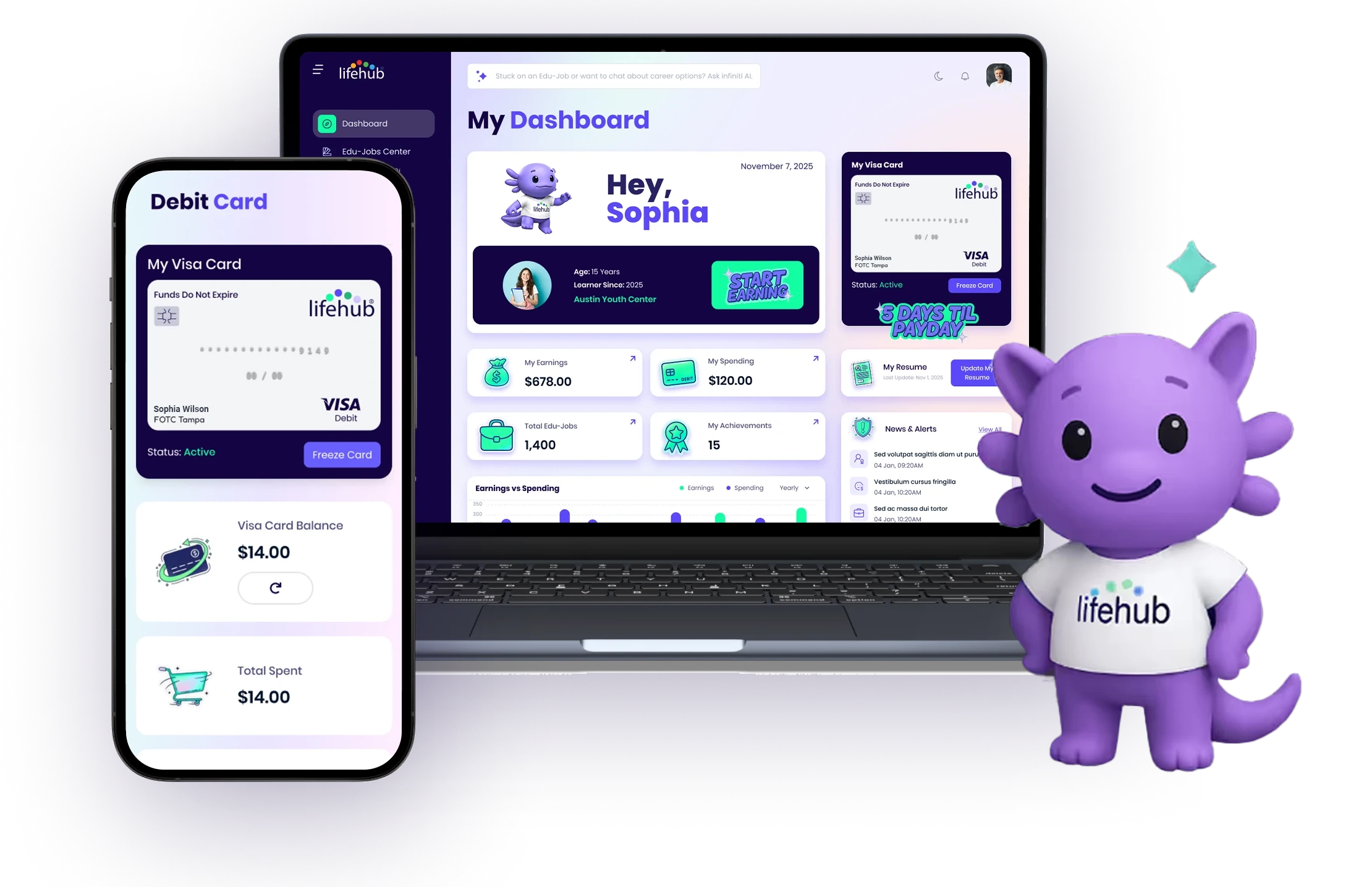
Life Hub’s monetized model tackles this issue by transforming educational tasks into financially rewarding opportunities. For example, as children complete bite-sized tasks called "Edu-Jobs," they earn virtual tokens instantaneously. These tokens are not just abstract points; they translate into real-world perks, including cash rewards and gift cards, scheduled for redemption during structured payday events.
For a deeper understanding of these approaches, explore our insights on 21st Century Learning Skills.
By integrating immediate rewards with real-world application, Life Hub reduces anxiety and enhances motivation, empowering neurodivergent youth to transform their educational journey from screen time into skill time.
For further insights, studies like those conducted by Harvard economist Roland Fryer highlight the effectiveness of rewarding learning inputs over outcomes, supporting the efficacy of models like Life Hub. According to these findings, such approaches substantially improve focus and academic performance, underpinning the shift towards phygital and monetized learning methods.
Transforming Traditional Education: The Role of Phygital Learning
The traditional schooling system often demands a one-size-fits-all approach, which can be challenging for neurodivergent students. Children with ADHD, autism, or dyslexia may struggle to adhere to conventional educational practices due to their unique cognitive processes. This is where phygital learning offers a transformative solution, merging physical and digital experiences to create a more inclusive educational environment.
Phygital Learning in Practice
Phygital learning transforms the educational experience by blending digital and physical activities into a cohesive learning journey. The Life Hub® platform exemplifies this model through its innovative programs like Life Fix™, Life Eco™, and Life Shop™. These programs integrate real-world tasks with digital feedback, allowing neurodivergent learners to engage more fully. For instance, Life Eco™ encourages environmental stewardship by guiding students to identify plant and animal species, fostering a connection with nature while earning rewards.
The Science Behind Phygital Engagement
Research supports the effectiveness of integrated learning experiences, especially for students with learning differences. According to a study in Frontiers in Psychology, tangible user interfaces (TUIs) significantly enhance cognitive function in autistic children by offering concrete interactions that reinforce learning. By engaging the whole body, phygital environments help reduce sensory overload, making tasks more manageable and enjoyable.
Real-World Applications
The Life Shop™ program, for example, turns mundane tasks like shopping into financial literacy exercises. Neurodivergent students learn to scan products, calculate costs, and manage budgets, essential skills for real-world success. Such lessons are more impactful than passive screen time, as they involve active participation and immediate feedback, crucial for maintaining engagement among neurodivergent learners.
Enhancing Learning Outcomes
By adopting phygital learning methods, educators can unlock the potential of neurodivergent minds. With platforms like Life Hub®, these methods offer an alternative that not only aligns with cognitive science but also provides immediate rewards through token economies, fostering motivation and reducing task avoidance.
Explore how AI and phygital learning are reshaping education by visiting our detailed blog AI Curriculum for more insights.

Monetizing Learning: Turning Skills into Tangible Rewards
In the realm of neurodivergent education, traditional systems often fall short. However, monetized learning approaches offer promising alternatives. Platforms like Life Hub embody this shift by incentivizing skills development with immediate rewards, creating an engaging educational experience.
The principle behind monetized learning is simple yet profound: learners earn tokens through completing tasks, transforming effort into a currency they can appreciate. This approach counteracts the dopamine deficit often encountered in ADHD and other neurodivergent conditions. By providing instant, tangible rewards, platforms like Life Hub ensure that motivation doesn't wane during the learning process.
Immediate Reinforcement: A Key to Engagement
Immediate reinforcement through token rewards provides crucial motivation. Research indicates that dramatic increases in engagement can occur when learners are quickly rewarded. According to studies in behavioral economics, immediate rewards can boost focus by more than 60% and significantly enhance learning retention.
These findings align with Life Hub’s method of integrating "Edu-Jobs"—bite-sized tasks that offer instantaneous rewards. Upon completion, tokens are recorded on a digital dashboard and can be redeemed for real-world items. This system transitions the abstract nature of learning into something concretely rewarding, making the process more tangible for young learners.
Enhancing Financial Literacy
Monetized learning also fosters financial literacy from a young age. As users of Life Hub earn and manage tokens, they gain a practical understanding of money management. This early exposure is valuable not only for neurodivergent children but for all young learners navigating today's economy.
For further insights into how technology enhances educational outcomes, explore Infiniti AI Tools. This tool, integrated with platforms like Life Hub, ensures personalization and accessibility, adapting lessons to each user’s pace for optimized learning.
By strategically incorporating monetized learning, educators and parents provide more than just academic education. They offer a foundation for life skills, equipping neurodivergent learners with the tools to thrive both in and out of the classroom. This approach not only transforms screen time into skill time but also ensures that learning becomes a rewarding and enriching journey for all students.
Enhancing Focus and Engagement Through Phygital Motivation
By shifting from vague, distant rewards to tangible, immediate reinforcement, educators empower neurodivergent learners to stay motivated and engaged. A recent single-subject study in Indonesia demonstrated that applying a structured token economy for a child with inattentive ADHD raised their attention span from under 5 minutes to approximately 7–8 minutes during learning tasks, with improved task completion that persisted even after reinforcements stopped Journal of Disability Studies in Education and Sport.
Another quasi-experimental intervention reported for an 8-year-old student diagnosed with ADHD found on-task behavior extended dramatically—from roughly 1–2 minutes at baseline to about 9 minutes at follow-up once token economy was in place Psikobuletin. These findings provide concrete examples of how timely rewards—central to the Life Hub “learn‑to‑earn” model—can reduce executive overwhelm by creating bite-sized wins that build confidence and momentum.
Meanwhile, Life Hub’s phygital approach leverages Tangible User Interfaces (TUIs) to anchor learning in sensory experience. In a controlled study comparing digital storytelling with and without TUIs, autistic children engaging with multisensory tangible elements showed greater comprehension and recall than peers using traditional illustrated books PMC (PubMed Central). Similarly, a recent experimental design guideline for children with dyslexia showed that a TUI prototype—“Tangibell”—improved spelling and letter recognition when compared against non-tangible methods International Journal of Information and Learning Technology.
By combining non-screen-based interaction with immediate reward, the platform’s **phygital reinforcement loop** not only enhances cognitive processing but also reduces screen fatigue and sensory overload. Parents and educators who integrate such methods report smoother transitions into focused work and higher persistence, especially when tokens map onto real-world privileges or resources.
In practice, caregivers can apply these insights by pairing simple physical tasks—like sorting laundry into categories or measuring ingredients for a recipe—with a token system that delivers a visible reward upon completion. This mirrors Life Hub’s design: “Edu‑Jobs” that bridge physical activity with digital tracking, instantly acknowledge success, and consistently reinforce progress. Over time, this structured, embodied routine helps neurodivergent learners build resilience, making skill time feel less like a chore and more like a natural, rewarding rhythm of achievement.

Unlocking Potential: Key Takeaways
Embracing the "phygital" approach marks a transformative step toward inclusive education for neurodivergent learners. By offering a blend of physical activities and digital tools, Life Hub® effectively caters to the unique needs of children with ADHD, autism, and dyslexia. This dual approach not only enriches learning experiences but also fosters an environment where neurodiverse minds can flourish.
A critical aspect of this methodology is the focus on immediate, tangible rewards. Unlike traditional educational approaches that emphasize delayed gratification, Life Hub’s "Learn & Earn" model provides instant reinforcement. This design is especially vital for children with ADHD, who benefit from immediate dopaminergic feedback to stay engaged and motivated. By bridging the reward gap, Life Hub helps establish a consistent habit of success.
Empowering Parents and Children Alike
Parents often carry the cognitive load of managing their child's education. Through Fini AI™, Life Hub eases this burden by providing personalized guidance, adjusting learning difficulty in real time, and offering accessibility tools. This stewardship allows parents to focus on celebrating milestones instead of managing logistics. The platform’s comprehensive analytics ensure parents remain informed about progress without being overwhelmed.
Life Hub's commitment to engaging the whole body in learning is pivotal. Features like Life Fix™, Life Eco™, and Life Shop™ offer vibrant, multisensory learning experiences that extend beyond traditional screens. These modules transform ordinary tasks into educational opportunities, enabling children to develop practical skills while earning rewards.
Actionable Steps Forward
For families and educators seeking a more engaging, effective educational experience that aligns with the needs of neurodivergent learners, transitioning from screen time to skill time is crucial. By integrating phygital learning with a monetized reward system, Life Hub presents a feasible solution. This innovative platform not only supports academic growth but also develops essential life skills in an empowering way.
To begin implementing these strategies and provide neurodivergent minds with the support they deserve, explore the resources available at Life Hub. This adaptive ecosystem offers the tools and support necessary to unlock the full potential of every learner.


Related Content
Ready to Chat about Life Hub?
Whether you're parents, or a homeschool family, Life Hub is your partner to help you
raise super strong kids.

.svg)

.svg)


.svg)
.svg)

.svg)