From Piggy Banks to Paychecks: How Financial Literacy Shapes Career Success




In today’s competitive job market, we often focus on developing technical skills and industry knowledge to advance our careers. However, there’s a crucial element that’s frequently overlooked: financial literacy. Let’s explore how the financial skills taught by programs like Life Hub can lead to more successful and satisfying careers.
The Career Impact of Financial Literacy
Research consistently shows that early financial education leads to better career outcomes. A study cited by Cambridge University Press & Assessment indicates that early financial education makes individuals more likely to create successful careers and less likely to be unemployed. This powerful link between financial literacy and career success underscores the importance of programs like Life Hub.
How Financial Literacy Boosts Careers
1. Better Decision-Making Skills
Financial literacy isn’t just about managing money—it’s about making informed decisions. These decision-making skills translate directly to the workplace, helping individuals navigate career choices more effectively.
2. Entrepreneurial Mindset
The comprehensive approach of Life Hub, which includes entrepreneurship education, aligns with research showing that financially literate individuals are more likely to pursue entrepreneurial ventures. This entrepreneurial spirit can lead to innovative career paths and wealth creation opportunities.
3. Improved Negotiation Skills
Understanding personal finance empowers individuals to better assess their market value. This knowledge translates into more effective salary negotiations, potentially leading to higher earning potential throughout their careers.
4. Enhanced Job Performance
Financial stress can significantly impact workplace productivity. According to FINRA, 60% of American adults feel anxious about their personal finances. By reducing this financial stress through education, employees can focus more on their work, leading to better job performance and career advancement opportunities.
5. Long-Term Career Planning
Financial literacy promotes long-term thinking and planning. This skill set is crucial for career development, enabling individuals to make strategic decisions about job changes, further education, or career pivots.
The Life Hub Advantage
Life Hub’s innovative approach to financial education is particularly well-suited to fostering career success. Here’s how:
Real-World Experience Through Edu-Jobs
The edu-jobs program offered by Life Hub provides young people with real-world earning experiences. This aligns with research by Bowen & Kensinger (2017), which found that participants compensated with cash performed better on tasks compared to those given course credit. By combining learning with earning, Life Hub prepares students for the realities of the working world.
Comprehensive Financial Education
Life Hub’s curriculum covers a wide range of financial topics, from budgeting to investing. This comprehensive approach ensures that young people are well-equipped to handle various financial scenarios they may encounter in their careers.
Technology Integration
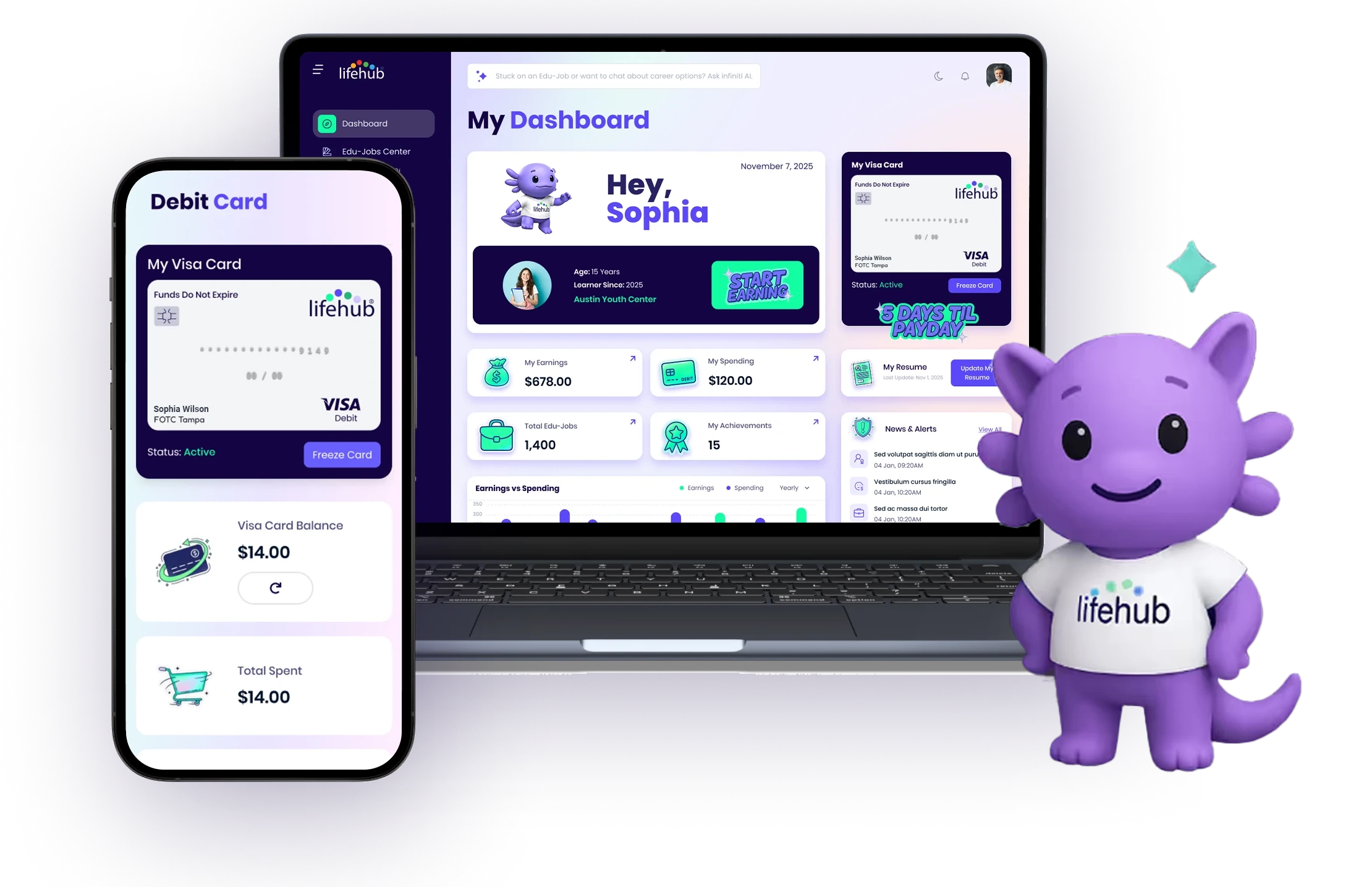
In today’s digital economy, understanding how to manage money online is crucial. Life Hub’s use of a Visa rewards card for managing earnings from edu-jobs provides valuable experience with digital financial tools, a skill increasingly important in many careers.
The Bigger Picture: Financial Literacy and Economic Mobility
The impact of financial literacy on careers extends beyond individual success. A study by Ebert et al. (2001) analyzing a Tennessee welfare program found that providing cash incentives for educational milestones showed potential in motivating faster learning progress. This suggests that financial literacy programs like Life Hub, which reward educational achievements, can play a crucial role in promoting economic mobility and career advancement.
Conclusion: Investing in Financial Literacy for Career Success
The evidence is clear: financial literacy is a powerful tool for career development. By equipping young people with financial knowledge and skills, we’re not just helping them manage their personal finances—we’re providing them with a foundation for professional success.
Programs like Life Hub are at the forefront of this important work, combining financial education with practical experience to prepare the next generation for thriving careers. As we continue to invest in financial literacy, we can look forward to a future workforce that is not only financially savvy but also more prepared for the challenges and opportunities of the modern economy.
Remember, every time a young person learns to budget, invest, or make informed financial decisions, they’re not just managing money—they’re building the skills that will shape their future careers.


Related Content



Ready to Chat about Life Hub?
Whether you're parents, or a homeschool family, Life Hub is your partner to help you
raise super strong kids.

.svg)

.svg)


.svg)
.svg)

.svg)