Opening a bank account for your teenager marks an important step in their financial education journey. Many parents turn to established banks when looking for safe, reliable options. Chase offers several products designed specifically for young people, making the chase debit card teenager conversation one worth having with your family. Understanding what these accounts offer can help you make an informed choice that supports your teen's growing independence while keeping appropriate guardrails in place.
What Chase Offers for Teen Banking
Chase provides two main account types aimed at younger customers. Each serves different age ranges and comes with distinct features.
Chase First Banking℠
Chase First Banking℠ targets children aged 6 to 17. This account gives parents full oversight while allowing kids to practice basic money management. The account includes no monthly service fees and connects directly to a parent's existing Chase account.
Parents can set spending limits, receive transaction alerts, and lock the card through the Chase Mobile app. Kids get their own debit card and can track their balance independently. The account teaches fundamental concepts like deposits, withdrawals, and spending choices.
Chase High School Checking℠
For teenagers aged 13 to 17, Chase High School Checking℠ offers more independence. This account waives monthly fees until the account holder turns 19. It provides standard checking features including mobile check deposit, bill pay, and access to Chase's extensive ATM network.
The account transitions smoothly into a standard Chase checking account when the teen reaches adulthood. Parents can maintain oversight through linked accounts but teens get more autonomy in managing their money.

Key Features of a Chase Debit Card for Teenagers
When evaluating a chase debit card teenager option, several features stand out as particularly valuable for families.
Security and Control Options
- Instant card locking through the mobile app
- Customizable spending limits by category
- Real-time transaction notifications
- Fraud protection with zero liability
Money Management Tools
- Balance tracking and transaction history
- Spending insights and category breakdowns
- Savings goals and automatic transfers
- Mobile deposit for checks and cash
Access and Convenience
- Over 16,000 Chase ATMs nationwide
- No fees at Chase ATMs
- Fee-free transactions at Chase branches
- Apple Pay and Google Pay compatibility
The combination of oversight and independence makes these accounts practical for families at different stages. Parents can gradually reduce monitoring as their teen demonstrates responsible habits.
How Chase Compares to Other Teen Debit Cards
The banking market for young people has expanded significantly. Comparing debit cards for teens reveals a range of approaches and pricing structures.
| Feature |
Chase First Banking |
Traditional Banks |
Digital-Only Banks |
Prepaid Cards |
| Monthly Fee |
$0 |
$3-$10 typical |
$0-$5 |
$5-$10 |
| Parental Controls |
Robust |
Limited |
Extensive |
Moderate |
| Physical Branches |
4,700+ locations |
Varies |
None |
Limited |
| Financial Education |
Basic |
Minimal |
Strong |
Variable |
| Earning Opportunities |
None |
None |
Some offer tasks |
None |
Chase's strength lies in its established infrastructure and branch network. Families who value in-person banking access may prefer this over digital-only alternatives. However, Chase accounts don't include built-in educational content or earning opportunities.
Several banking products for kids and teens now incorporate learning features directly into their platforms. This integration helps young people understand concepts while using their accounts daily.
Teaching Money Skills Through Teen Banking
Simply handing a teenager a debit card won't automatically build financial competence. The account becomes a teaching tool when parents actively use it for lessons.
Starting Conversations About Spending
Review transactions together weekly when your teen first gets their chase debit card teenager account. Ask open questions about their choices rather than lecturing. "What made you decide to spend money on that?" works better than "Why did you waste money?"
Young people learn best through reflection on real experiences. A purchase they regret teaches more than a lecture about budgeting. Use the transaction history to identify patterns and discuss alternatives.
Setting Up Savings Goals
Most Chase accounts allow goal setting within the mobile app. Help your teen identify something they want to save for, whether it's a gaming console, concert tickets, or college expenses.
Break larger goals into smaller milestones. Saving $500 feels overwhelming, but saving $50 ten times seems achievable. Celebrate progress to reinforce the habit.
Understanding Fees and Consequences
While Chase teen accounts avoid many common fees, certain situations still trigger charges. Overdraft protection, out-of-network ATM use, and international transactions can cost money.
Review the fee schedule together when opening the account. If your teen encounters a fee, treat it as a learning moment rather than simply reimbursing them. Understanding that mistakes have consequences builds better long-term habits.

Practical Steps to Open a Chase Account for Your Teen
The process of opening a chase debit card teenager account requires preparation from both parent and child.
What You'll Need
- Parent's government-issued ID
- Teen's Social Security number
- Proof of teen's identity (birth certificate or passport)
- Parent's existing Chase account or new account setup
- Initial deposit amount (varies by account type)
Opening Options
You can open these accounts online, through the Chase Mobile app, or by visiting a branch. Online applications typically take 10-15 minutes. Branch visits allow you to ask questions and ensure everything is set up correctly.
Many families prefer the branch option for first accounts. The in-person experience helps teenagers understand that banking involves real people and physical infrastructure, not just apps and screens.
Initial Setup Tasks
After opening the account, take time to configure it properly. Set up mobile banking access for both parent and teen. Enable transaction alerts so you both receive notifications. Establish initial spending limits based on your teen's typical needs.
Walk through the mobile app together. Show your teen how to check their balance, review transactions, and use features like mobile deposit. This hands-on introduction prevents frustration later.
Common Challenges and Solutions
Even well-planned teen banking arrangements encounter obstacles. Knowing common issues helps you address them quickly.
Overspending in the First Month
Nearly every teenager overspends when they first get account access. The card feels like free money until the balance drops to zero.
Set a lower initial limit than you think necessary. After your teen demonstrates responsible use for 30-60 days, gradually increase it. This builds confidence without allowing expensive mistakes.
Forgetting to Track Balances
Teens accustomed to asking parents for money often forget to check balances before spending. Declined transactions can be embarrassing but educational.
Rather than constantly reminding them to check their balance, let natural consequences teach the lesson. One declined purchase at a store creates stronger motivation than dozens of parental reminders.
Losing the Physical Card
Lost or misplaced cards happen frequently with younger account holders. Chase allows immediate card locking through the app, which prevents unauthorized use.
Order a replacement card and use the incident to discuss card security. Where should the card be stored? What situations require extra caution? These conversations stick better after a real problem than as abstract warnings.
Comparing Traditional Banking to Integrated Learning Platforms
The financial education landscape has evolved beyond basic checking accounts. Modern debit card options for kids now connect banking directly to skill development and earning opportunities.
Traditional banks like Chase focus primarily on account access and transaction processing. Parents must create their own systems for allowances, chores, and money lessons. This approach works but requires significant parental time and consistency.
Integrated platforms combine banking with structured learning activities. Young people complete tasks that build real skills while earning money deposited directly to their cards. This creates an immediate connection between effort and financial reward.
The Value of Earning Through Learning
Research consistently shows that teenagers engage more deeply with money management when they earn funds themselves rather than receiving allowances. Working for money creates ownership and motivation to use it wisely.
Youth-focused programs that teach life skills recognize this principle. They structure activities so young people practice academic concepts, career readiness, and financial literacy while building real-world capability.
A chase debit card teenager account serves as the transaction tool. But it doesn't provide the earning structure or educational framework that helps young people develop comprehensive money skills.
Age-Appropriate Banking for Different Stages
Not all teenagers need the same level of banking access or independence. Consider your teen's maturity and experience when choosing account features.
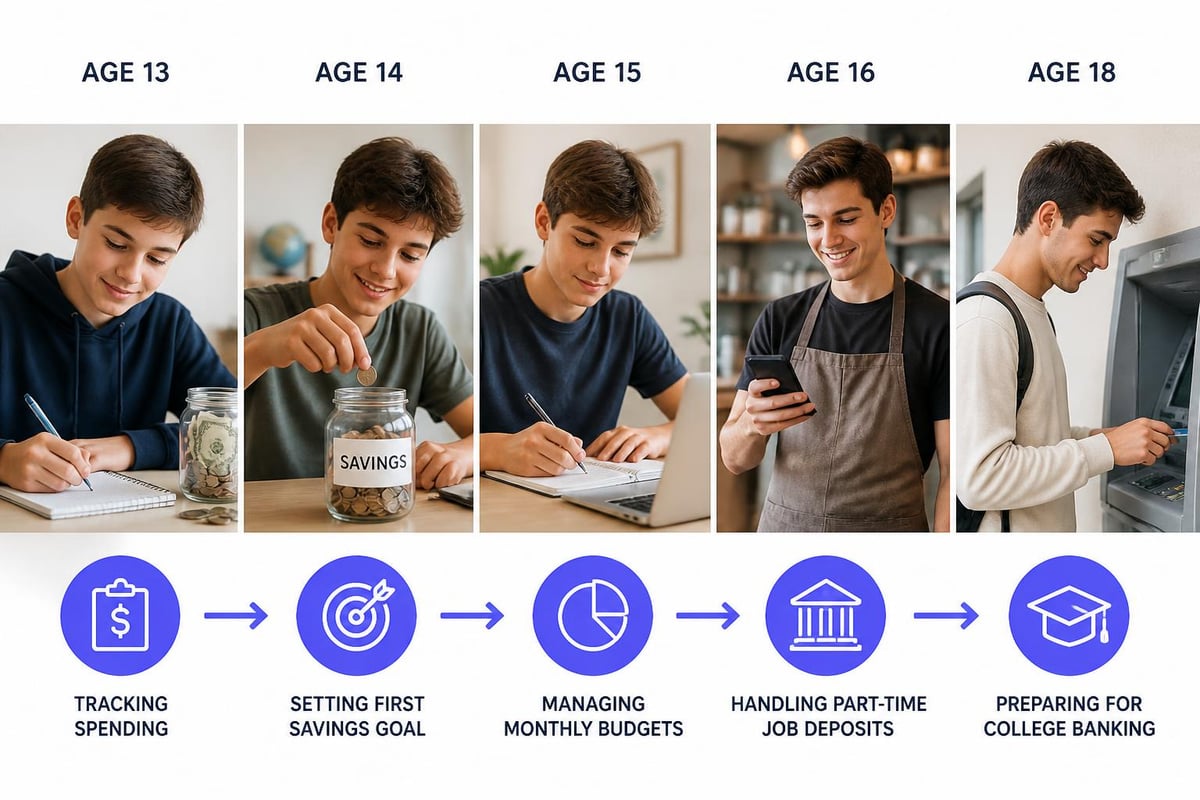
Ages 13-14: Supervised Learning
Early teens benefit from close oversight and structured earning opportunities. Start with lower limits and frequent check-ins. Focus on basic concepts like tracking spending and distinguishing wants from needs.
Use the account primarily for discretionary spending rather than essential purchases. This limits the risk if poor choices occur while still providing meaningful learning experiences.
Ages 15-16: Gradual Independence
Mid-teens can handle more responsibility as they demonstrate consistent good judgment. Increase spending limits and reduce the frequency of mandatory reviews. Introduce more complex concepts like saving percentages and comparing prices.
Some families begin transitioning certain expenses to teen management during this phase. Clothing budgets, entertainment spending, or school lunch money can shift to the teen's responsibility.
Ages 17-18: Preparation for Adulthood
Older teens approaching college or career entry need practice managing larger sums and more complex financial situations. The account should closely mirror adult banking with minimal parental intervention.
Discussions shift from basic spending control to longer-term planning. How will they handle banking when they leave home? What accounts will they need for college? How does credit work differently from debit?
Building Financial Confidence Through Real Transactions
Book knowledge about money management only goes so far. Teenagers need hands-on practice with real financial tools to build genuine competence and confidence.
A chase debit card teenager account provides the practice field. Every transaction represents a micro-lesson in decision making, resource allocation, and consequence management. Over months and years, these small lessons accumulate into substantive capability.
The Power of Small Stakes Learning
Making a $15 purchase mistake at 16 teaches the same principles as a $1,500 mistake at 26, but with far less severe consequences. Teen banking creates a protected environment where errors cost little but teach much.
Parents sometimes fear giving teens too much financial freedom. But controlled access through proper account features actually reduces risk compared to the alternative. Teens who reach adulthood without banking experience face much steeper learning curves.
Connecting Money to Meaningful Goals
Abstract financial concepts bore most teenagers. But those same concepts become engaging when connected to personal goals. The account transforms from a parent requirement into a personal tool when teens use it for their own purposes.
Encourage your teen to identify goals that genuinely matter to them. Support those goals even if they differ from what you'd choose. A teenager saving for sneakers learns the same saving principles as one saving for college textbooks. The motivation matters more than the specific goal.
Security and Privacy Considerations
Banking for minors requires balancing access with protection. Understanding the security landscape helps families make informed choices.
What Parents Can and Should Monitor
Joint accounts and teen-focused products give parents legal access to transaction data. This oversight protects young people from fraud and helps guide their development. However, constant surveillance can undermine the trust necessary for learning.
Many families establish graduated privacy. Early teens have frequent mandatory reviews. As teens demonstrate responsibility, parents shift to background monitoring with less frequent discussions unless concerns arise.
Teaching Digital Security Basics
Debit cards and mobile banking require strong security practices. Teens must understand password management, phishing recognition, and device security before receiving account access.
Digital literacy skills extend beyond banking but directly impact account security. Young people who understand how online systems work and where threats come from protect themselves more effectively.
Making the Most of Teen Banking
A chase debit card teenager account represents more than just transaction convenience. It's an opportunity to build financial capability that will serve your child throughout their life.
Success requires more than just opening the account. Regular conversations about money, consistent expectations, and genuine consequences for choices all contribute to effective learning. The account itself is neutral but becomes powerful when surrounded by intentional teaching.
Questions to Discuss Regularly
- What purchases felt worth the money this month?
- What would you do differently if you could?
- How close are you to your savings goal?
- What surprised you about your spending?
- What financial questions do you have?
These open questions invite reflection without judgment. They help teenagers develop the internal dialogue necessary for good financial decision making throughout life.
Alternative Approaches to Teen Financial Education
While traditional banks like Chase offer solid account options, they represent just one approach to teen money education. Exploring different debit card options for kids in 2026 reveals a diverse marketplace with varying philosophies.
Some platforms emphasize investment education, others focus on spending controls, and still others integrate earning opportunities. The right choice depends on your family's specific needs and your teenager's learning style.
Factors Beyond Basic Features
- Does the platform align with your teaching philosophy?
- Will your teen actually engage with the tools offered?
- How does the account grow with your child?
- What happens when they turn 18?
Detailed reviews of Chase First Banking℠ highlight both strengths and limitations. The account excels at providing secure access and parental oversight but offers minimal educational content or skill-building activities.
Families seeking more integrated approaches may combine a basic chase debit card teenager account with external educational resources. Others prefer all-in-one platforms that merge banking with structured learning experiences.
Supporting Long-Term Financial Capability
The ultimate goal extends beyond safe teenage spending. Parents want children who grow into financially capable adults who make sound decisions throughout their lives.
Research on financial education shows that hands-on experience with real money and real consequences creates deeper learning than classroom instruction alone. Teenagers need both knowledge and practice.
A banking account provides the practice component. Where do teenagers gain the knowledge? Some families teach at home, others rely on school programs, and many use a combination of approaches.
Comprehensive life skills curriculum addresses financial literacy alongside other essential capabilities. Programs that integrate money management with academic subjects, career exploration, and practical skill development create more complete preparation for adult life.
When Traditional Banking Needs Enhancement
Chase accounts handle transactions effectively and provide reliable service. But they don't actively teach financial concepts or create earning opportunities. Many families find they need supplemental tools to build complete money skills.
Consider what gap exists between opening an account and achieving your educational goals. Does your teenager understand budgeting? Can they explain interest, both earned and paid? Do they know how different account types work?
If significant gaps exist, look for resources that fill them. Online courses, educational apps, or structured programs can complement basic banking. The key is ensuring your teenager actually engages with whatever supplement you choose.
Looking Beyond the Account to the Outcome
When researching a chase debit card teenager option, the account features themselves matter less than the habits and understanding your child develops. The best account is the one your family will actually use for teaching and learning.
Some families thrive with minimal-feature accounts and create their own educational structure. Others prefer platforms that provide more guidance and built-in learning opportunities. Neither approach is inherently superior but one may fit your situation better.
Think about your own time availability, teaching preferences, and your teenager's learning style. An account requiring significant parental setup and ongoing effort won't work if you lack time. A highly automated system won't work if your teen needs personal interaction to stay engaged.
Practical Money Skills for the Real World
Banking accounts teach transactions but teenagers need broader financial capability. Understanding how money works in various life situations prepares them for adult challenges.
Essential Skills Beyond Banking
- Comparing costs across different purchasing options
- Recognizing marketing tactics and sales pressure
- Understanding the relationship between time and money
- Calculating whether something is truly affordable
- Identifying needs versus wants in real time
These skills develop through repeated practice in varying contexts. A chase debit card teenager account creates some practice opportunities but not comprehensive coverage. Programs focused on practical money skills can address gaps.
Young people who understand financial concepts in theory but never practice applying them often struggle when they face real adult financial decisions. The practice matters as much as the knowledge.
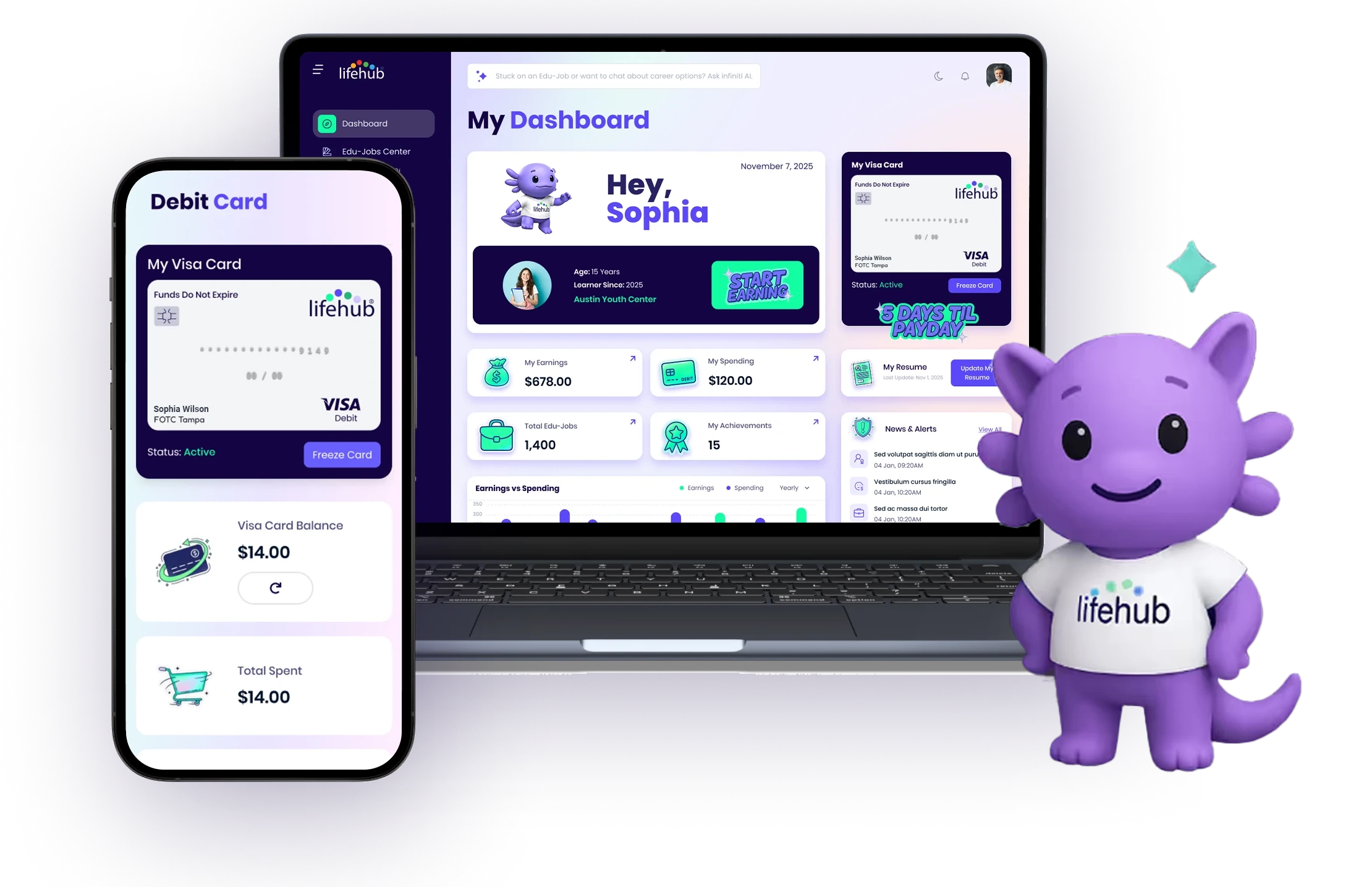
Opening a banking account for your teenager starts an important learning journey. Whether choosing a chase debit card teenager option or another product, what matters most is how you use the account to build real financial capability. Life Hub takes this further by connecting earning opportunities directly to skill development, allowing young people to learn financial literacy, career readiness, and academic concepts while earning real money deposited to their own debit card. When teenagers see the direct link between building capabilities and earning rewards, money management transforms from abstract lectures into meaningful personal experience.






.avif)















.png)

.svg)

.svg)


.svg)
.svg)

.svg)