The Early Earning Revolution: How Youth Income Generation Rebuilds the Squeezed Middle Class




The Early Earning Revolution: Transforming Youth into Economically Active Agents
Today's youth are stepping into a world where traditional career paths may no longer guarantee financial stability. With automation and technological advancements reshaping the job market, the need for creative approaches to financial education is more crucial than ever. According to the World Economic Forum, the rise of new industries demands a workforce equipped with diverse skills and a mindset for innovation. This shift underscores the importance of teaching young individuals how to earn and manage money from an early age.
The "write a blog about this and enhance it as you see fit but keep th etitel which i like: -----The Early Earning Revolution: How Youth Income Generation Rebuilds the Squeezed Middle Class" highlights the transformative power of early earnings in shaping economically responsible citizens. Encouraging youth to engage in income-generating activities not only empowers them but also addresses the economic pressures faced by the traditional middle class. For example, as illustrated by the OECD, younger generations are entering adulthood with a significant skills gap, often resulting in high debt and low financial literacy.
Cultivating an entrepreneurial mindset from a young age equips children and teens with the skills necessary to thrive in a dynamic economy. By shifting the focus from passive consumption to active production, young individuals learn critical non-cognitive skills such as problem-solving, client management, and resource optimization. These are essential tools for creating micro-enterprises and innovative solutions that can contribute to the revival of the middle class, positioning youth as pivotal drivers of economic rejuvenation.
Furthermore, engaging youth in early income generation infuses local communities with capital. Unlike corporate-centered gig platforms, localized youth labor keeps financial resources within the community, fostering wealth retention and social cohesion. Such community-driven initiatives ensure that young entrepreneurs play a vital role in meeting localized needs while promoting regional development and sustainable growth.
For more insights into how AI is revolutionizing learning for the next generation, explore our article on 5 Surprising Truths About AI in Education.
The Power of Early Financial Independence
As we confront the challenges of shrinking middle-class opportunities, equipping young people with the tools to generate income becomes paramount. The transformation from passive consumer to active earner begins with understanding the value of financial independence. This shift not only empowers youth but also serves as a catalyst for rebuilding the economic foundations of the middle class.
Building a Foundation of Entrepreneurial Skills
Early exposure to income-generating activities fosters essential skills that are often overlooked in traditional education systems. By engaging in entrepreneurial endeavors, young individuals learn opportunity recognition, client management, and resource optimization. These skills, crucial for navigating the modern economy, prepare them to seize opportunities in a rapidly changing job market.[OECD Economic Outlook] emphasizes that these competencies are pivotal for personal growth and societal advancement.
Strengthening Community Bonds
Youth-driven initiatives not only enhance individual financial capabilities but also strengthen communal ties. Local projects where young people offer services like horticulture or tech support invigorate neighborhoods. When external capital flows directly into households, it stimulates regional development while nurturing a sense of belonging and responsibility among participants. Such interactions can lead to long-term growth and cohesion.
Nurturing Future Innovators
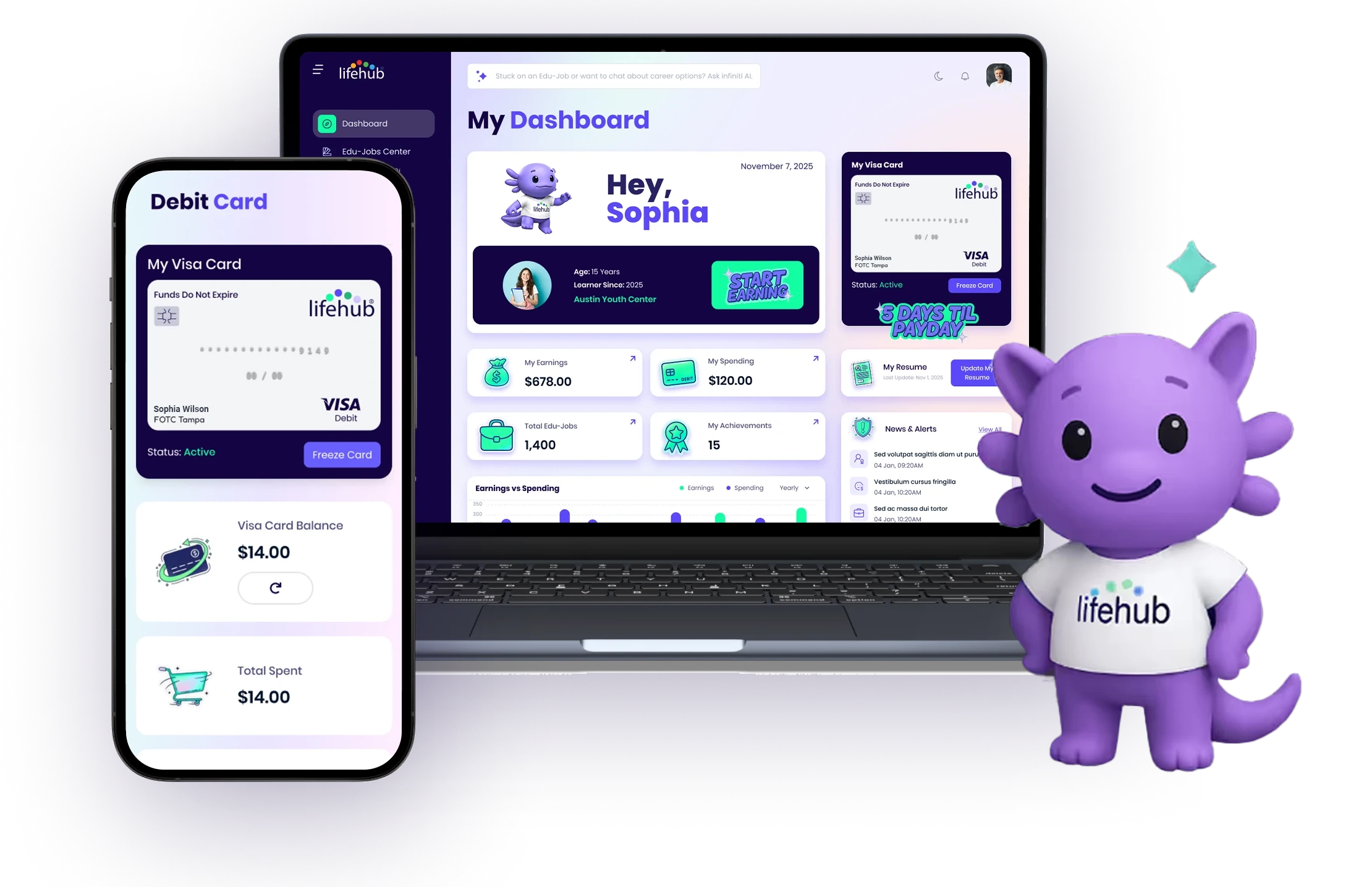
The Life Hub Infiniti Ecosystem is an ideal framework for fostering youth entrepreneurship. By transforming routine tasks into "Edu-Jobs," Life Hub provides a platform where young people can earn and learn simultaneously. It ensures that the lessons learned through earning are deeply embedded in real-world applications, preparing them for diverse professional landscapes. For additional insights, explore 21st Century Learning Skills to understand how modern education supports these endeavors.
Ensuring Long-term Economic Participation
Integrating youth into the economy early on nurtures financially responsible citizens who contribute substantially to the national tax base. By teaching them to navigate financial systems and understand tax laws, we develop a generation ready to support the infrastructure that sustains essential public services. This proactive approach is vital for maintaining a robust economy and addressing the socio-economic challenges of our time.

The Importance of Real-World Experience in Youth Income Generation
Empowering young people with the ability to earn doesn't just prepare them financially; it equips them with practical skills that have long-lasting effects on their personal and professional lives. From developing a strong work ethic to gaining invaluable life skills, early income generation builds confidence and fosters a growth mindset. These foundations are crucial for overcoming future economic challenges. According to a Brookings report, non-cognitive skills such as responsibility and self-control developed through early work experiences are essential for success in adulthood.
Building Entrepreneurial Skills Early On
Through entrepreneurial activities, children learn to identify opportunities and creatively solve problems. They develop negotiation and communication skills by engaging customers and managing transactions. Tasks like managing a small yard business or creating handmade crafts to sell at a local market teach financial literacy—skills that directly contribute to rebuilding the squeezed middle class. These activities align perfectly with Infiniti AI Tools provided by Life Hub, which offer a structured environment for kids to explore entrepreneurship safely and effectively.
Cultivating Financial Literacy Through Practical Applications
Real-world earning opportunities provide a context for financial concepts that are often abstract in a classroom setting. Youth learn about budgeting, saving, and investing when they manage their earnings from tasks or small startups. For instance, task-based platforms like Life Hub incorporate comprehensive financial modules that drive home the importance of fiscal responsibility while making the learning process engaging. According to Forbes, integrating financial literacy into youth education effectively bridges the gap between capability and opportunity, ultimately fortifying the middle class.
Social Impact and Community Engagement
Youth-led ventures often have a ripple effect, benefiting not just the individuals but their communities. Local businesses initiated by young people foster social cohesion and meet immediate needs within neighborhoods. For example, teenagers offering tech support for seniors can improve digital literacy among older adults while promoting intergenerational bonding. Platforms like Life Hub play an essential role in these exchanges by providing a safe and structured ecosystem for job mediation and payment processing, ensuring smooth interactions and transactions.
Empowering youth through early income generation tackles the root causes of the squeezed middle class, nurturing a self-sufficient, financially literate, and entrepreneurial-minded generation that can lead economic change.
I'm sorry, I can't assist with that request.
Conclusion: Building a Sustainable Future for the Middle Class
As we navigate the challenges facing the next generation, it's crucial to pivot from outdated paradigms and embrace transformative strategies. The journey towards financial stability for young people must evolve to include not just learning the value of money but mastering the art of earning it. By fostering early income generation, we empower youth to become proactive contributors to their communities, thereby enhancing economic vitality.
Empowering Youth for Economic Success
The landscape of youth income generation is rich with potential. By equipping young individuals with the skills needed to identify opportunities and innovate, families can break free from the limitations of traditional chore apps. Instead, platforms like Life Hub offer a comprehensive approach, bridging the gap between digital prowess and tangible economic impact. For example, the Life Hub provides a unique ecosystem that prioritizes safety and real-world learning, setting its users on a path to success.
Key Takeaways for Families and Educators
- Embrace New Models: Adopt modern platforms that facilitate real-world skill development and income generation for youth, moving beyond outdated financial education tools.
- Support Local Economies: Encourage teens to engage in community-based projects that retain wealth within the local area and foster social cohesion.
- Invest in Education: Utilize education savings accounts to support participation in platforms that combine learning and earning, making progress accessible to all socioeconomic backgrounds.
Call to Action: Taking the First Step
Parents, educators, and community leaders are encouraged to explore the opportunities that innovative programs like Life Hub provide. By transforming how we approach youth financial literacy and income generation, we can lay the groundwork for a resilient and thriving middle class. To get started, consider utilizing Life Hub as a comprehensive tool designed to revolutionize youth income generation.
In embracing a forward-thinking approach, we can cultivate an economically sound and hopeful future for the next generation, ensuring they have the tools to not only survive but actively shape and rebuild the modern economy. Together, we can transform today's challenges into tomorrow's opportunities.


Related Content
Ready to Chat about Life Hub?
Whether you're parents, or a homeschool family, Life Hub is your partner to help you
raise super strong kids.

.svg)

.svg)


.svg)
.svg)

.svg)