How Much Allowance for a 13-Year-Old? A New Approach to Teaching Financial Responsibility




The Hook
When considering how much allowance to give a 13-year-old, many parents default to the widely recognized guideline: $1 per week per year of age, or $13 a week. While this is a convenient benchmark, automatically giving children unearned money might inadvertently set them up for financial failure. Rather than fostering financial acumen, this approach can morph money into an expectation rather than a reward for effort.
The Danger of 'Free Money' in the Formative Teen Years
Teenagers receiving automated weekly allowances might begin to view money as an inexhaustible resource, decoupled from effort or value creation. This setup not only distorts their understanding of financial security but also potentially nurtures a sense of entitlement, undermining future accountability. Financial literacy should start early, and these formative years are critical for instilling values that connect money with effort and stewardship.
For more on building skills useful for the modern world, see 21st Century Learning Skills.
The Danger of 'Free Money' in the Formative Teen Years
As teenagers navigate the delicate transition between childhood and adulthood, automated allowances can create harmful misconceptions about financial realities. By decoupling money from effort, these systems inadvertently teach young minds that financial security is given rather than earned. This can lead to an inflated sense of entitlement, where money is seen as an endless, free resource rather than a limited commodity requiring careful management.
The problem deepens as teens receive weekly allowances without corresponding responsibilities. Imagine a 13-year-old receiving $13 each week, simply for existing. Instead of learning valuable lessons about earning their income, they might begin to expect money without understanding its worth. Without integrating a sense of accountability, the lessons they internalize might revolve around consumption rather than financial responsibility.
Financial educator Amy McCourt claims that pairing money with responsibility fosters practical financial literacy. "If teens don't experience the direct link between effort and reward," she says, "they’re less likely to appreciate the value of hard work in adulthood" (Family Finance Expert).
The implications of such an upbringing are profound. Children accustomed to automatic allowances might struggle to adapt when financial independence becomes necessary. Instead of cultivating prudent financial habits, they risk entering adulthood with a skewed understanding of money management. The necessity of nurturing financial discipline and accountability cannot be overstated. For insights into engaging learning methods, explore 5 Surprising Truths About Ai In Education Its Not What You Think.

The Better Alternative: A Practical Framework
Instead of providing an automated allowance, why not nurture financial literacy through a more hands-on approach? A Commission-Based System could be the answer. This allows your 13-year-old to earn money by accomplishing real tasks, fostering a connection between effort and reward. You might consider having them assist with household projects, like organizing a garage or helping to plan a family event. This teaches the value of creating value before receiving compensation.
Another effective strategy is the Budget Management System. Allowing your teen to manage actual expenses, such as their clothing budget, introduces them to real-world financial responsibilities. They'll quickly discover that overspending on non-essentials affects their ability to afford what they truly need. This hands-on experience is crucial for understanding the long-term impact of financial decisions.
Both systems empower teens with the autonomy to make and learn from their own decisions. Encouraging them to save for a desired item not only instills discipline but also provides a sense of accomplishment once the goal is met. This practical approach aligns with the ethos of youth-oriented organizations, promoting accountability and self-efficacy.
Incorporating these methods within your household could be transformative. When teens are earnestly engaged in earning and managing their money, they gain real financial insights—a priceless education that no app can replicate. For parents eager to go beyond the traditional, these alternatives might just be the key to fostering a financially responsible young adult.
Competitor Differentiation: The True Value in Financial Education
In a world where digital convenience often trumps genuine learning, it's essential to recognize the limitations of traditional allowance automation apps like Greenlight or GoHenry. While these platforms are adept at digitizing allowance distribution, they fall short in nurturing the financial literacy skills teens truly need. Our approach, grounded in deep behavioral financial education, offers something more substantial.
The Commission-Based System invites teenagers to earn money through creating value, instilling a sense of pride and achievement. Contrarily, apps focus on transactional efficiency, providing little in terms of understanding financial responsibility. By implementing a system where money is earned, teens develop a work ethic that apps simply can't replicate.
Moreover, the Budget Management System empowers teens by placing real expenses under their control. This approach encourages proactive money management and accountability. While automated apps help track expenditures, they lack the capacity to simulate real-world financial consequences in the same impactful way as managing an actual clothing budget, for example.
Emphasizing practical, hands-on experiences sets our strategy apart. While digital solutions streamline allowance allocation, they inadvertently distance teens from the essential human elements of financial learning: effort, value creation, and strategic budgeting. This approach isn't just about tracking money; it's about teaching critical financial skills that form the bedrock of adult financial fitness.

The Call to Action: Life Hub Education
As parents, reshaping how we approach financial literacy for teenagers is crucial. Free-flowing, automated allowances might seem convenient, but real financial empowerment comes from understanding the value of money and the work involved in earning it. The systems we’ve discussed—like the commission-based model and budget management—are steps toward fostering accountability and independence in your child's financial journey.
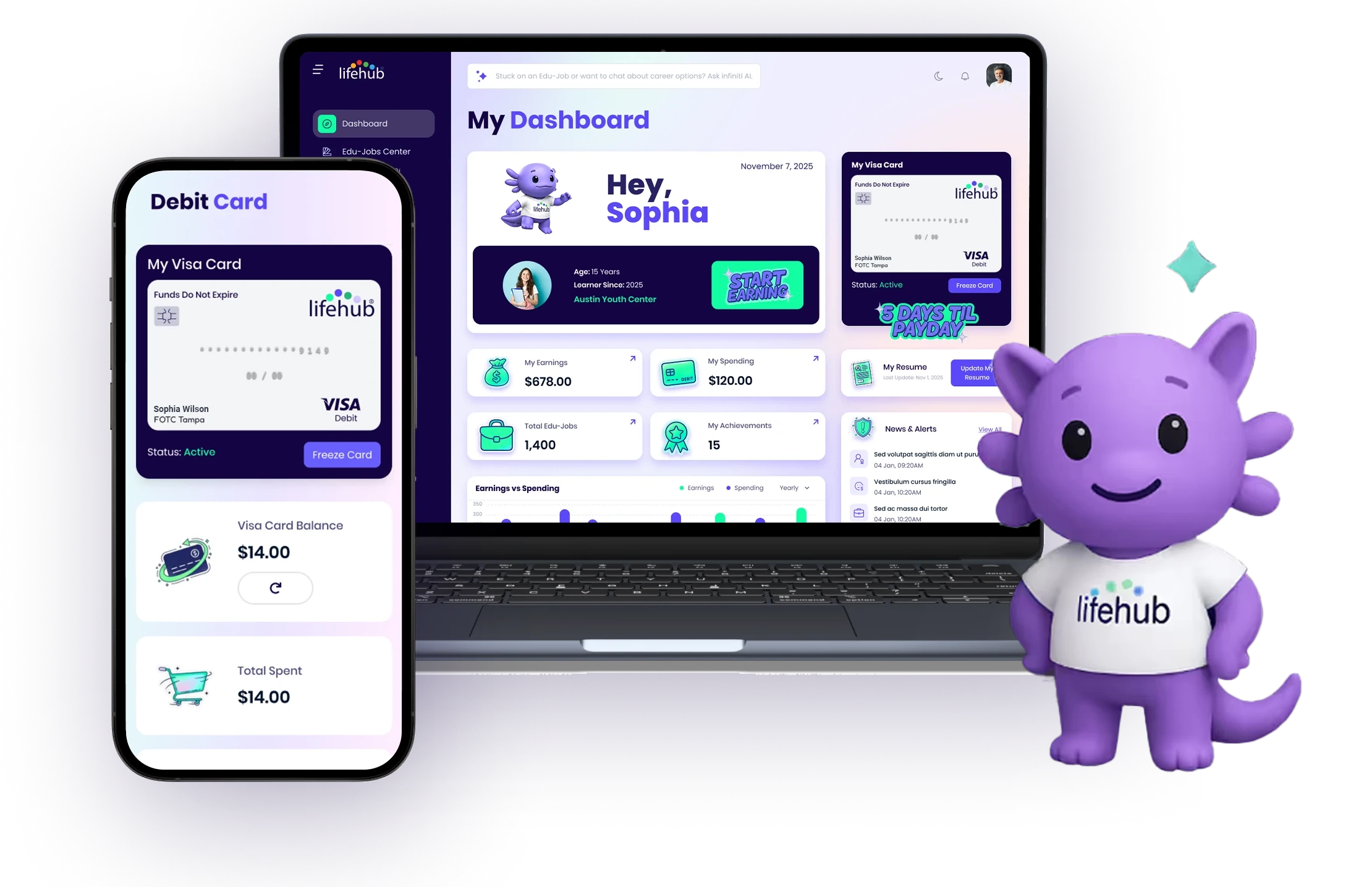
Imagine if your teenager could grow up viewing money as a tool they actively engaged with, appreciating the effort required to earn and manage it wisely. To support these efforts, Life Hub Education offers a comprehensive program that transcends basic digital allowance tracking. It's designed to instill true accountability and work ethic while teaching real-world money management skills.
With Life Hub Education, your teenager won’t just receive money; they’ll earn it, budget it, and learn to live with their financial choices. The program focuses on hands-on learning experiences that challenge them to make informed decisions, fostering growth that a simple allowance app cannot deliver.
Don’t let the allure of convenience overshadow the opportunity to instill deeper values. Inspire your teenager to cultivate lifelong skills that will set them apart. Visit Life Hub Education today and start redefining financial literacy for your child.


Related Content
Ready to Chat about Life Hub?
Whether you're parents, or a homeschool family, Life Hub is your partner to help you
raise super strong kids.

.svg)

.svg)


.svg)
.svg)

.svg)