Parents looking for tools to teach their children about money often turn to prepaid debit cards designed for kids. GoHenry has become one of the most discussed options in this space. Reading gohenry card reviews from other families can help you decide if this financial education tool fits your needs. This article examines what real users say about GoHenry, how it works, and whether the features justify the monthly cost.
What GoHenry Offers Families
GoHenry provides a prepaid debit card for children aged 6 to 18, paired with a mobile app that teaches money management. Parents control the account through their own app, where they can set spending limits, block certain types of purchases, and instantly transfer money.
The card functions like a regular Visa debit card. Kids can use it in stores, online, and at ATMs. Parents receive notifications every time their child makes a purchase, which creates natural opportunities for conversations about spending choices.
Core Features That Matter
- Customizable spending controls by category (groceries, entertainment, online shopping)
- Task and chore assignments with automated payments
- Real-time spending notifications sent to parent devices
- Money Goals feature to encourage saving habits
- Weekly pocket money automation to eliminate cash handling
The app includes financial literacy content through short video lessons. These cover topics from budgeting basics to understanding interest rates. However, many gohenry card reviews note that engagement with these lessons varies widely by child.

Monthly Cost and Fee Structure
GoHenry charges £4.99 per month per child in the UK, or $4.99 in the US. A family subscription covering up to four children costs £9.98 or $9.98 monthly. These fees apply regardless of how much your child uses the card.
| Fee Type |
Amount |
Notes |
| Monthly subscription |
£4.99/$4.99 |
Per child |
| Family plan (up to 4 kids) |
£9.98/$9.98 |
Best value for multiple children |
| ATM withdrawals |
Free |
Up to £120/$120 monthly |
| Foreign transactions |
Free |
No currency conversion fees |
| Card replacement |
Free |
First replacement; £4.99/$4.99 after |
When reading gohenry card reviews, the monthly fee often generates mixed reactions. Some parents view it as reasonable for the peace of mind and educational value. Others find it expensive compared to free alternatives that have entered the market since 2024.
What Parents Say About GoHenry
User experiences shared across multiple platforms reveal consistent patterns. Customer reviews on Sitejabber show satisfaction scores that fluctuate, with both strong advocates and frustrated users.
Positive Feedback Themes
Parents who rate GoHenry highly often mention specific benefits:
Convenience for pocket money: Setting up automated weekly transfers eliminates the need to remember cash. One parent noted that their child receives £10 every Sunday morning without fail, creating predictable spending patterns.
Teaching moments: Real-time notifications let parents discuss purchases as they happen. A family from Manchester shared that seeing their daughter's £15 spent at a café sparked a conversation about coffee costs versus saving for a concert ticket.
Independence building: Children report feeling more grown-up handling their own card. This psychological benefit appears across comprehensive reviews from Finder UK and other platforms.
Common Complaints
Negative gohenry card reviews typically focus on three areas:
Customer service delays: Multiple users report waiting several days for responses to account issues. Password reset problems and card activation difficulties seem to take longer than expected to resolve.
App glitches: Some families experience sync issues between parent and child apps. Spending limits occasionally fail to update immediately, causing declined transactions that frustrate both parties.
Value concerns: As mentioned in detailed analysis from MoneyRaters, the monthly fee structure means families pay approximately $60 annually per child just for access to features that some competitors now offer free.
How GoHenry Compares to Modern Alternatives
The kids' debit card market has grown substantially. When evaluating gohenry card reviews, consider what other options provide.
Traditional banks now offer teen checking accounts with no monthly fees. These typically require a parent as joint account holder and provide basic debit card access without gamified learning features. Finding the best debit card for kids requires weighing your specific priorities.
Educational Value Assessment
GoHenry includes financial education content, but the depth and engagement level matter. The app offers short lessons on topics like compound interest and budgeting. However, these feel supplementary rather than comprehensive.
According to evaluation from Kids' Money, parents seeking structured financial education might want additional resources. The card teaches through experience (spending, saving, tracking), but doesn't replace dedicated curricula.
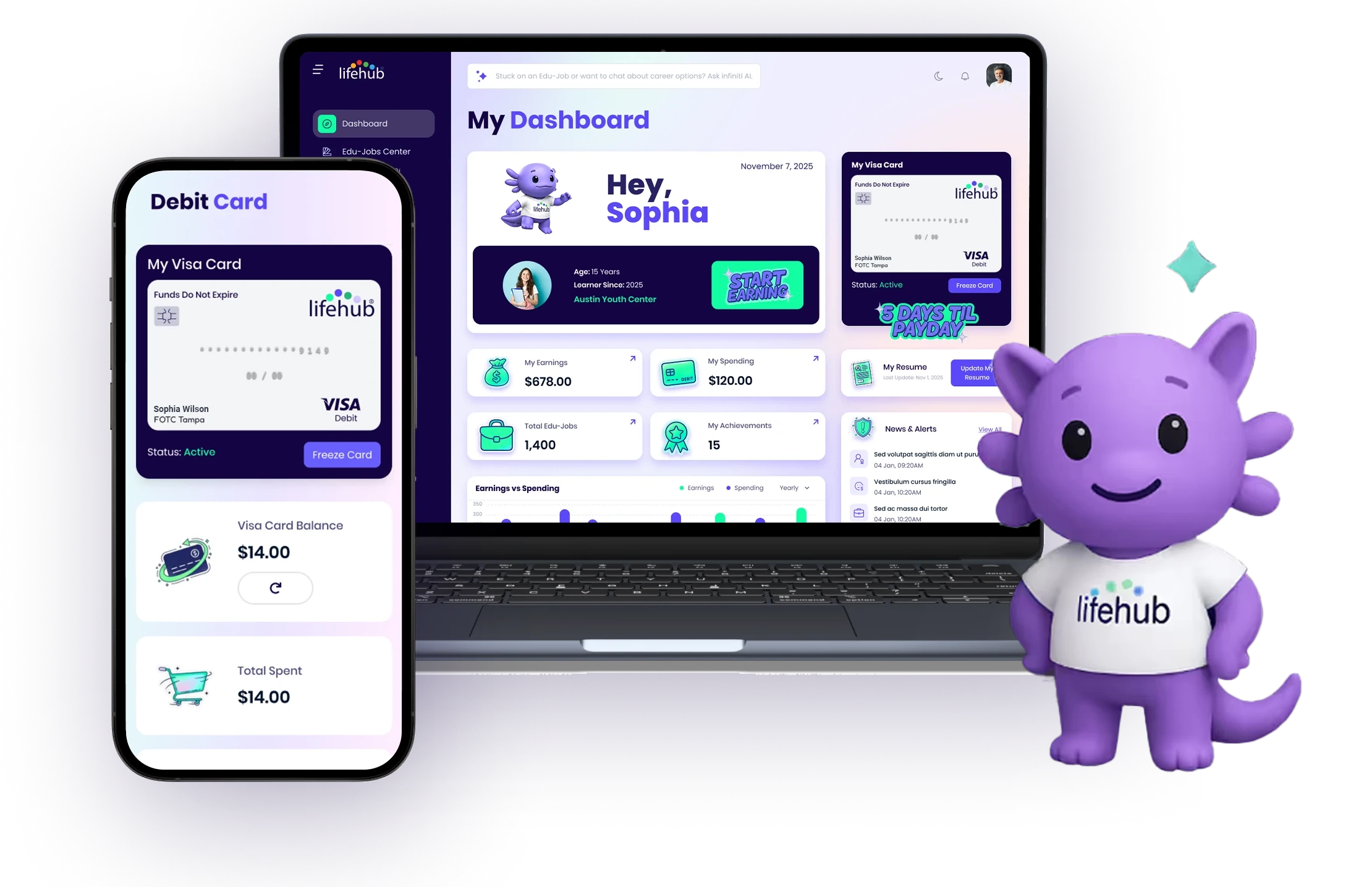
For families wanting deeper money skills development, platforms like Life Hub take a different approach. Rather than just providing a card with basic lessons, comprehensive financial education programs connect learning with earning through practical tasks.

Age Appropriateness and Skill Building
GoHenry accepts children from age 6, but reviews suggest different experiences by age group.
Ages 6-9: At this stage, the card primarily teaches that money is finite and purchases require funds. Parents report that younger children benefit most from the visual feedback of seeing their balance decrease. The educational content often exceeds their comprehension level.
Ages 10-13: This group engages more actively with features. They set savings goals, complete chores for payment, and start making independent spending decisions. Parents appreciate the controlled environment for these first financial steps.
Ages 14-18: Teenagers often find GoHenry limiting. They want full debit card functionality without parental oversight. Some families transition away from GoHenry during high school years when teens can open their own checking accounts.
Setting Up and Daily Use
The initial setup takes about 10 minutes. Parents download the app, create an account, and order cards. Physical cards typically arrive within 5-7 business days.
Getting Started Steps
- Download parent and child apps
- Verify your identity with photo ID
- Add your funding source (bank account or debit card)
- Customize spending controls before activating the card
- Load initial funds and activate when the card arrives
Daily use centers on the parent app. You can transfer money instantly, which appears in your child's account within seconds. The task feature lets you assign chores with payment amounts, though some gohenry card reviews mention that children ignore tasks and just ask for direct transfers instead.
Security Features and Concerns
Card security receives generally positive marks. Parents can instantly freeze the card from their app if it goes missing. The ability to block online purchases or ATM withdrawals reduces risk for younger children.
However, according to Good Money Guide, the account security itself has room for improvement. Two-factor authentication isn't standard, which concerns some security-conscious parents.
| Security Feature |
How It Works |
Parent Rating |
| Instant card freeze |
One tap blocks all transactions |
Highly valued |
| Spending category controls |
Block entire merchant types |
Very useful |
| ATM withdrawal blocks |
Prevent cash access entirely |
Popular for young kids |
| Location restrictions |
Not available |
Frequently requested |
| Biometric login |
Available on newer devices |
Mixed adoption |
The card itself has zero liability protection for unauthorized purchases, similar to major credit cards. If someone steals and uses the card, you won't lose money once you report it.
Alternative Approaches to Financial Education
While gohenry card reviews help evaluate that specific product, consider your broader goals. Teaching children about money involves more than providing a card.
Real financial capability develops through repeated practice with real consequences. According to schools that teach life skills, the most effective programs combine three elements: knowledge (understanding concepts), skills (practical application), and motivation (reason to care).
Beyond the Card
A debit card creates spending opportunities but limited earning experience. Children learn what money can buy but not necessarily how to create value. Some families supplement cards with:
- Entrepreneurship projects where kids sell products or services
- Investment accounts that introduce growth concepts
- Family budget involvement showing household financial decisions
- Charitable giving to develop values around money
Micro-learning platforms offer another approach by connecting small educational tasks directly to earnings. This builds both knowledge and work ethic simultaneously.

Technical Performance and Reliability
App stability affects daily experience. Most gohenry card reviews mention occasional technical issues, though severity varies.
The parent app generally performs better than the child app. Loading speeds are acceptable on modern smartphones, though some users with older devices report lag. Notification delivery works reliably, which parents value for spending oversight.
Sync delays between parent and child apps cause the most frustration. When a parent updates spending limits or transfers money, the child's app may take several minutes to reflect changes. This creates confusion during shopping trips when limits appear different on each device.
International Use and Travel
For families who travel, GoHenry functions in most countries. The card works wherever Visa is accepted. Foreign transaction fees don't apply, which saves money compared to many adult cards.
ATM withdrawals abroad follow the same rules as domestic use. Your child can access up to £120 or $120 monthly without fees. The exchange rate uses Visa's standard rates, which are generally competitive.
Parents traveling internationally with children appreciate the ability to transfer money instantly regardless of location. If your teenager needs additional funds during a school trip to France, you can send money from home immediately.
Data Privacy and Child Protection
GoHenry operates under standard financial regulations. As noted in Wikipedia's overview of GoHenry, the company is regulated by the UK's Financial Conduct Authority and complies with data protection laws.
The app collects transaction data, location information, and usage patterns. This data helps provide the service but also raises questions about children's digital privacy. Parents should review the privacy policy to understand what information is collected and how it's used.
Unlike some youth apps, GoHenry doesn't sell advertising space within the child's interface. This reduces exposure to marketing, though the company does send promotional emails to parents.
Customer Support Experience
Support quality emerges as a divisive issue in gohenry card reviews. Response times vary significantly based on issue complexity.
Simple questions answered through the help center typically get resolved quickly. More complex problems requiring account investigation can take 3-5 business days. During peak times, especially around holidays when families set up new accounts, delays extend further.
Contact options include email and in-app chat. Phone support isn't available, which frustrates parents dealing with urgent card issues. If your child's card is declined incorrectly during a purchase, waiting for email support isn't ideal.
Real-World Usage Scenarios
Understanding how GoHenry works in practice helps more than abstract feature lists.
Scenario 1 - School lunch: A 12-year-old uses her GoHenry card daily in the school cafeteria. Her parent set a £5 daily limit for food purchases. The system works smoothly until the cafeteria's card reader malfunctions one day, requiring cash backup.
Scenario 2 - Online shopping: A 15-year-old wants to buy gaming items. His parent blocked online entertainment purchases to encourage saving. He finds this frustrating but ultimately negotiates completing extra tasks to earn removal of the restriction temporarily.
Scenario 3 - Emergency funds: During a weekend sports tournament, a parent instantly transfers £20 when their daughter's team decides to grab pizza. The money appears immediately, avoiding the awkward situation of being unable to participate.
Is GoHenry Worth the Investment?
Evaluating gohenry card reviews leads to a nuanced answer. The card works well for specific family situations.
Best fit for:
- Families wanting structured pocket money automation
- Parents who value detailed spending oversight
- Children ages 8-14 learning basic money management
- Households with multiple children (family plan offers better value)
Probably not ideal for:
- Budget-conscious families seeking free alternatives
- Teenagers wanting more independence
- Parents prioritizing comprehensive financial education over basic card access
- Families already using other financial teaching methods successfully
The monthly fee remains the primary consideration. If you actively use the parental controls, task features, and educational content, the cost may feel justified. If the card simply replaces handing over cash with no other behavior change, free alternatives accomplish the same goal.
Making Your Decision
Reading gohenry card reviews provides useful perspectives, but your family's specific needs matter most. Consider these questions:
What problem are you solving? If you forget to provide pocket money consistently, automation helps. If your child needs to understand budgeting, any spending tool works with proper guidance.
How much oversight do you want? GoHenry provides extensive controls. Some parents love this; others feel it prevents children from learning through mistakes.
What's your time investment? The card creates teaching opportunities only if you discuss transactions. Without parent engagement, it's just a payment method.
Do you want education integrated? Cards with basic features may need supplementing. Comprehensive programs that combine earning, learning, and practical money management offer different value.
GoHenry offers a structured way to introduce children to money management through a supervised debit card system. The monthly fee, parental controls, and educational features work well for some families but feel limiting or expensive to others. Your decision should align with your specific teaching goals and budget. Life Hub provides an alternative approach that connects financial learning directly to earning through practical tasks across personal finance, career skills, and real-world capability. Young people build money skills while earning real cash for completing educational micro-tasks, creating a motivating link between learning and reward that extends beyond basic spending tools.






.avif)















.png)

.svg)

.svg)


.svg)
.svg)

.svg)