App Curriculum: Building Effective Learning Paths


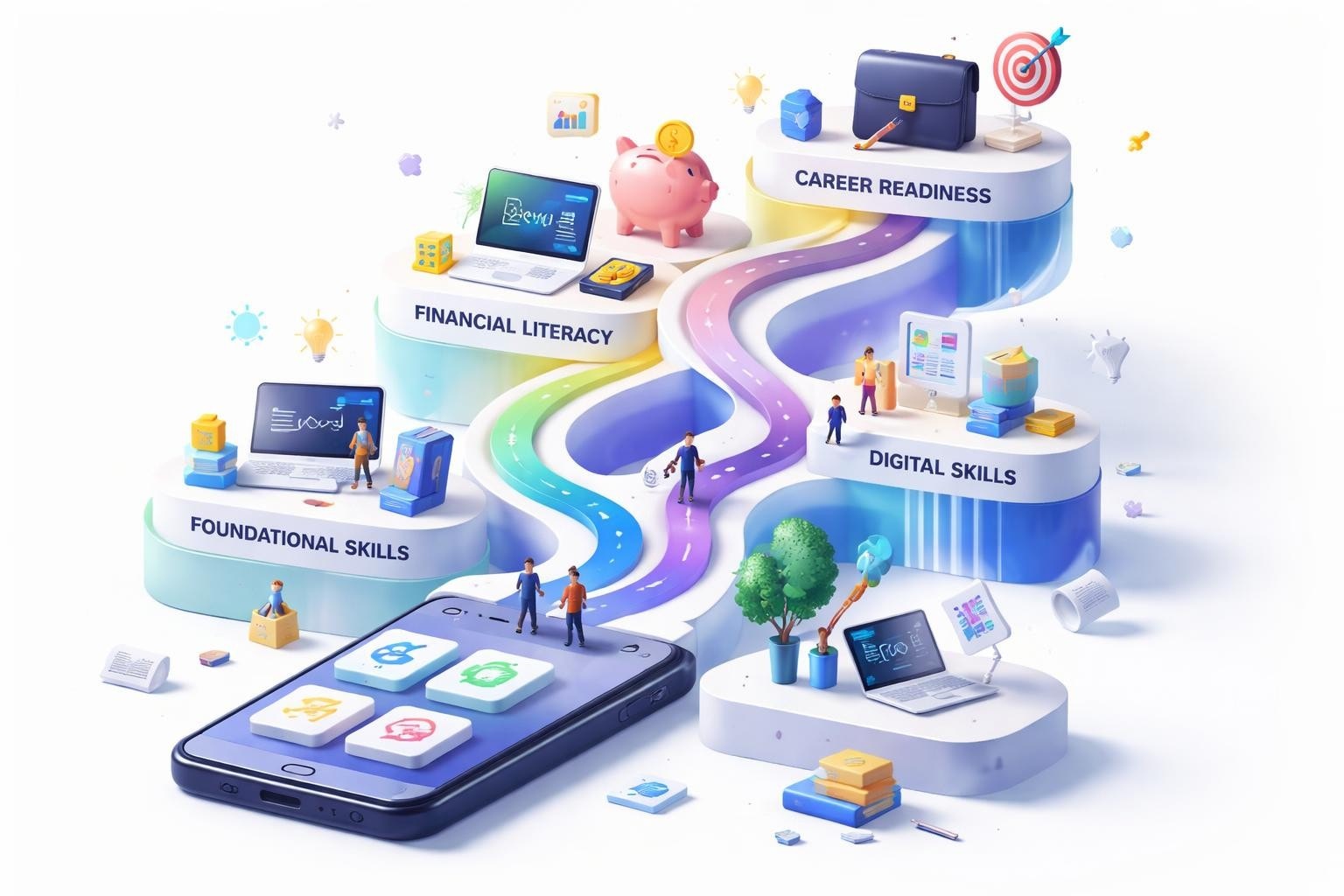

An app curriculum represents more than just a list of lessons delivered through a mobile device. It's a carefully structured learning path that combines educational goals with interactive digital experiences, creating opportunities for young people to build real-world skills. When done well, an app curriculum transforms how learners engage with content, making education accessible anywhere and turning passive reading into active doing.
What Makes an App Curriculum Different
Traditional curricula follow linear structures with fixed timelines and classroom-based delivery. An app curriculum adapts to individual pacing and learning preferences.
Core Components of Effective App Curricula
Every strong app curriculum includes several key elements:
- Clear learning objectives that define what learners will accomplish
- Bite-sized content modules that fit mobile consumption patterns
- Progress tracking that shows growth over time
- Interactive elements that require active participation
- Assessment methods that verify skill development
The best app curriculum designs recognize that mobile learning happens in different contexts than traditional education. A learner might complete a five-minute module while waiting for the bus or spend 30 minutes working through a complex challenge at home.
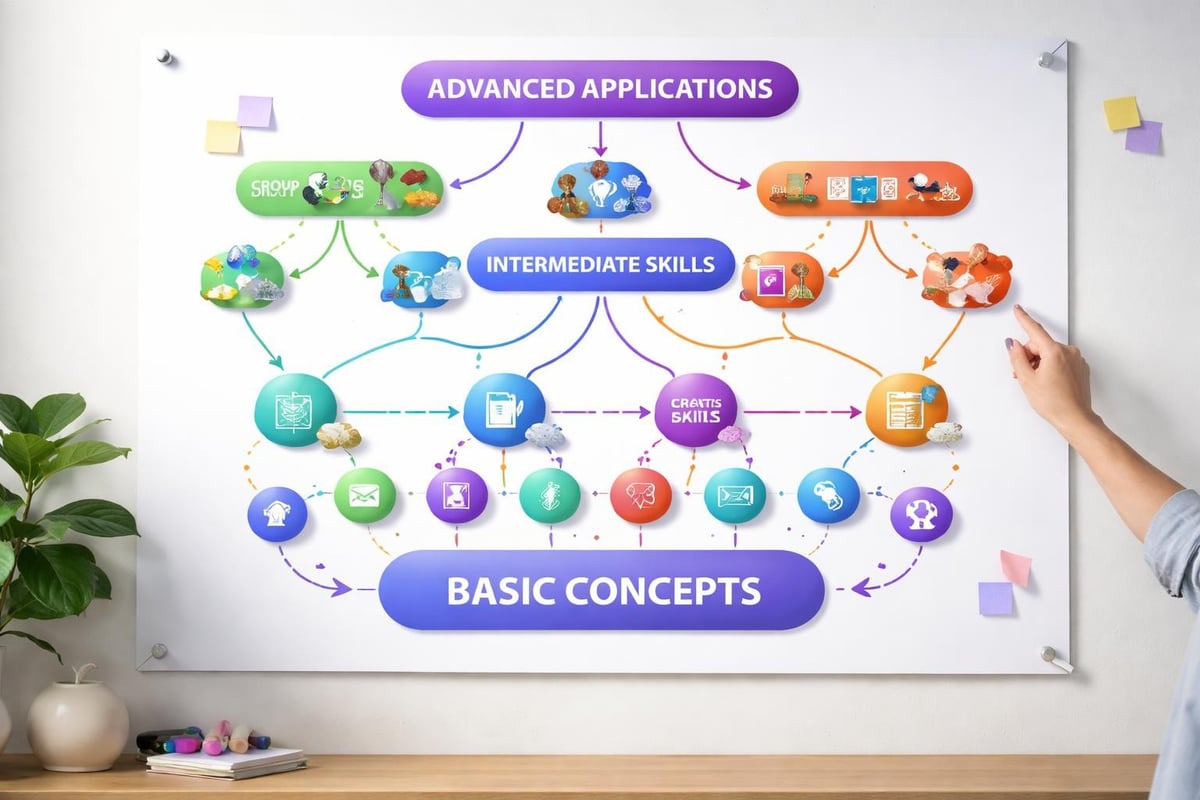
Alignment With Educational Standards
Developing an app curriculum requires careful attention to established educational frameworks. The California Department of Education's standards provide one example of how state-level requirements shape curriculum content and sequencing.
This alignment ensures that digital learning experiences complement rather than replace traditional education. When an app curriculum maps directly to academic standards, parents and educators can trust that time spent on the platform contributes to measurable educational outcomes.
Designing Curriculum for Mobile Learning
Mobile platforms create unique opportunities and constraints for curriculum designers. Screen size, attention spans, and usage patterns all influence how content should be structured.
The Micro-Learning Approach
Breaking complex topics into smaller units makes learning more manageable. Each module in an app curriculum should focus on a single concept or skill. This approach allows learners to make progress even when they only have a few minutes available.
Research shows that micro-learning platforms increase retention rates compared to longer study sessions. The brain processes and stores information more effectively when presented in focused bursts rather than extended periods.
Key characteristics of effective micro-learning modules:
- Duration: 3-10 minutes per task
- Focus: One clear objective per module
- Action: Requires learner input or decision-making
- Feedback: Immediate response to learner actions
- Connection: Links to previous and future learning
Balancing Structure and Flexibility
An app curriculum needs enough structure to ensure comprehensive coverage while allowing learners to explore topics that interest them. This balance proves especially important for topics like financial education where practical application matters as much as theoretical knowledge.
Some learners benefit from guided pathways that walk them through a predetermined sequence. Others prefer choosing topics based on immediate relevance to their lives. The most effective app curriculum designs accommodate both preferences.
Subject Areas for App-Based Learning
The range of topics suitable for app curriculum delivery continues to expand. Traditional academic subjects work well alongside practical life skills and emerging competencies.
Core Academic Integration
Mathematics, language arts, science, and social studies all translate effectively to mobile learning when properly designed. The key involves creating interactive experiences rather than simply digitizing textbooks.
For mathematics, an app curriculum might present real-world problems requiring calculation and logical thinking. Language arts modules could involve creative writing prompts with peer review features. Science content works well with simulations that let learners manipulate variables and observe outcomes.
| Subject Area | App Curriculum Advantages | Example Activities |
|---|---|---|
| Mathematics | Instant feedback on calculations | Budget creation, measurement tasks |
| Language Arts | Writing anywhere, anytime | Daily journaling, story development |
| Science | Virtual experiments | Hypothesis testing, data collection |
| Social Studies | Current event connections | Research projects, timeline building |
Financial Literacy and Life Skills
Young people need practical knowledge about managing money, making career decisions, and navigating adult responsibilities. An AI curriculum might teach learners how to use technology tools for financial planning and career exploration.
Financial education through an app curriculum can include:
- Budgeting exercises with real or simulated money
- Savings challenges that track progress toward goals
- Investment simulations that demonstrate compound growth
- Career exploration modules connecting education to earning potential
- Entrepreneurship basics for learners interested in starting businesses
These practical topics benefit from the action-oriented approach that mobile platforms enable. Instead of reading about budgeting, learners create actual budgets and make spending decisions.
Digital and AI Literacy
Understanding technology goes beyond using apps and devices. Modern digital literacy includes critical thinking about information sources, online safety, and how artificial intelligence systems work. The AI literacy curriculum addresses these evolving needs.
An effective app curriculum for digital skills teaches learners to evaluate online information, protect their privacy, and use productivity tools. It also introduces concepts like how algorithms make recommendations and why different people see different content online.

Development Best Practices
Creating an app curriculum involves more than writing content. The design process requires understanding both educational principles and mobile platform capabilities.
Frameworks and Guidelines
Developers benefit from established frameworks when building educational apps. Google's guidelines for educational apps cover essential requirements around design, privacy, and educational value. These standards help ensure that apps meet quality benchmarks and protect young users.
The FEAD framework integrates design tools with app development platforms, helping creators build better user experiences. This matters because even excellent curriculum content fails if the interface frustrates learners or makes navigation confusing.
User Experience Considerations
Young learners have different needs than adult users. An app curriculum must account for varying reading levels, attention spans, and prior technology experience.
Design elements that improve engagement:
- Large, clear buttons for touch navigation
- Consistent placement of common functions
- Visual progress indicators
- Celebration of achievements
- Simple, jargon-free language
The best practices for educational app development emphasize understanding your audience. What works for 8-year-olds differs significantly from what engages teenagers.
Content Development Process
Building an app curriculum typically follows these steps:
- Define learning objectives based on educational standards and learner needs
- Map content progression from foundational concepts to advanced skills
- Create individual modules with clear outcomes and activities
- Design assessments that measure understanding
- Test with real learners and gather feedback
- Iterate based on data showing how learners interact with content
The MAD-learn curriculum demonstrates how design thinking applies to app development for K-12 education, emphasizing ideation, planning, design, building, testing, and launching phases.
Engagement and Motivation Strategies
Even well-designed curriculum content can fail if learners don't stay engaged. Mobile platforms offer unique tools for maintaining motivation.
Gamification Elements
Points, badges, levels, and leaderboards tap into natural competitive instincts and desire for achievement. When implemented thoughtfully, these game mechanics support learning rather than distract from it.
An app curriculum might award points for completing modules, badges for mastering topic areas, and unlock advanced content as learners progress. The key involves ensuring that these elements reward actual learning rather than just time spent or tasks completed.
Real-World Connections
Learners engage more deeply when they understand how content applies to their lives. An app curriculum should explicitly connect abstract concepts to practical applications.
For example, a mathematics module about percentages becomes more relevant when tied to calculating discounts while shopping or understanding interest rates on savings accounts. A life skills curriculum makes these connections central to the learning experience.

Financial Incentives
Some app curriculum models incorporate monetary rewards for completed learning tasks. This approach creates direct connections between effort and reward, mirroring how work functions in adult life.
When young people earn real money for verified learning achievements, motivation increases significantly. The compensation doesn't need to be large to be effective. Even small amounts create a sense of value and accomplishment that purely game-based rewards cannot replicate.
Assessment and Progress Tracking
Measuring learning outcomes helps educators, parents, and learners understand what's working. An app curriculum should include multiple assessment methods.
Formative Assessment
Ongoing checks for understanding happen throughout the learning process. These quick assessments might include:
- Multiple-choice questions after each concept
- Short written responses explaining key ideas
- Demonstration tasks showing skill application
- Peer review of completed work
- Self-assessment reflections
The eLearning best practices emphasize continuous feedback loops that help learners adjust their approach before summative assessments.
Data-Driven Improvement
App platforms collect rich data about how learners interact with content. Which modules take longer? Where do learners get stuck? Which activities generate the most engagement?
This information helps curriculum designers refine content, adjust difficulty levels, and identify topics that need additional support resources. Privacy protections must be built into any data collection, especially when working with young learners.
Demonstrating Impact
For schools, youth organizations, and corporate sponsors funding educational programs, proving effectiveness matters. An app curriculum should generate reports showing:
| Metric Type | What It Measures | Why It Matters |
|---|---|---|
| Completion rates | Percentage finishing modules | Shows engagement levels |
| Time to mastery | Speed of skill acquisition | Indicates content difficulty |
| Assessment scores | Learning comprehension | Verifies educational value |
| Application examples | Real-world skill use | Demonstrates practical impact |
| Cost per outcome | Efficiency of funding | Helps sponsors evaluate ROI |
Emerging Technologies
The app curriculum landscape continues evolving as new technologies create fresh possibilities for educational delivery.
Generative AI Integration
Artificial intelligence tools now help educators create and customize content more efficiently. The GAIDE framework shows how generative AI assists in developing diverse, engaging course materials tailored to specific learner needs.
AI can also provide personalized support within an app curriculum, answering learner questions, suggesting relevant resources, and adapting content difficulty based on demonstrated skill levels. This technology makes individualized education scalable in ways previously impossible.
Planning and Development Tools
New platforms help young people themselves participate in app curriculum development. The App Planner tool assists K-12 learners in brainstorming and planning their own mobile applications, turning them from content consumers into creators.
This shift represents an important evolution. When learners understand how educational apps work, they engage more critically with the content and develop valuable technical skills.
Accessibility Features
Modern app curriculum designs must work for learners with diverse abilities. Voice narration, adjustable text sizes, high-contrast displays, and alternative input methods ensure that everyone can access learning opportunities.
Technology makes it easier to provide these accommodations automatically. An app can detect user preferences and adjust the interface accordingly, removing barriers that traditional classroom materials often create.
Implementation Considerations
Moving from curriculum design to actual deployment requires planning around technical, organizational, and user adoption challenges.
Platform Selection
Should an app curriculum work on iOS, Android, or both? Web-based platforms offer broader accessibility but may lack some native app features. The choice depends on target audience devices and required functionality.
Training and Support
Even intuitive apps require some explanation. Providing resources that help parents, educators, and learners understand how to use the platform maximizes adoption and effectiveness.
Essential support materials include:
- Quick start guides for different user types
- Video tutorials demonstrating key features
- FAQ sections addressing common questions
- Direct support channels for technical issues
- Community forums where users share tips
Privacy and Safety
Working with young learners requires strict attention to data protection and online safety. Compliance with regulations like COPPA (Children's Online Privacy Protection Act) is mandatory, not optional.
An app curriculum should collect only essential information, store data securely, never share personal details with third parties without explicit permission, and provide clear explanations of privacy practices that young people and parents can understand.
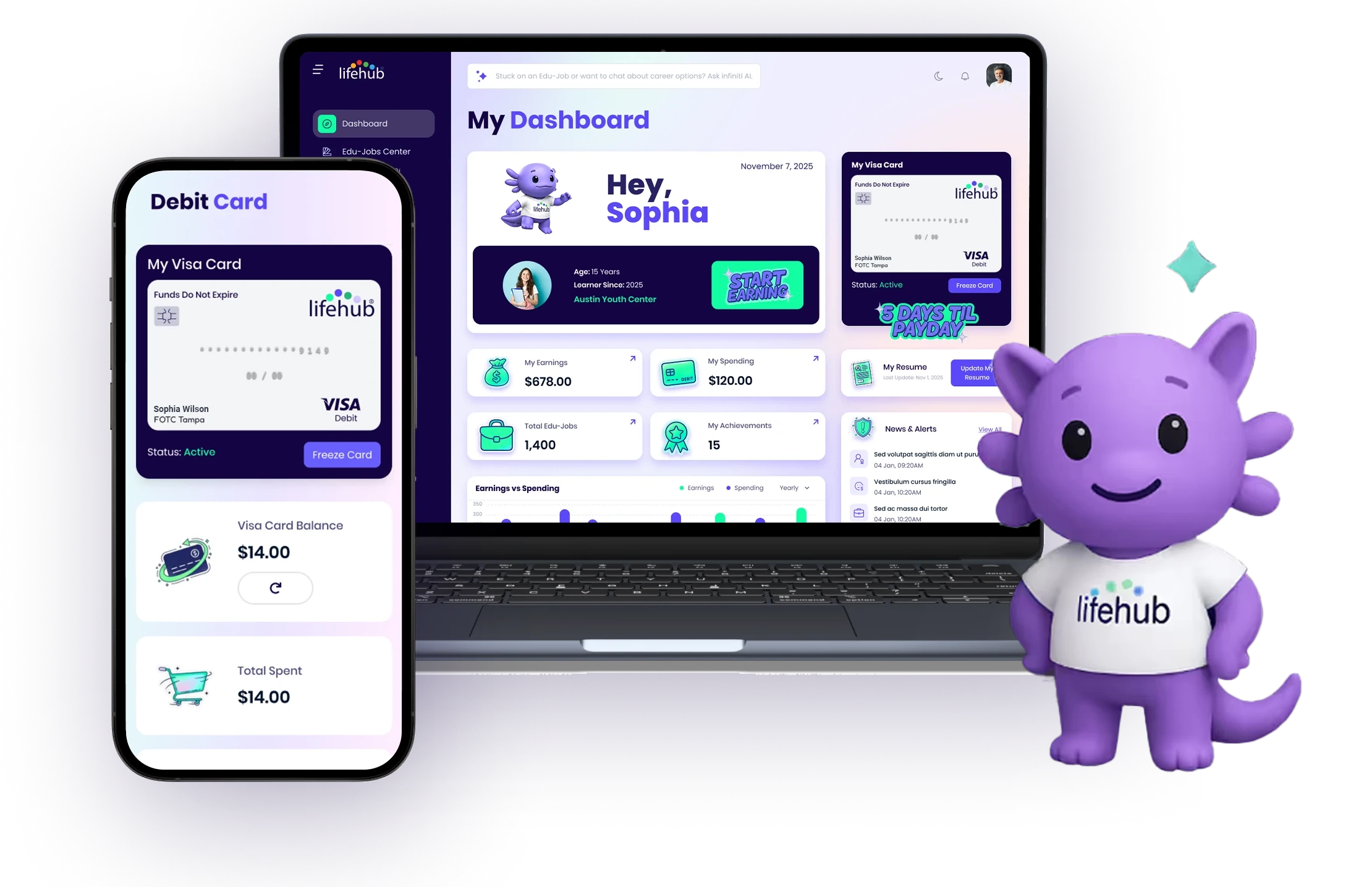
Building an effective app curriculum combines educational expertise with platform design skills and deep understanding of how young people learn. The most successful approaches turn passive content consumption into active skill development while maintaining alignment with established educational standards. Life Hub demonstrates this model by connecting learning tasks directly to real-world rewards, helping young people build financial literacy, digital skills, and practical capabilities through paid micro-learning activities that prove impact while motivating continued growth.


Related Content
Ready to Chat about Life Hub?
Whether you're parents, or a homeschool family, Life Hub is your partner to help you
raise super strong kids.

.svg)

.svg)


.svg)
.svg)

.svg)