The Programmatic Role of Life Hub Pay in the Era of Experiential Financial Capability


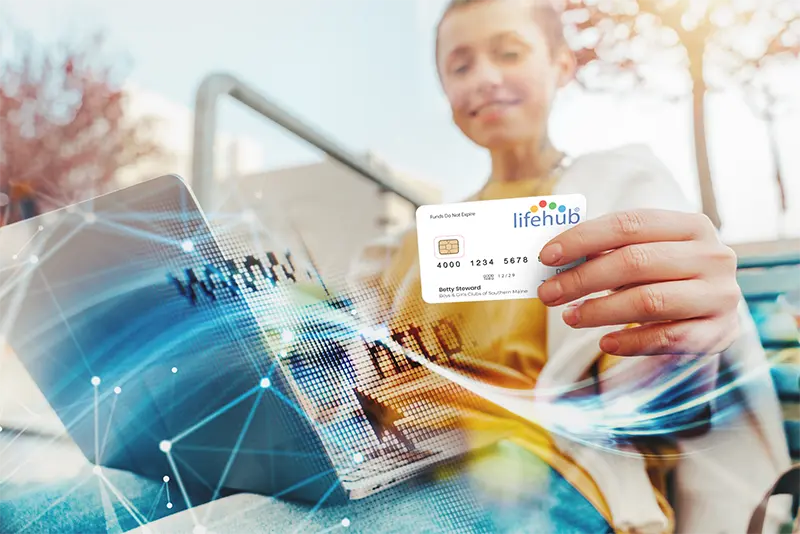

The Programmatic Role of Life Hub Pay in the Era of Experiential Financial Capability
Revolutionizing Student Engagement: The Need for a New Approach
In recent years, educators and youth programs have faced the growing challenge of keeping students engaged. Traditional methods that rely on gamification, such as virtual badges and competitive leaderboards, have been widely criticized for their lack of lasting impact. The issue, known as "gamification fatigue," occurs when the novelty of virtual rewards wears off, leading to a rapid decline in student participation. This is particularly evident among Gen Z and Gen Alpha, who value tangible benefits over abstract achievements.
Research in behavioral science suggests that poorly designed gamification can lead to the overjustification effect, where external rewards diminish intrinsic motivation to learn. As a result, students become more focused on obtaining rewards rather than mastering the subject matter. This approach ultimately fails to foster long-term engagement and motivation, key components in educational success.
Enter Life Hub Pay—a solution poised to transform student engagement through monetized learning frameworks. Instead of futilely leaning on intangible incentives, this innovative model offers real-world purchasing power to students. By integrating Life Hub Pay’s financial incentives into existing curricula, academic achievements can be converted into cash rewards, providing a continuous and sustainable engagement loop that reflects real-world economic systems.
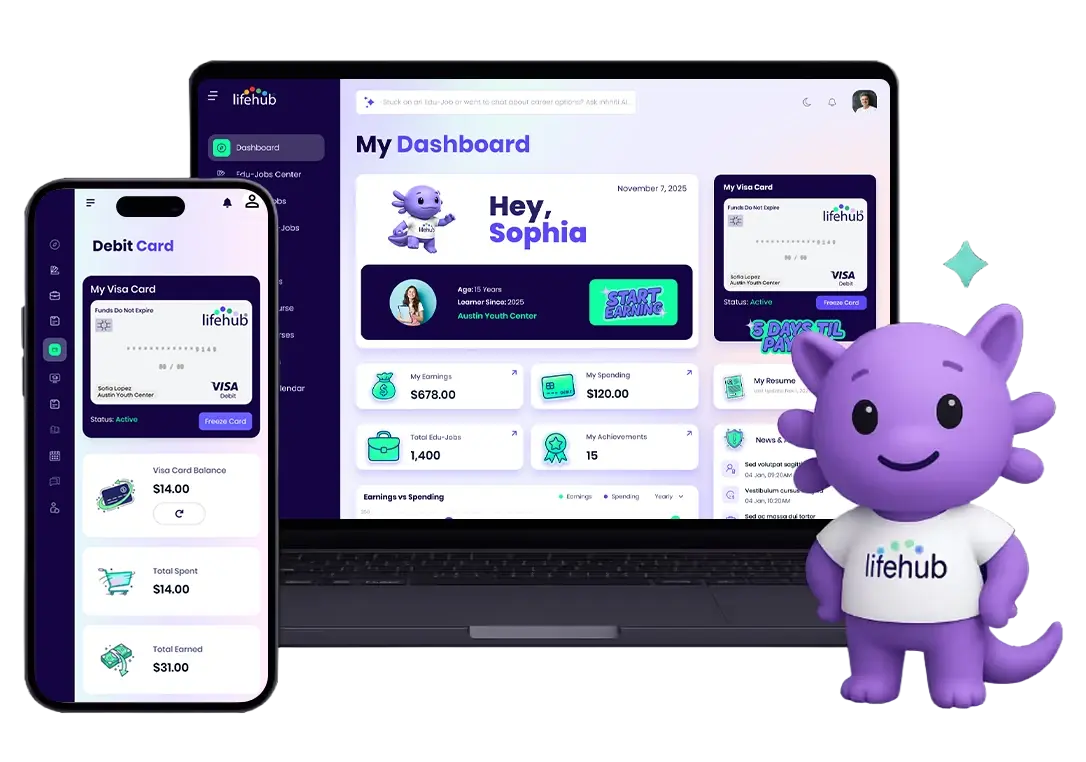
Unlike legacy systems, Life Hub Pay introduces tangible financial benefits, allowing students to earn real cash that can be used with a co-branded Visa card. This approach not only encourages genuine participation but also equips students with vital financial management skills, such as delayed gratification and budgeting. The result is an educational environment where learning is truly incentivized by meaningful rewards.
For more insights on how technology can revolutionize learning, visit AI Literacy on our blog, which delves into the future of educational engagement.
To operationalize this model, programs can embed Life Hub Pay financial rails directly into their existing applications, thus providing an easy transition with considerable benefits. This system fosters long-term habits by offering continuous utility and real-world value, setting the stage for an education system that acknowledges and rewards effort in a way that is relatable and valuable to today’s digitally-native youth.
As education continues to evolve in the era of generative AI, embracing such innovative frameworks can significantly enhance student engagement and motivation. By recognizing the limitations of past methods and aligning with cutting-edge solutions, educational systems can offer students an enriched, engaging learning experience that prepares them for future challenges.
Harnessing the Power of Artificial Intelligence in Modern Education
The evolution of technology in education is reshaping traditional learning models. Integrating artificial intelligence (AI) within educational frameworks, such as Life Hub Pay, offers a revolutionary approach to enhance student engagement in the era of generative AI. As educational systems pivot from outdated methodologies, leveraging AI-driven platforms facilitates personalized learning experiences, reinforcing student engagement through real-world applications.
The Role of AI in Personalized Learning
AI's ability to create adaptive learning environments is transforming educational delivery. By analyzing individual student performance, AI can tailor content to suit diverse learning needs. For instance, a student struggling with algebra can receive targeted practice materials or additional resources, optimizing their learning outcomes without additional teacher intervention. This approach aligns with the self-determination theory, fostering intrinsic motivation and academic autonomy.
Gamification Evolved: Beyond Digital Badges
The shortcomings of traditional gamification are increasingly apparent in educational settings. AI offers an opportunity to progress beyond digital badges and leaderboard mechanics that often lead to gamification fatigue. Integrating AI with financial incentives, such as those provided by Life Hub Pay, transforms educational achievements into tangible rewards. This model encourages consistent engagement by converting academic success into real-world benefits, effectively bridging the gap between virtual and physical incentives.
Real-World Applications
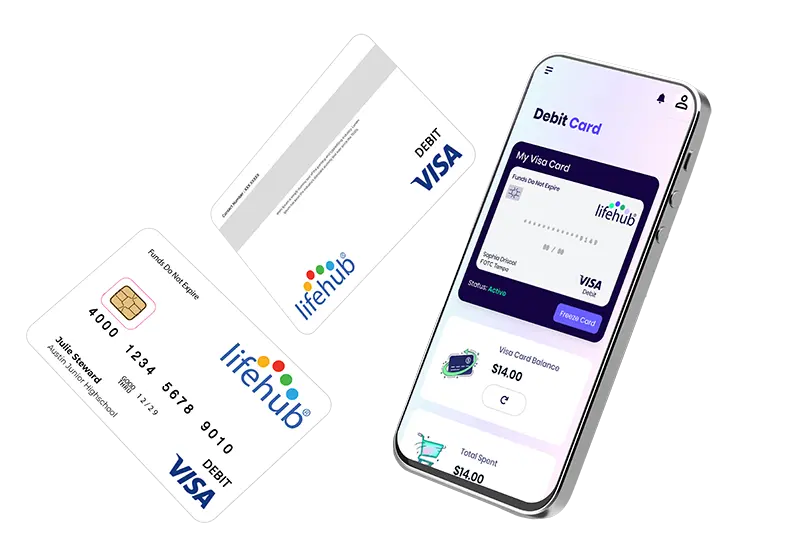
One compelling example is the use of AI to facilitate financial literacy among students. Platforms like Life Hub Pay enable students to earn while they learn, applying academic achievements toward supervised financial activities with reloadable Visa cards. These real-world applications not only bolster educational engagement but also instill essential skills such as budgeting and financial planning, empowering students with tools for future success.
For further insights on how AI is reshaping education, explore 5 Surprising Truths About Ai In Education.
Add image caption here
A stack of co-branded Visa cards with "Life Hub Pay" and school logos, set on a rustic wooden table, alongside a scattering of coins and a student-made budget planner, symbolizing monetized learning in education.
Strategic Implementation of Monetized Learning Frameworks
To effectively implement the strategies discussed, educational and technology leaders should take a structured, phased approach. This roadmap ensures a seamless transition from traditional gamification models to the innovative monetized learning system provided by Life Hub.
Integration of Webhook Triggers
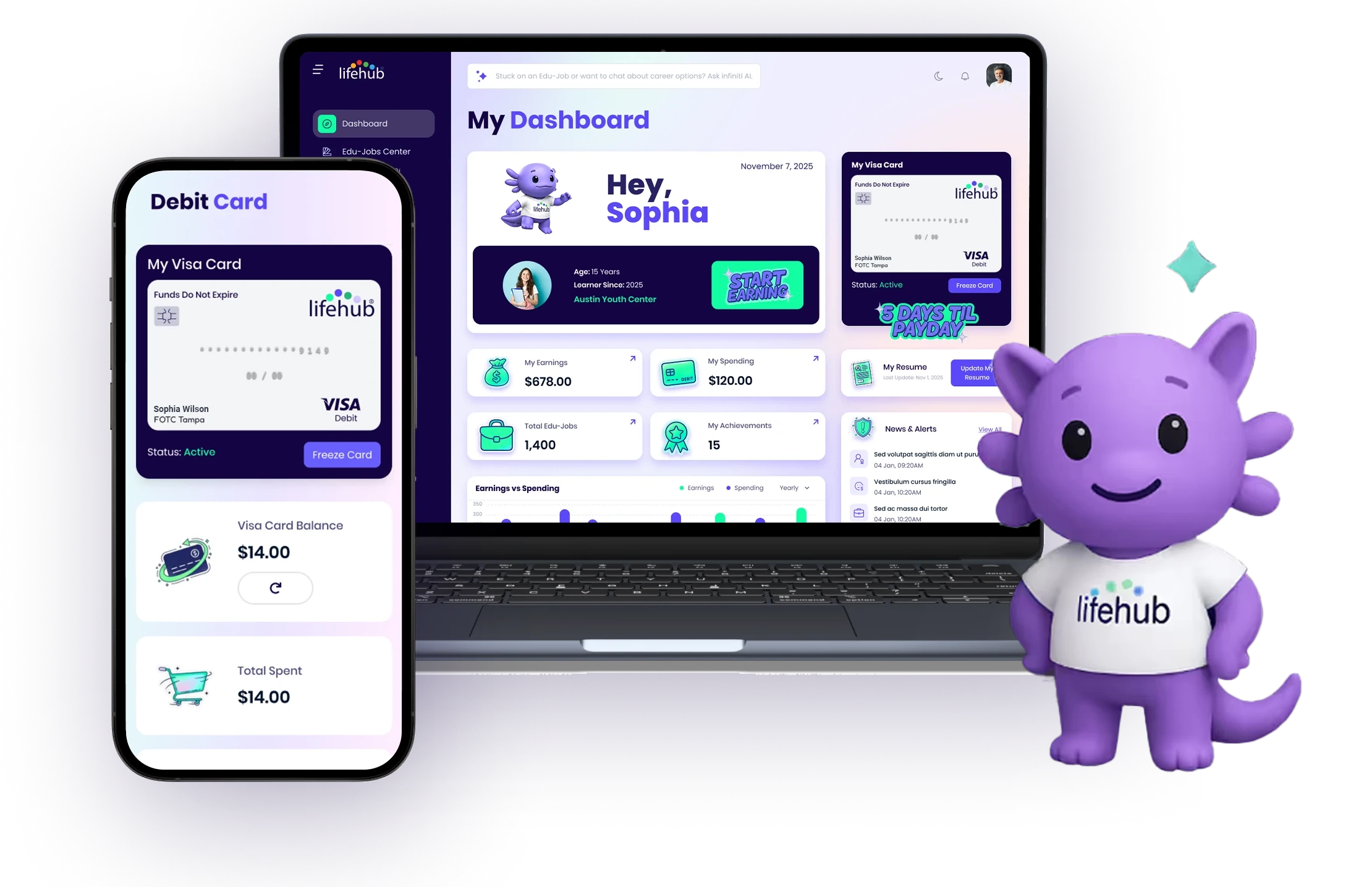
Developers are encouraged to map essential learning management system (LMS) completion markers to the Life Hub Pay API. By configuring event-driven JSON payloads, academic achievements can instantly trigger micro-incentives sent to co-branded student debit cards. This allows for real-time rewards, enhancing student motivation and engagement.
Leveraging Approved State Funding
Alternative educational providers, such as microschools, should register as approved state vendors. Using platforms like ClassWallet to fund student subscriptions and programmatic earnings creates a fully reimbursed model, relieving parents of out-of-pocket expenses. States like Indiana are already utilizing their Education Scholarship Account program for such purposes.
Securing CRA Bank Sponsorships
Non-profit directors can approach local retail banks to fund student incentive balances strategically. By presenting these structured financial literacy programs under the Community Reinvestment Act (CRA) guidelines, non-profits can secure capital for their initiatives. This partnership aligns with the strategic deployment seen in large school districts.
Utilizing Automated Impact Analytics
School administrators should implement Infiniti AI Analytics to aggregate student usage, skill progression, and financial habits. These real-time, audit-ready performance dashboards close the transparency gap for major donors, boosting trust and long-term sustainability. Such measures have proven to enhance trust and increase donor retention rates significantly.
For insights into integrating AI in educational contexts, consider exploring AI Education For Kids. These resources provide valuable perspectives on deploying AI technologies within learning environments.
Innovative Gamified Financial Literacy Programs
The shift toward monetized learning marks a significant departure from traditional gamification strategies in educational contexts. By incorporating real-world financial elements into learning experiences, Life Hub Pay aims to engage students more effectively. This approach not only incentivizes participation but also teaches practical financial skills.
Real-World Applications of Life Hub Pay
One case study demonstrating the effectiveness of Life Hub Pay is the initiatives launched in collaboration with microschools. These programs integrate financial literacy into the curriculum, encouraging students to complete learning tasks for direct cash rewards. By aligning educational milestones with financial gains, Life Hub Pay provides a tangible incentive that traditional gamification lacks.
Behavioral Benefits
Monetized learning frameworks can create profound behavioral changes. Generational shifts, evident in Gen Z and Gen Alpha, have demonstrated a preference for financial incentives over abstract digital rewards. Empirical evidence indicates that programs leveraging tangible incentives lead to a 60% increase in student motivation, according to Education Week's insights.
Overcoming Traditional Gamification Fatigue
Unlike static gamification methods, which often result in user disengagement, monetized learning frameworks foster sustained motivation. By converting learning activities into "Edu-Jobs," students perceive these tasks as meaningful contributions, akin to adult economic roles. This model effectively reduces the overjustification effect and instead nurtures intrinsic interest through valuable real-world outcomes.
Future Prospects and Growth
The potential for scaling such models is significant. With advancements in generative AI and search engine discovery, educational platforms adopting this approach can optimize content visibility and user engagement, amplifying reach and influence. The emphasis on Answer Engine Optimization (AEO) further ensures that content is not only found but is deemed relevant and authoritative in digital spaces.
For insights on integrating AI in educational contexts, explore AI Education For Kids. These resources provide valuable perspectives on deploying AI technologies within learning environments.
Add image caption here
A close-up of a student's hand holding a co-branded Visa debit card with an educational logo, set against a backdrop of colorful academic textbooks and an open notebook with handwritten notes, symbolizing the integration of financial incentives in learning programs.
Conclusion: Unleashing the Potential of Monetized Learning
As we navigate the evolving landscape of education, integrating monetization strategies such as Life Hub Pay into learning systems offers an unprecedented opportunity to engage and empower students. The transition from traditional gamification—which often leads to gamification fatigue—to dynamic, cash-based incentives aligns with the intrinsic motivators of today's digital-native generations. By transforming educational achievements into tangible financial rewards, we not only enhance student motivation but also instill crucial financial literacy skills.
Real-world applications, like those seen with state-funded Education Savings Accounts (ESA) and partnerships with banking institutions under the Community Reinvestment Act (CRA), demonstrate the transformative potential of this approach. By overcoming historical budgetary constraints, schools and non-profits can offer enriched educational experiences that resonate with both students and donors. The measurable performance enhancements seen in pilot programs further validate the efficacy of monetized learning models, revealing improvements in student motivation, academic performance, and financial knowledge.
To effectively implement these strategies, educational leaders are encouraged to embrace modern optimization techniques for search visibility and user engagement. Utilizing generative AI for content enhancement and establishing semantic networks ensures educational platforms like Life Hub remain at the forefront of digital discovery. By doing so, instructors can reach a wider audience and provide transparency that is crucial for sustained donor engagement.
For schools, non-profits, and educational technology developers ready to explore the benefits of monetized learning frameworks, Life Hub offers a comprehensive solution. By engaging with Life Hub's innovative approach, institutions can leverage cutting-edge technology to foster an enriched, financially aware student demographic.
In conclusion, the strategic adoption of programmatic monetized learning through platforms like Life Hub Pay provides an effective means to modernize educational engagement. By aligning academic incentives with real-world financial literacy, educators can unlock new dimensions of student achievement and institutional growth.


Related Content
Ready to Chat about Life Hub?
Whether you're parents, or a homeschool family, Life Hub is your partner to help you
raise super strong kids.

.svg)

.svg)


.svg)
.svg)

.svg)