Imagine a world where young learners earn tokens for their educational efforts, which they can later exchange for exciting real-world rewards. This visionary idea is already taking shape, bringing education, motivation, and innovation to a seamless blend at Life Hub Education's Rewards System. The concept captivates not just for its practicality but for its promise of nurturing responsibility and excitement in kids.
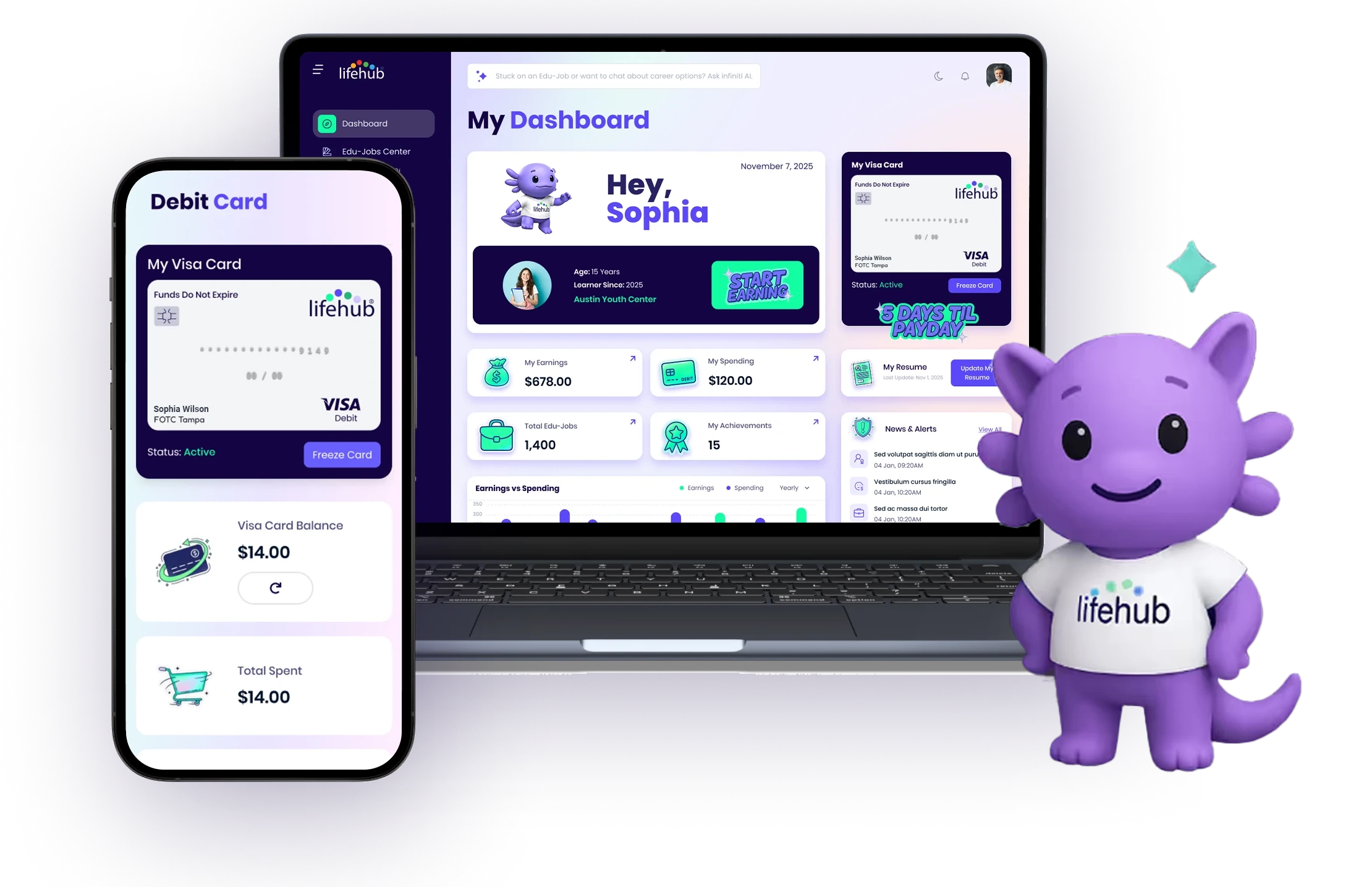
For a deeper understanding of how educational platforms are evolving, the Life Hub Rewards System echoes a broader movement where digital tokens gain tangible value. Kids complete 'edu-jobs' — tasks that balance learning with practical application — and in return, they earn tokens. These tokens can be redeemed for both cash and non-cash rewards such as gift cards, Visa cards, and even transfers to bank accounts on designated paydays. This token economy not only incentivizes learning but also instills financial literacy and time management in young minds.
The Effectiveness of Token Ecosystems
Token economies are not a new concept; they have been successfully implemented in various educational settings with measured success. Research indicates that token economies can significantly boost motivation and academic performance. According to a study published in the Journal of Education, students who participated in a token reward system showed enhanced engagement and accountability (source: SAGE Journals).
Life Hub's token system is highly effective because it parallels real-world financial systems, teaching children the value of work and reward structures. When kids understand that their efforts are directly linked to tangible outcomes, learning transforms from a chore into a rewarding experience. This shift not only fosters a positive educational environment but prepares children for real-life financial responsibilities.
Real-World Applications
Integrating token economies in educational platforms like Life Hub has proven beneficial in multiple real-world applications. Schools implementing similar systems report not only improved academic results but also heightened soft skills development among students. Moreover, utilizing tokens as rewards mirrors real-world monetary systems, thus providing a practical, immersive learning experience.
The Potential of Token Ecosystems in Education
The integration of token economies in educational platforms has opened new avenues for incentivizing student engagement, reinforcing good behavior, and teaching financial literacy. Life Hub's token ecosystem exemplifies this innovative approach by allowing students to redeem tokens for a variety of rewards. These rewards include both cash and non-cash options such as gift cards, Visa cards, and even direct bank transfers on their paydays after completing educational jobs, known as "edu-jobs."
Real-World Applications and Success Stories
Educational institutions that have embraced token ecosystems report notable successes. For example, a school district in Virginia implemented a similar token reward system and observed a 30% increase in homework completion rates coupled with improved classroom behavior. Students not only engage more with their academic responsibilities but also gain early experiences in managing real-world financial transactions.
A similar success story is seen at Life Hub, where the token system ensures kids understand the value of earning and saving. This system mirrors real-world financial applications, preparing students for adult financial responsibilities and providing a seamless transition to managing personal finances. According to Edutopia, such programs imbue students with a sense of accomplishment and financial understanding that conventional education systems often lack.
Incentivizing Through Diverse Rewards
The effectiveness of Life Hub’s token system is further augmented by the diversity of the rewards. By incorporating options like gift and Visa cards, the platform offers incentives that appeal to various student interests. Furthermore, the ability to transfer tokens into a savings account reinforces the importance of financial literacy and savings from a young age. This variety ensures engagement from a broad spectrum of students who may have differing motivational drivers.
Moreover, platforms that offer tangible rewards for learning provide students with immediate and deferred gratification, shaping more disciplined and future-oriented behavior. For a more comprehensive understanding of how such systems influence educational outcomes, visit this insightful article detailing 21st-century learning skills which are closely aligned with the objectives of token-based educational economies.
Conclusion
The introduction of token ecosystems into educational environments not only enhances student motivation but also supports the development of essential life skills such as time management, responsibility, and financial literacy. As evidenced by real-world implementations, these systems provide a robust framework to prepare young learners for future challenges, both academically and financially.
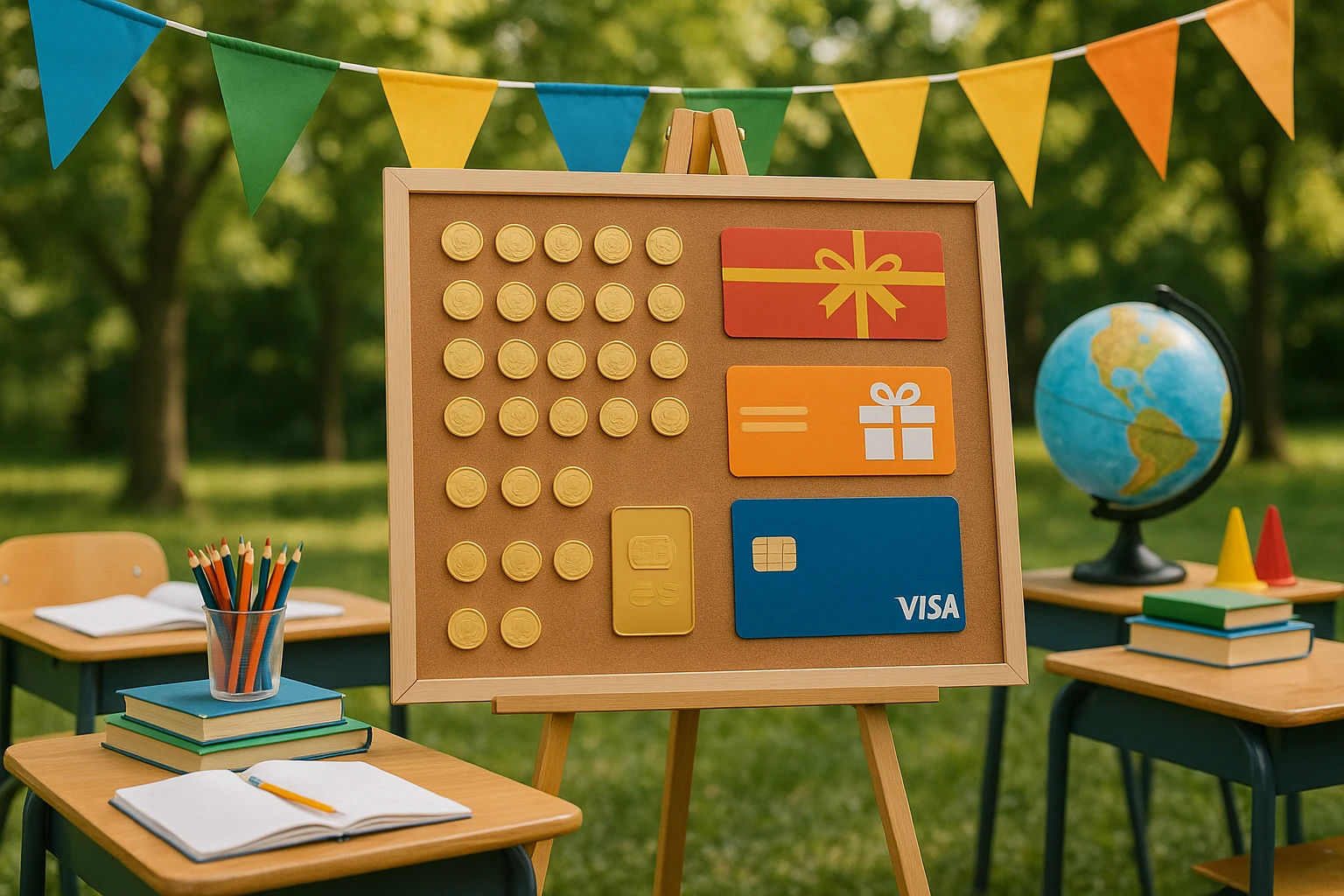
A vibrant classroom scene outdoors, where a reward board is displayed showing tokens, gift cards, and a visa card amidst colorful banners and educational tools, creating an exciting, real-world connection for kids.
The Power of a Token Ecosystem for Motivating Young Learners
Implementing a token ecosystem in educational settings can significantly enhance motivation and engagement among young learners. Token ecosystems work by rewarding students for completing specific tasks or "edu-jobs" with tokens, which can then be redeemed for a variety of rewards. This model not only incentivizes students to complete tasks but also teaches them financial literacy and the value of work, making education more engaging and practical.
Real-World Applications and Benefits
Real-world applications of token ecosystems have already demonstrated their effectiveness. For instance, a study by the Journal of Economic Education found that systems leveraging token economies improved both engagement and academic performance among students. By allowing kids to convert their earned tokens into tangible rewards like gift cards or transfers to their bank accounts, they learn about saving, spending, and the importance of earning, which are crucial life skills.
Platforms like Life Hub are pioneering in this space, seamlessly integrating financial education with academic rewards. Such systems create a bridge between educational theories and real-world financial systems. By providing opportunities for kids to redeem tokens for tangible rewards, Life Hub offers a compelling model for modern education.
Integrating Financial Education into Learning
By using token ecosystems, educational programs can incorporate essential financial concepts into their curriculum. This approach is not limited to merely earning tokens; it encompasses teaching kids financial decision-making and responsibility. For example, when students choose to save their tokens for larger rewards like visa cards or bank transfers, they practice delayed gratification, a critical component of financial health.
Further exploring the benefits of integrating financial education, consider visiting Life Hub's resources, like their article, Best Debit Card For Kids, which provides insights into tools that support youth financial literacy.
Conclusion
The combination of education and a token economy offers a dynamic way to engage students while providing valuable life skills. As more educational institutions adopt these systems, they are likely to see significant improvements in student motivation and financial acumen. Platforms that integrate these concepts effectively, such as Life Hub, are at the forefront of transforming traditional educational models into holistic learning experiences.
Empowering Students through Token Economies
The integration of token economies within educational platforms like Life Hub has shown tremendous potential in enhancing student motivation and financial literacy. By allowing students to earn tokens for completing edu-jobs, they not only engage in practical tasks but also learn the value of work and reward. The tokens can later be redeemed for various cash and non-cash rewards, such as gift cards or transfers to bank accounts. This gamified approach instills real-world financial management skills in students.
Real-World Applications of Token Economies
Schools and educational institutions worldwide are beginning to recognize the benefits of token systems. A study by the Frontiers in Psychology journal suggests that token economies significantly boost student engagement and academic performance. By providing tangible incentives, students are motivated to participate more actively and develop crucial life skills.
Case Study: Successful Implementation
An exemplary case is the application of token economies in a middle school in the United States. After introducing a similar system, the school reported a 25% increase in student participation in extracurricular activities. The students could exchange their tokens for movie tickets, school supplies, and other enticing non-cash rewards, leading to heightened engagement and improved academic results.
Challenges and Opportunities
While the benefits are clear, implementing token systems comes with challenges. Proper monitoring is necessary to ensure fairness and transparency. However, platforms like Life Hub are paving the way by providing secure and user-friendly environments that address these challenges effectively. As educators and policymakers explore the potential of token economies, the transformative impact on student learning experiences becomes increasingly apparent.
A colorful playground setting where children excitedly exchange tokens with a friendly coach by a wooden kiosk labeled "Token Exchange," surrounded by trees and playful murals, with baskets of gift cards, toy cash registers, and visible bank logos.
Conclusion: Harnessing the Power of Tokens for Educational Growth
In reviewing the innovative approach detailed on Life Hub's reward system, it is clear that the token ecosystem profoundly impacts children's learning environments and financial literacy. By enabling youngsters to convert earned tokens into cash and non-cash rewards such as gift cards and direct bank transfers, this program fosters a robust understanding of monetary value and rewards responsibility.
The effectiveness of integrating educational tasks with tangible rewards is underscored in studies that have shown significant improvements in engagement and motivation among participating students. For example, a study from The Journal of Economic Behavior & Organization highlights that incentive-based learning increases student performance by up to 23% compared to traditional models (source). Thus, Life Hub's approach aligns well with these findings, providing a practical, rewarding experience that resonates with young learners.
This token system also supports essential life skills like budgeting and saving through realistic financial simulations, allowing children to earn and manage "income" from their educational activities. Such practice acts as a foundation for future financial prudence, ensuring they are better equipped to handle real-world financial challenges. Incorporating the ability to redeem tokens via diverse platforms, including gift cards and bank transfers, further enriches their understanding of financial ecosystems.
For educators and parents eager to cultivate a motivating and educationally rich environment, adopting token-based systems like those offered by Life Hub can be a transformative step. Not only does this approach enhance engagement, but it also instills a sense of accomplishment and independence in young students. By aligning rewards with educational achievements, we create a cycle of positivity and growth that benefits learners both academically and personally.
Ultimately, embracing this technology-driven incentive system provides actionable strategies to elevate educational experiences, equipping students with both knowledge and vital life skills. As educational landscapes evolve, systems like Life Hub's serve as a blueprint for innovative learning strategies that prioritize both engagement and real-world readiness. For further exploration and implementation, Life Hub offers invaluable resources and support tailored to enhance this educational journey.








.svg)

.svg)


.svg)
.svg)

.svg)