Real Education: Teaching Skills That Matter in 2026




Young people sit through thousands of hours of instruction, but many graduate without knowing how to budget, write a professional email, or navigate workplace software. This gap between what schools teach and what life demands has parents, educators, and learners asking important questions about the purpose and effectiveness of modern schooling. Real education goes beyond test scores and standardized curricula to prepare young people for the challenges they will actually face.
What Real Education Means for Young People
Real education focuses on practical application rather than theoretical knowledge alone. It builds the bridge between what learners study and what they need to thrive in their careers, finances, and personal lives.
The concept has sparked debate among education reformers. Charles Murray's book Real Education challenged conventional thinking about educational standards and ability. Meanwhile, John Dewey argued in My Pedagogic Creed that education must connect to social life and community participation.
The Gap Between School and Life
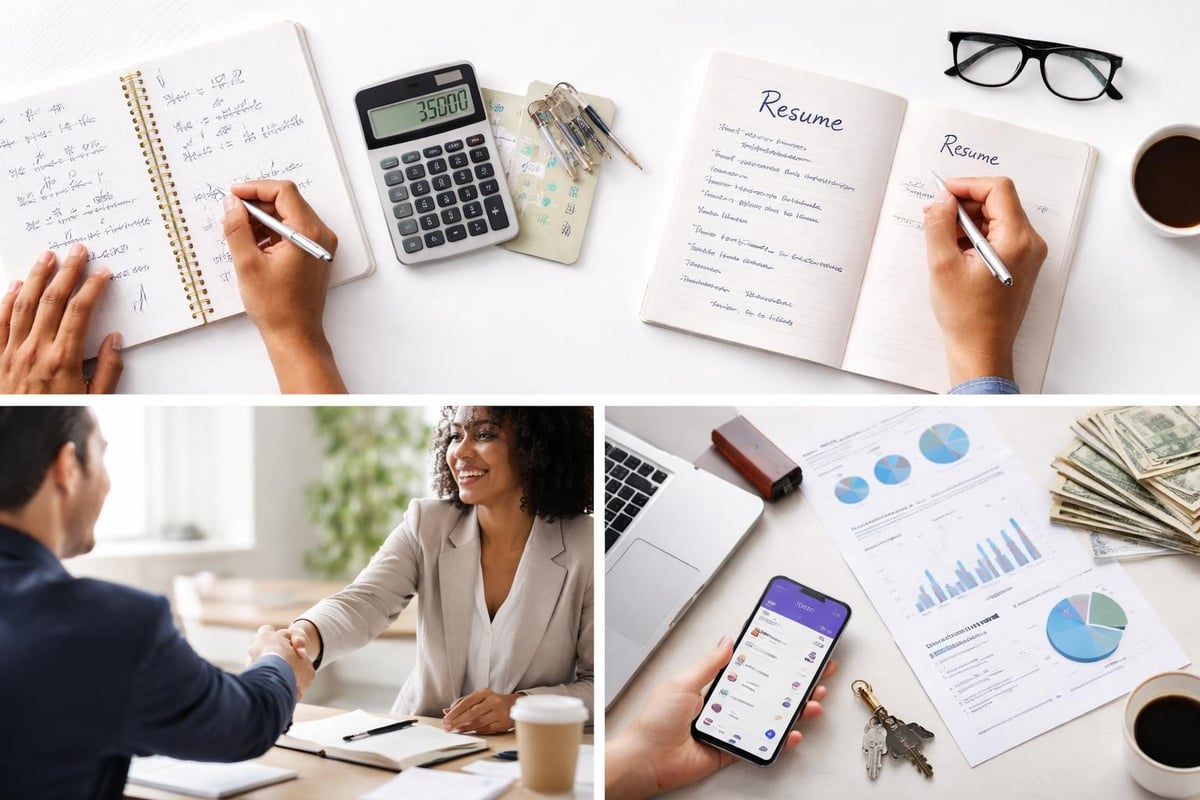
Traditional schooling often prioritizes memorization and abstract problem-solving. Learners can solve quadratic equations but struggle to calculate compound interest on a credit card. They write essays about historical events but freeze when asked to draft a resume.
Common skills missing from traditional education:
- Creating and following a personal budget
- Understanding taxes, insurance, and retirement savings
- Professional communication and workplace etiquette
- Using industry-standard software and digital tools
- Negotiating salary and evaluating job offers
- Basic entrepreneurship and side income strategies
This disconnect creates anxiety and unpreparedness as young people transition to adulthood. Real education addresses these gaps through hands-on learning and immediate application.
Building Skills Through Experience
Learning by doing creates deeper understanding than passive consumption of information. When young people practice skills in realistic contexts, they build confidence and competence simultaneously.
Realia in education refers to using real objects and authentic materials in instruction. This principle extends beyond physical objects to include real tasks, genuine projects, and actual responsibilities that mirror adult life.
How Hands-On Learning Works
Practice creates neural pathways that lectures alone cannot build. A learner who completes a tax form learns more about deductions than one who watches a video about taxes. Someone who manages a small budget develops financial judgment that worksheets cannot teach.
| Learning Method | Retention Rate | Application Ability |
|---|---|---|
| Lecture alone | 5-10% | Low |
| Reading | 10-20% | Low to medium |
| Demonstration | 30% | Medium |
| Practice by doing | 75% | High |
| Teaching others | 90% | Very high |
These numbers explain why real education emphasizes action over absorption. Young people need opportunities to try, fail, adjust, and succeed in safe environments before facing high-stakes situations.
Motivation Through Tangible Results
Real education connects effort to outcomes in visible ways. When learners see the direct results of their work, whether through completed projects, earned money, or solved problems, they develop intrinsic motivation.
This mirrors how adults stay engaged in their careers and personal development. People continue learning when they see progress and receive feedback that matters to them. Abstract grades often fail to provide this connection, especially for learners who struggle with traditional academics but excel at practical tasks.
Financial Literacy as Foundation
Money skills represent one of the clearest examples where traditional education falls short. Most young people enter adulthood without understanding credit scores, investment basics, or how to evaluate financial products.
Real education treats financial literacy as essential rather than optional. These skills impact every major life decision from college choice to career planning to retirement security.
Core Money Skills Every Young Person Needs
Financial capability starts with basic concepts but extends to sophisticated decision-making. Young people should understand both mechanics and psychology of money.
Essential financial competencies:
- Tracking income and expenses accurately
- Distinguishing needs from wants in spending decisions
- Understanding interest rates on savings and debt
- Comparing costs using unit prices and total ownership costs
- Reading and questioning marketing and sales tactics
- Setting financial goals and creating action plans
- Understanding risk and reward in investments
These skills build on each other. A learner who masters budgeting can then tackle credit management. Someone who understands compound interest makes smarter choices about debt and savings.
A comprehensive life skills curriculum integrates financial education with career readiness, digital literacy, and personal development. This holistic approach recognizes that money skills connect to nearly every other life domain.
Career Readiness Beyond Resume Building
Real education prepares young people for the workplace they will actually enter, not an idealized version from decades past. The 2026 job market demands digital fluency, adaptability, and specialized skills alongside traditional credentials.
Understanding Modern Career Paths
Linear career trajectories have become rare. Young people will likely change roles, industries, and even career fields multiple times. Real education helps them develop portable skills and learning agility rather than training for a single occupation.
Exploring different fields through low-risk experiences helps learners identify interests and aptitudes. Someone might discover a passion for data analysis, graphic design, or financial planning through hands-on projects rather than reading career descriptions.
| Traditional Career Prep | Real Education Approach |
|---|---|
| Choose major early | Explore multiple interests |
| Focus on credentials | Build demonstrable skills |
| Single career path | Adaptability and pivoting |
| Academic achievements | Portfolio of real work |
| Networking after graduation | Building connections early |

Digital and AI Literacy Requirements
Every industry now requires some level of digital competency. Young people need more than social media skills. They must understand professional software, data privacy, digital communication norms, and emerging technologies.
Artificial intelligence will reshape work throughout learners' careers. Understanding how AI tools function, where they add value, and their limitations becomes as important as reading and math. An AI literacy curriculum prepares young people to work alongside these technologies rather than compete against them.
Practical experience with workplace tools like spreadsheets, presentation software, project management platforms, and communication systems gives young people an immediate advantage. Employers value candidates who can contribute from day one without extensive software training.
The Role of Immediate Rewards
Real education recognizes that motivation matters. Young people engage more deeply when they receive tangible benefits from their learning efforts, not just abstract promises of future success.
Why Delayed Gratification Falls Short
Adults often tell young people to study hard now for rewards years or decades later. This advice ignores developmental psychology and behavioral economics. The teenage and young adult brain discounts future rewards steeply.
Immediate feedback and concrete outcomes create stronger learning loops. When a young person completes a challenging task and receives recognition or compensation, their brain reinforces the behaviors that led to success.
Benefits of immediate rewards in learning:
- Increased engagement and completion rates
- Faster skill development through repeated practice
- Development of work ethic and responsibility
- Real-world understanding of value exchange
- Financial resources for further learning or goals
This approach does not eliminate long-term thinking. Rather, it builds the foundation for delayed gratification by first establishing that effort produces results.
Learning Through Earning
Connecting education to income helps young people understand the economic value of skills. When someone earns money by demonstrating knowledge or completing tasks, they internalize lessons that traditional grading cannot teach.
This model reflects how adult learning works. Professionals invest in skills that advance their careers and increase their earning potential. Real education applies this principle earlier, helping young people build positive associations between learning and personal benefit.
The experiences provided through schools and youth organizations can incorporate paid learning opportunities that teach both subject matter and financial responsibility. Learners practice skills while earning, save for goals, and begin building financial independence.
Practical Application in Daily Life
Real education transforms abstract concepts into concrete actions. Every subject area connects to daily decisions and long-term outcomes when taught with application in mind.
Making Academic Subjects Relevant
Math becomes more engaging when learners use it to calculate sale prices, compare phone plans, or project investment growth. Writing improves when practiced through emails, proposals, and real communication rather than only essays for teachers.
Science concepts stick when connected to health decisions, environmental choices, or technology troubleshooting. History provides context for current events and civic participation when taught as an ongoing story rather than isolated facts.
- Identify the practical question or need
- Connect relevant academic concepts
- Practice applying knowledge to solve the problem
- Reflect on the process and outcomes
- Transfer the approach to new situations
This cycle works across subjects and skill levels. A micro-learning platform can break complex skills into manageable tasks that build toward real capabilities.
Social and Emotional Learning Through Real Challenges
Interpersonal skills develop through actual interaction, not worksheets about feelings. Young people need safe opportunities to collaborate, resolve conflicts, give and receive feedback, and navigate social dynamics.
Real education includes projects that require teamwork, communication under pressure, and persistence through setbacks. These experiences build resilience and emotional intelligence that serve learners throughout life.

Measuring Success Beyond Test Scores
Real education requires different metrics than traditional schooling. While academic assessment has its place, deeper measures reveal whether young people can actually apply what they have learned.
Competency-Based Assessment
Can the learner demonstrate the skill in a realistic context? This question matters more than whether they can answer multiple-choice questions about it. Competency-based evaluation looks at performance rather than recall.
Alternative assessment methods:
- Completed projects and work samples
- Skill demonstrations in authentic contexts
- Portfolios showing growth over time
- Peer and expert feedback on real work
- Self-reflection on learning process
- Application to novel situations
These approaches provide richer information about what learners can do. They also build metacognitive skills as young people evaluate their own growth and set development goals.
Long-Term Outcomes That Matter
The true test of education appears years after formal instruction ends. Do young people make sound financial decisions? Can they adapt to changing career demands? Have they developed the judgment to navigate complex situations?
Organizations like Real Educators emphasize relevance, empathy, action, and lifelong learning as core principles. These values lead to outcomes beyond employment rates or income levels, though those matter too.
Creating Real Education Opportunities
Parents, educators, and program designers can all contribute to more practical, applied learning experiences. The shift does not require abandoning academic standards. It means connecting those standards to meaningful application.
For Families
Parents can create learning opportunities through everyday activities. Involve young people in family budgeting discussions. Let them research and compare options for major purchases. Encourage side projects that develop skills while exploring interests.
Support exploration across different fields. A young person interested in gaming might learn programming, graphic design, or business through that lens. Someone curious about fashion could explore marketing, supply chains, or financial modeling.
For Educational Programs
Schools and youth organizations can integrate real-world tasks into their programming. Partner with local businesses for mentorship and project opportunities. Use authentic assessments alongside traditional tests.
The principles outlined in the Campaign for Real Education advocate for standards and accountability while allowing flexibility in how learning happens. Programs can maintain rigor while increasing relevance.
For Young Learners Themselves
Take ownership of your learning beyond assigned work. Seek opportunities to practice skills in real contexts. Start small projects that interest you. Ask adults about their work and what skills matter most.
View mistakes as information rather than failure. Real education involves trying things you cannot do yet and improving through practice. The most valuable learning often happens when tasks feel challenging but achievable.
Technology as an Enabler
Digital platforms expand access to real education opportunities. Young people can now practice skills, receive feedback, and build portfolios regardless of their geographic location or school resources.
Scalable Personalized Learning
Technology allows programs to meet learners where they are and adapt to their progress. Someone struggling with a concept can access additional support. A fast learner can move ahead without waiting for the class.
This personalization makes real education accessible to diverse learners. Students who struggle in traditional academics might excel at practical tasks. Others might need different entry points to engage with material.
Connecting Learning to Opportunity
Digital platforms can link educational tasks to actual opportunities. Young people might complete projects for real organizations, build professional networks, or develop portfolios that demonstrate capabilities to future employers or educators.
These connections help learners see education as the beginning of their careers rather than a separate phase of life. Work and learning blend together, as they do throughout adulthood.
Building Confidence Through Capability
Perhaps the most important outcome of real education is the confidence that comes from proven capability. Young people who have successfully navigated real challenges know they can handle what comes next.
This confidence differs from empty self-esteem boosting. It rests on evidence. A young person who has managed money, completed projects, solved problems, and overcome obstacles develops justified belief in their abilities.
How real experience builds confidence:
- Proof of capability through completed challenges
- Skills that transfer to new situations
- Recovery from setbacks and mistakes
- Recognition from others for real contributions
- Growing independence and decision-making ability
These experiences create a positive cycle. Confidence leads to trying new challenges. Success builds more confidence. Even failures provide learning that increases capability over time.
The Future of Learning
Real education will become increasingly important as the pace of change accelerates. Young people need adaptability more than specific technical knowledge that might become obsolete.
The skills that endure are those grounded in human judgment, creativity, and interpersonal connection. Financial literacy, communication, problem-solving, and ethical reasoning remain relevant regardless of technological disruption.
Programs that connect learning to action, provide immediate feedback, and reward demonstrated capability prepare young people for uncertainty. They build both specific skills and the learning agility to acquire new ones throughout life.
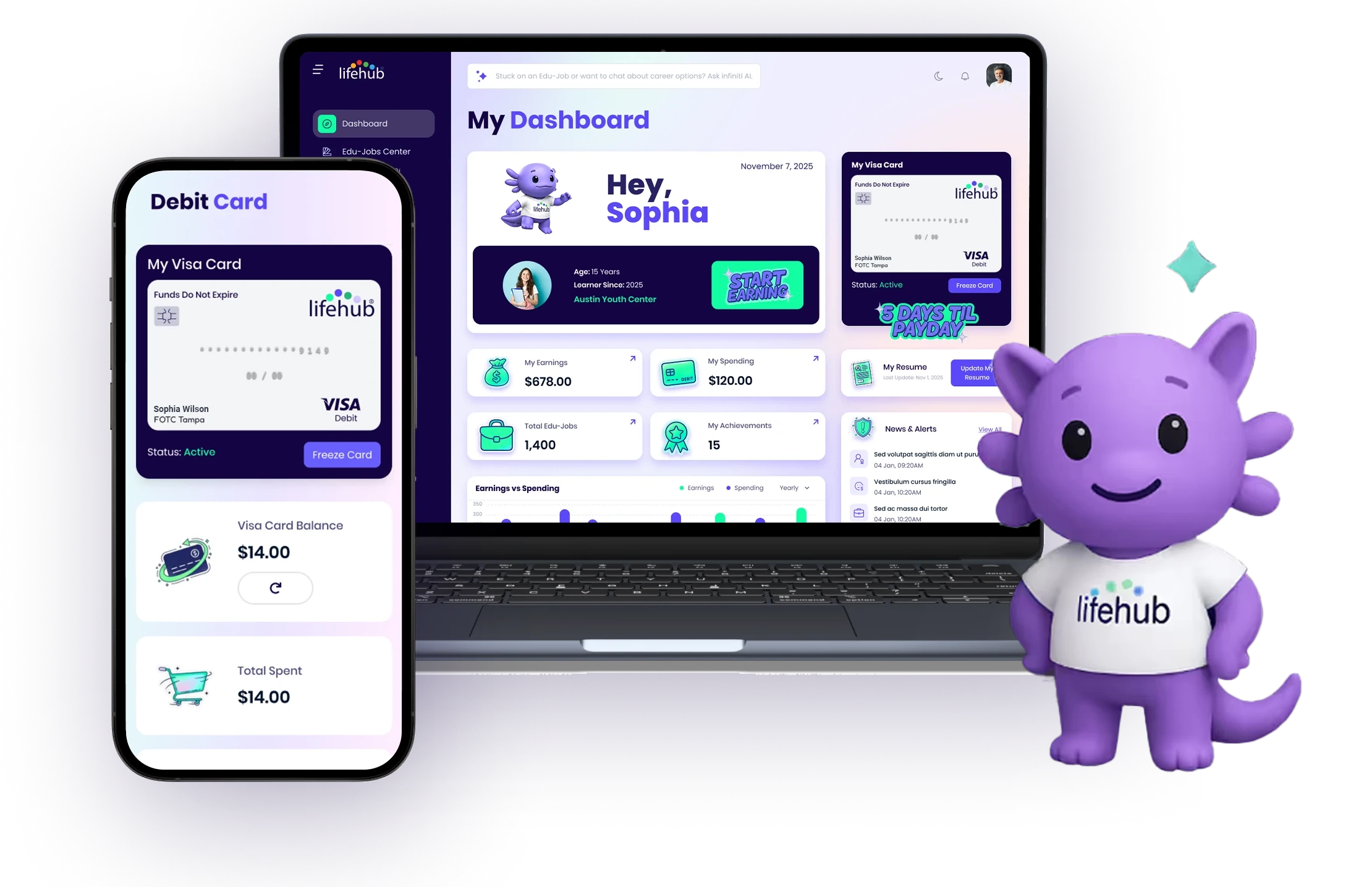
Real education transforms how young people learn by connecting knowledge to action and effort to meaningful outcomes. When learners can practice skills in realistic contexts, receive tangible rewards, and see the relevance to their lives, they engage more deeply and retain more. Life Hub makes this approach accessible through paid micro-learning tasks that build financial literacy, career readiness, digital skills, and real-world capability. Young people earn while learning, developing both competence and confidence through experiences that prepare them for life beyond school.


Related Content
Ready to Chat about Life Hub?
Whether you're parents, or a homeschool family, Life Hub is your partner to help you
raise super strong kids.

.svg)

.svg)


.svg)
.svg)

.svg)