Program Entrepreneurship: Building Business Skills


Program entrepreneurship offers young people a structured pathway to develop business skills through organized curriculum and hands-on experience. Unlike informal learning, program entrepreneurship combines academic frameworks with practical application, giving learners the tools to understand how businesses work while building confidence through real projects. This approach has become valuable for preparing the next generation to think creatively about problems, manage resources, and create value in their communities.
What Program Entrepreneurship Means for Young Learners
Program entrepreneurship refers to structured educational initiatives that teach business creation and innovation through formal curriculum. These programs typically include coursework, mentorship, and project-based learning designed to develop entrepreneurial thinking and skills.
The difference between general business education and program entrepreneurship lies in the action component. Young learners don't just read about concepts. They apply them through mini-ventures, simulations, or real projects that require planning, execution, and reflection.
Core Elements of Effective Programs
Strong program entrepreneurship initiatives share several common features that make learning stick:
- Structured curriculum that progresses from fundamentals to advanced concepts
- Hands-on projects where learners create actual products or services
- Mentorship connections with experienced entrepreneurs or business professionals
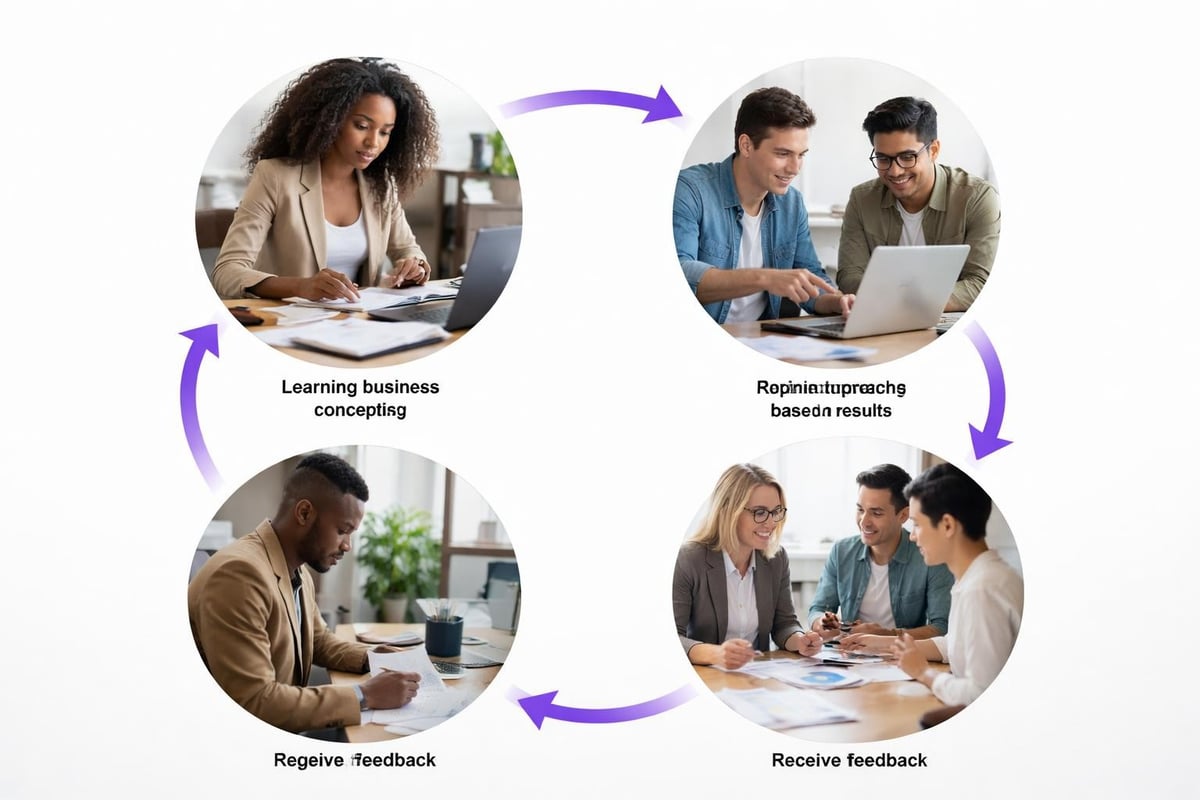
- Feedback loops that help learners understand what works and what needs improvement
- Resource access including tools, networks, and sometimes seed funding
Wharton's entrepreneurship program for high school students demonstrates this approach by combining classroom learning with team-based startup projects over two intensive weeks. Learners work through real challenges, from market research to pitch presentations.
The best programs also recognize that failure is part of the learning process. When a project doesn't work out as planned, learners gain insights they can apply to future ventures.
Building Financial Literacy Through Entrepreneurial Thinking
Program entrepreneurship naturally develops financial literacy because business concepts require understanding money flow. Learners must grasp revenue, expenses, profit margins, and reinvestment to make their ventures work.
Money Management in Practice
When young people run a small business or complete entrepreneurial projects, they encounter financial decisions constantly. They track income from sales, budget for supplies, and calculate whether their venture is sustainable.
| Financial Skill | How Program Entrepreneurship Develops It | Real Application |
|---|---|---|
| Budgeting | Allocating limited resources across project needs | Planning startup costs and operating expenses |
| Income tracking | Recording all revenue sources | Understanding multiple income streams |
| Expense management | Identifying and controlling costs | Making trade-offs between quality and price |
| Profit calculation | Subtracting expenses from revenue | Determining business viability |
| Financial forecasting | Projecting future income and costs | Planning for growth or scaling |
These skills transfer directly to personal finance. A learner who understands business cash flow can apply the same thinking to managing an allowance or part-time job income.
Program Entrepreneurship Across Educational Levels
Different age groups benefit from program entrepreneurship tailored to their developmental stage. The concepts remain similar, but the complexity and independence increase as learners mature.
Elementary and Middle School Foundations
Younger learners can grasp basic entrepreneurial concepts through simplified projects. A lemonade stand, craft sale, or neighborhood service teaches fundamentals like customer needs, pricing, and quality.
Program entrepreneurship at this level focuses on:
- Identifying problems they can solve
- Creating something of value to others
- Understanding the connection between effort and results
- Learning that money comes from providing value, not just asking for it
These early experiences build confidence and show learners they can create rather than just consume.
High School and Beyond
Older learners can handle more sophisticated program entrepreneurship that mirrors real business creation. They can conduct market research, develop business plans, and potentially launch actual ventures with real customers.
Stanford Graduate School of Business offers strategic frameworks that help learners think systematically about building companies. While designed for graduate students, the concepts can be adapted for motivated high school learners working on serious projects.
The University of Illinois Chicago's entrepreneurship program immerses learners in the local startup ecosystem through partnerships and internships, showing how classroom concepts translate to real-world application.
Integrating Program Entrepreneurship with Other Skills
Entrepreneurial learning doesn't exist in isolation. The most effective program entrepreneurship connects business concepts to other essential competencies young people need.
Cross-Functional Skill Development
Digital literacy becomes necessary when learners need to research markets, create presentations, or manage social media for their ventures. They learn productivity tools because they have a real reason to use them, not just for practice exercises.
Critical thinking develops through problem-solving in uncertain situations. Entrepreneurs must evaluate options, anticipate consequences, and make decisions with incomplete information.
Communication skills improve when learners need to pitch ideas, negotiate with suppliers, or explain their product to customers. The stakes feel real, which motivates clearer expression.
- Mathematical concepts become tangible through pricing calculations and financial tracking
- Writing skills improve through business plan development and marketing copy
- Research abilities grow through market analysis and competitive assessment
- Collaboration strengthens through team-based ventures
Micro-learning platforms can deliver these integrated skills through short, focused tasks that build toward entrepreneurial competence gradually.

Real-World Application and Earning Potential
Program entrepreneurship becomes particularly powerful when learners can earn money from their efforts. This creates immediate feedback that validates their work and reinforces the connection between skill development and financial reward.
The Motivation of Real Earnings
When young people complete entrepreneurial tasks and receive actual payment, several things happen. They take the work more seriously because real money is at stake. They develop a clearer understanding of how economic value is created. They gain confidence in their ability to generate income through their own efforts.
Traditional program entrepreneurship often uses simulations or hypothetical scenarios. While these have educational value, they lack the emotional impact of real financial outcomes. Learners may complete assignments to get grades, but earning money creates a different level of engagement.
Structured Earning Through Entrepreneurial Tasks
Paid micro-learning tasks combine program entrepreneurship principles with immediate financial results. Learners complete business-related activities like:
- Researching market opportunities for specific products
- Creating marketing materials for hypothetical or real businesses
- Analyzing competitor pricing strategies
- Developing budget proposals for startup ventures
- Pitching business ideas through written or video presentations
Each completed task builds entrepreneurial competence while providing earnings. This approach makes program entrepreneurship accessible even for learners who aren't ready to launch full businesses.
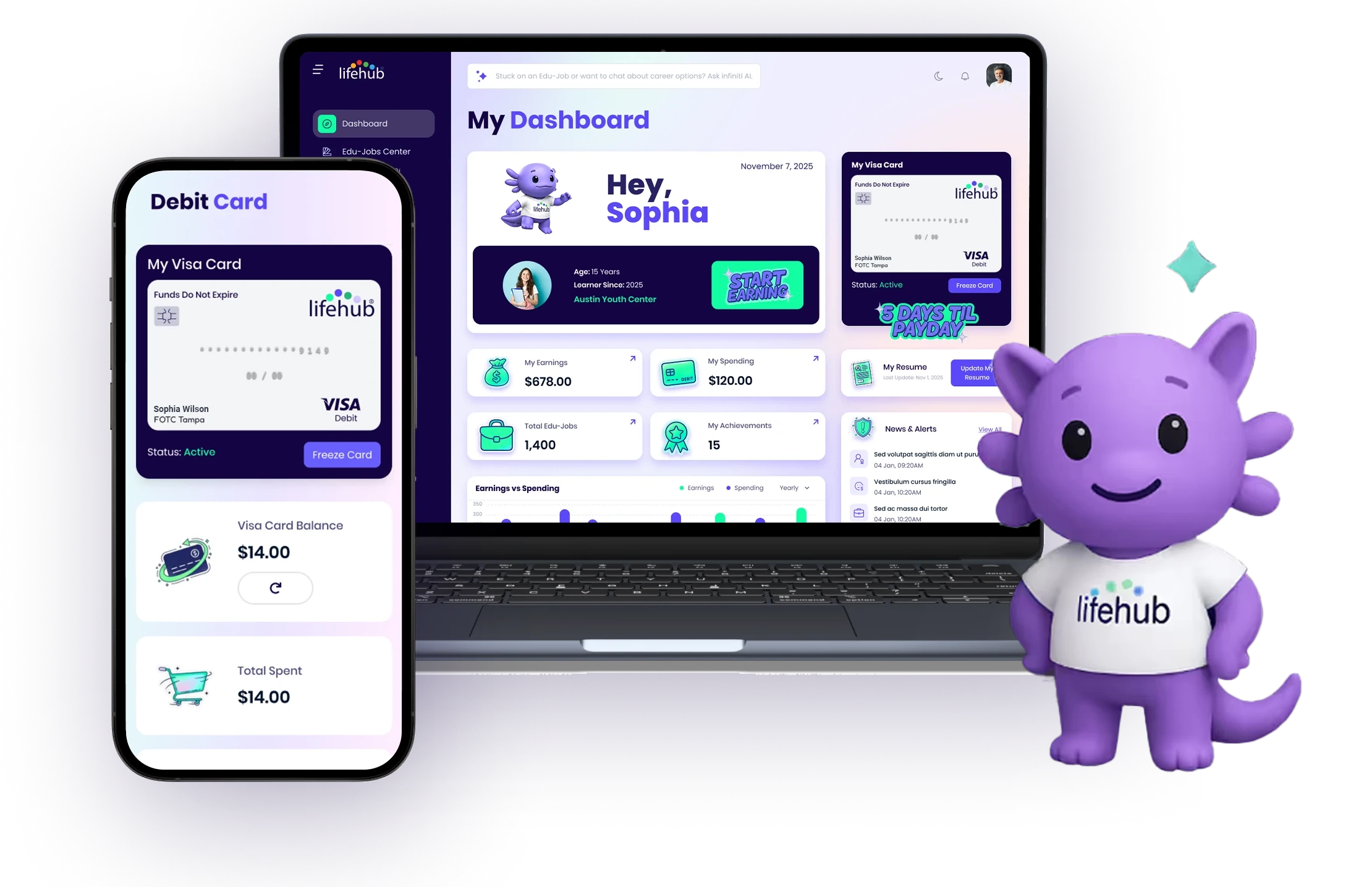
The Life Hub platform demonstrates how entrepreneurial learning can happen through paid Edu Jobs that cover business concepts alongside other subjects. Learners practice entrepreneurial thinking in manageable chunks while earning money that accumulates in their accounts.
Adapting Program Entrepreneurship for Different Learning Environments
Program entrepreneurship works in various settings, from traditional classrooms to homeschool networks to youth organizations. The key is adapting the approach to fit the context while maintaining the core elements.
Schools and Districts
Schools implementing entrepreneurship programs can integrate business concepts across existing subjects. A math class might use business scenarios for word problems. Social studies could examine entrepreneurship in different cultures or historical periods. Language arts can incorporate business writing assignments.
Project-based learning naturally aligns with program entrepreneurship. When learners work on extended projects that require planning, resource management, and presentation, they're developing entrepreneurial skills even if the project isn't explicitly about business.
Youth Organizations and Community Groups
Youth-oriented organizations often have flexibility to design intensive program entrepreneurship experiences. Summer camps, after-school programs, and weekend workshops can focus entirely on venture creation without the constraints of standard curriculum.
These settings allow for deeper dives into specific entrepreneurial topics. A two-week intensive can take learners through the entire process from idea generation to market testing to final pitch, similar to accelerator programs designed for adults.
Family-Based Learning
Families and homeschool networks can customize program entrepreneurship to individual learner interests. A young person passionate about art might explore creative entrepreneurship. Someone interested in technology could focus on digital products or services.
The advantage of family-based program entrepreneurship is the ability to involve learners in real household economic decisions. They can see family budgeting in action and understand how parents make financial trade-offs.
Technology's Role in Modern Program Entrepreneurship
Digital tools have expanded what's possible in program entrepreneurship. Learners can access global markets, learn from distant mentors, and use sophisticated business software that was once available only to established companies.
Essential Digital Skills for Young Entrepreneurs
Productivity software forms the foundation. Learners need basic competence with:
- Word processing for business plans and correspondence
- Spreadsheets for financial tracking and modeling
- Presentation software for pitches and reports
- Email and calendar management for professional communication
- Cloud storage for organizing business documents
Research and analysis tools help learners understand markets and competition. They learn to evaluate information quality, identify trends, and draw conclusions from data.
Artificial intelligence is becoming part of program entrepreneurship as learners explore how AI can help with business tasks. They might use AI for market research, content creation, or customer service planning, developing literacy with these tools in practical contexts.
The MIT Entrepreneurship Development Program shows how technical institutions integrate technology deeply into entrepreneurship education, preparing participants to build innovation-driven businesses.
Global Perspectives on Program Entrepreneurship
Entrepreneurship education varies significantly across cultures and economic contexts. Understanding these differences helps young learners appreciate diverse approaches to business creation.
International Models and Initiatives
The Global Innovation through Science and Technology initiative supports entrepreneurs in 135 emerging economies through skills development and mentorship. This program recognizes that entrepreneurship looks different depending on local resources, regulations, and market conditions.
Young learners benefit from exposure to these global perspectives. They discover that entrepreneurship isn't just about technology startups in Silicon Valley. It includes social enterprises addressing community needs, agricultural innovations in developing regions, and creative businesses in established markets.

Cultural Attitudes Toward Risk and Innovation
Program entrepreneurship should help learners understand how cultural factors influence business creation. Some cultures celebrate risk-taking and view business failure as a learning experience. Others prioritize stability and gradual progress over rapid innovation.
Neither approach is universally superior. Young learners gain perspective by examining how successful entrepreneurs work within different cultural contexts, adapting their strategies to local expectations while still pursuing innovation.
Measuring Progress in Program Entrepreneurship
Unlike traditional academic subjects with standardized tests, program entrepreneurship requires different assessment approaches. The goal is to evaluate growth in entrepreneurial competence, not just knowledge retention.
Competency-Based Assessment Methods
Effective program entrepreneurship measures progress through:
Portfolio development where learners document their projects, reflections, and growth over time. A portfolio might include business plans, financial statements from ventures, marketing materials created, and written reflections on what worked and what didn't.
Skill demonstrations that require learners to apply concepts in new situations. Rather than answering questions about market research, they conduct actual market research for a specified product or service.
Peer and mentor evaluations that provide diverse perspectives on a learner's development. Other young entrepreneurs can offer insights on collaboration and communication, while adult mentors assess strategic thinking and execution quality.
| Assessment Type | What It Measures | Example Application |
|---|---|---|
| Business plan review | Strategic thinking and planning | Complete plan for a viable small business |
| Financial tracking | Numeracy and resource management | Accurate records from a real or simulated venture |
| Pitch presentation | Communication and persuasion | Convincing presentation of a business idea |
| Customer feedback | Market understanding and adaptation | Responses to user testing or sales interactions |
| Reflection essays | Self-awareness and learning integration | Written analysis of what was learned from a project |
Real financial outcomes provide perhaps the most objective measure. Did the venture generate revenue? Did it cover its costs? Did it grow over time? These metrics show whether learners have grasped fundamental business principles.
Supporting Diverse Learners in Program Entrepreneurship
Not every young person enters program entrepreneurship with the same background knowledge, resources, or confidence. Effective programs account for these differences and provide appropriate support.
Addressing Knowledge Gaps
Some learners come from families where business ownership is common. They've observed entrepreneurship firsthand and may have participated in family ventures. Others have no exposure to business concepts beyond shopping at stores.
Quality program entrepreneurship meets learners where they are. It provides foundational knowledge for those who need it while offering advanced challenges for those ready to move faster. Differentiation allows everyone to progress at an appropriate pace.
Resource Equity Concerns
Traditional entrepreneurship education sometimes assumes learners have access to startup capital, transportation, technology, and professional networks. These assumptions create barriers for young people from less resourced backgrounds.
Well-designed programs remove these barriers by:
- Providing seed funding for initial projects
- Using digital platforms that reduce need for physical resources
- Creating mentorship connections for learners who lack professional networks
- Focusing on ventures that require minimal capital investment
- Offering technology access through schools or community partners
The most inclusive program entrepreneurship recognizes that resourcefulness itself is an entrepreneurial skill. Learning to create value with limited resources is valuable training for business reality.
Career Readiness Through Entrepreneurial Experience
Program entrepreneurship prepares young people for diverse career paths, not just business ownership. The skills developed through entrepreneurial learning apply broadly across professional contexts.
Transferable Professional Competencies
Employers consistently seek workers who can:
- Identify and solve problems independently
- Manage projects from conception through completion
- Communicate effectively with diverse audiences
- Adapt to changing circumstances and priorities
- Work collaboratively while also taking individual initiative
Program entrepreneurship develops all these competencies naturally. A learner who has launched even a small venture has practiced each of these skills in a realistic setting.
Initiative and self-direction become habits through entrepreneurial experience. Young people learn to start tasks without detailed instructions, a quality that distinguishes standout employees from those who only respond to directives.
Resilience and adaptability grow through encountering obstacles and setbacks. Business ventures rarely proceed exactly as planned, so learners develop the ability to adjust strategies when circumstances change.
Exploring Career Options Through Business Projects
Program entrepreneurship can serve as career exploration. A learner interested in graphic design might start a small design business and discover whether they enjoy client work. Someone curious about food service could sell baked goods and learn about that industry from the inside.
These experiments cost less and carry lower stakes than career commitments made after extensive education. Young people can test interests and aptitudes before investing years in specific paths.
Career-focused programs help learners connect entrepreneurial skills to various professional fields, showing how business thinking applies whether they become company founders, corporate employees, or nonprofit leaders.
Building Long-Term Entrepreneurial Mindsets
The ultimate goal of program entrepreneurship extends beyond immediate projects or ventures. These programs aim to develop lasting mindsets that help learners navigate an uncertain economic future.
Characteristics of Entrepreneurial Thinking
An entrepreneurial mindset includes several key perspectives:
Opportunity recognition involves seeing possibilities where others see only problems or accept current conditions as unchangeable. Learners develop the habit of asking, "How could this be better?" and "What if we tried something different?"
Calculated risk-taking balances opportunity against potential downside. Young entrepreneurs learn to evaluate risks realistically rather than either avoiding all risk or taking reckless chances.
Value creation focus shifts attention from "What can I get?" to "What can I offer?" This orientation helps learners understand that sustainable success comes from serving others effectively.
Lifelong Learning and Adaptation
Program entrepreneurship instills the recognition that learning never stops. Markets change, technologies evolve, and customer needs shift. Successful entrepreneurs commit to continuous skill development and knowledge acquisition.
This perspective serves learners regardless of their ultimate career direction. The pace of change in modern economies requires everyone to update their capabilities regularly. Young people who develop comfort with ongoing learning gain a significant advantage.
Program entrepreneurship gives young people practical skills and mindsets that serve them throughout life, whether they start businesses or apply entrepreneurial thinking in other roles. The combination of structured learning, hands-on application, and real financial outcomes creates powerful motivation and genuine competence. Life Hub offers a way to experience program entrepreneurship through paid Edu Jobs that build business skills alongside financial literacy, digital competence, and career readiness, with learners earning real money while developing the entrepreneurial capabilities that prepare them for an uncertain but opportunity-rich future.


Related Content
Ready to Chat about Life Hub?
Whether you're parents, or a homeschool family, Life Hub is your partner to help you
raise super strong kids.

.svg)

.svg)


.svg)
.svg)

.svg)