Making the Most of Moneytime with Your Young Learner


Every parent and educator faces the same question: when is the right time to teach young people about money? The answer is simpler than you might think. Moneytime happens whenever a financial decision, conversation, or experience presents itself. These moments occur daily, whether you're at the grocery store, discussing allowance, or helping a teen open their first bank account. The key is recognizing these opportunities and turning them into meaningful learning experiences that build real-world capability.
What Moneytime Really Means
Moneytime refers to those teachable moments when financial concepts become tangible and relevant. Unlike formal classroom instruction, moneytime emerges organically from real life.
A trip to the store becomes moneytime when you compare unit prices. Receiving birthday cash becomes moneytime when deciding between spending and saving. Even scrolling through online shopping becomes moneytime when discussing wants versus needs.
The power of moneytime lies in its immediacy. Young people learn best when they can connect concepts to their own experiences. Abstract lessons about compound interest mean little to a 10-year-old. But watching their savings grow from completing tasks and earning money creates lasting understanding.
Why Traditional Financial Education Misses the Mark
Many schools teach financial literacy through textbooks and worksheets. Learners memorize definitions of terms like "budget" and "interest rate" for tests, then promptly forget them.
The problem is simple: no context, no retention. Financial education needs action, not just information.
Research from Next Gen Personal Finance shows that experiential learning dramatically improves financial outcomes. When young people practice money skills in authentic situations, they develop competence and confidence. Moneytime provides exactly this kind of hands-on practice.
Creating Consistent Moneytime Opportunities
Building financial capability requires regular practice. Here's how to weave moneytime into daily routines:
- Start conversations during everyday activities like grocery shopping, paying bills, or planning family outings
- Share age-appropriate financial decisions you're making and explain your reasoning
- Create opportunities for earning through tasks that build skills beyond just doing chores
- Let young people make mistakes with small amounts of money in low-stakes situations
- Celebrate smart money choices without turning every decision into a lecture
The Consumer Financial Protection Bureau's Money as You Grow initiative provides excellent age-based milestones. Their framework helps parents identify which concepts match developmental stages.

Moneytime for Different Age Groups
Financial conversations should evolve as young people grow. What works for a first-grader won't engage a high schooler.
Ages 5-8: Foundation Building
Early moneytime focuses on basic concepts. Coins and bills become real when kids can touch and count them. Earning becomes meaningful when connected to effort.
At this stage, moneytime might involve counting change, choosing between two small purchases, or earning money for specific tasks. Keep it concrete and immediate.
Ages 9-12: Expanding Understanding
Middle childhood brings capacity for more complex thinking. Moneytime can now include comparing prices, understanding sales tax, and setting short-term savings goals.
This age group benefits from micro-learning platforms that break financial concepts into bite-sized, actionable lessons. They're ready to explore the connection between work, skills, and compensation.
Ages 13-18: Real-World Application
Teenagers need authentic financial experiences. Moneytime becomes more sophisticated, involving bank accounts, debit cards, budgeting apps, and earning opportunities.
According to Jump$tart Coalition research, teens who manage their own money make better financial decisions as young adults. The key is giving them enough rope to learn, but not enough to seriously harm themselves financially.
Making Moneytime More Effective
Not all financial conversations create equal learning. Effective moneytime shares common characteristics.
Connect Effort to Reward
Young people need to see the link between what they do and what they earn. Vague promises about future benefits don't motivate action. Direct, immediate connections do.
When a learner completes a task and receives payment, cause and effect become clear. This principle applies whether the task involves academic work, skill practice, or household responsibilities.
| Age Range | Effective Moneytime Activities | Key Learning Outcomes |
|---|---|---|
| 5-8 years | Earning coins for simple tasks, counting money, making small purchases | Money has value, effort leads to earning |
| 9-12 years | Comparing prices, setting savings goals, earning through skill-building tasks | Planning ahead, comparing options, delayed gratification |
| 13-18 years | Managing a debit card, budgeting income, exploring career paths and earnings | Financial planning, income diversity, long-term thinking |
Ask Questions Instead of Lecturing
Moneytime works best as dialogue, not monologue. When you ask questions, young people engage their critical thinking.
"What do you think we should do with this birthday money?" opens discussion. "You should save half" shuts it down.
Questions to try during moneytime:
- What would happen if we chose this option instead?
- How long would you need to save to buy that?
- Which choice helps you reach your goal faster?
- What did you learn from this decision?
Let Natural Consequences Teach
Parents often want to protect kids from every mistake. But small financial errors during moneytime create powerful lessons.
A child who spends all their money on a impulse purchase and then can't afford something they really want learns about trade-offs. That lesson sticks far longer than any lecture about budgeting.
The FDIC's Money Smart program emphasizes learning from experience. Controlled mistakes during youth prevent larger errors during adulthood.

Technology and Moneytime in 2026
Digital tools have transformed how young people experience moneytime. Today's learners grow up with apps, digital payments, and online shopping as their financial reality.
Modern moneytime preparation must include digital literacy alongside financial literacy. Understanding how apps track spending, how subscription services work, and how online transactions function is now essential.
Digital Earning and Learning
Traditional allowances taught basic money management. But they didn't connect earning to skill development or effort to market value.
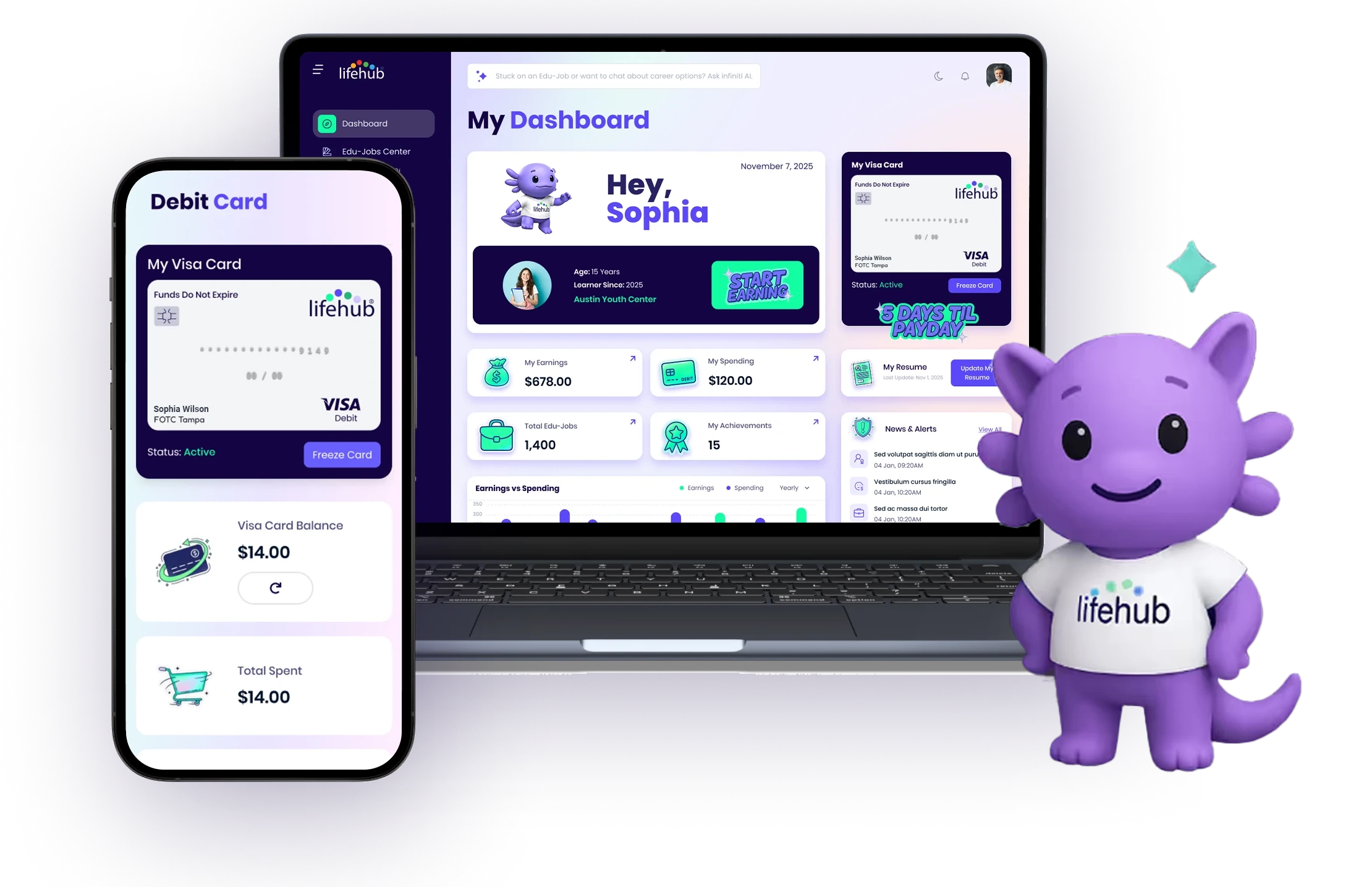
Platforms that combine financial education with real earning opportunities change this dynamic. When learners complete educational tasks and receive actual payment, moneytime becomes both meaningful and motivating.
This approach mirrors real-world work where people get paid for applying knowledge and skills. A teen who earns money by completing a lesson on budgeting immediately applies that knowledge to their own earnings.
Tracking Progress and Building Habits
Digital tools make moneytime more visible and measurable. Young people can see their earnings grow, track progress toward goals, and understand their financial patterns.
Key features that enhance moneytime learning:
- Real-time balance updates that show immediate results
- Goal-tracking tools that visualize progress
- Spending categorization that reveals patterns
- Earning history that connects effort to outcomes
The visibility creates accountability and motivation. When learners see concrete evidence of their financial choices, abstract concepts become personal reality.
Building Multiple Income Streams Early
One crucial moneytime lesson often gets overlooked: income doesn't have to come from just one source. Adults with diverse income streams build more financial security. Young people can start developing this mindset early.
Moneytime opportunities exist beyond traditional allowances or part-time jobs. Learners can earn through:
- Skill-building educational tasks that pay while teaching
- Creative projects that generate income
- Helping others with tasks they're good at
- Seasonal or project-based work
- Digital content or products they create
This variety teaches flexibility and entrepreneurial thinking. A teen who earns money three different ways learns that skills and initiative create opportunity.
Connecting Learning to Earning
The most powerful moneytime experiences link learning directly to earning potential. When young people see that developing skills increases their income opportunities, education becomes personally relevant.
Life skills curriculum that pays learners for completion creates this connection. Math skills, writing abilities, technology competence, and financial knowledge all become valuable assets, not just school requirements.
This reframes education from "something adults make me do" to "something that benefits me directly." That shift in perspective can transform a young person's relationship with learning.
Moneytime and Career Exploration
Financial education and career readiness naturally overlap. Every moneytime conversation can include career connections.
When discussing how professionals earn money, explore the skills and education they needed. When a learner shows interest in a particular field, research typical earnings and career paths.
Making Work Visible
Many young people have limited understanding of how adults earn money. Parents go to "work" and money appears. This mystery makes financial planning abstract.
Moneytime should demystify work and income. Explain what you do, how you get paid, and how you developed relevant skills. Share career paths of family members and community members.
When learners understand the connection between skills, work, and income, they make more informed decisions about their own development.
Overcoming Common Moneytime Challenges
Even with good intentions, parents and educators face obstacles when creating moneytime opportunities.
"I'm not good with money myself."
You don't need to be a financial expert to facilitate moneytime. Focus on asking questions and exploring together. Resources from organizations like Investopedia can help you both learn.
"We don't have extra money for allowances or rewards."
Moneytime doesn't require spending money. Conversations about financial decisions, comparing prices while shopping, or discussing bills all create learning. When compensation makes sense, small amounts still teach effectively.
"My child isn't interested in money topics."
Make moneytime relevant to their interests. A learner passionate about gaming can explore game economics. An art-focused teen can discuss pricing creative work. Connection creates engagement.
"We don't want to overfocus on money."
Balance is important. Moneytime teaches money as a tool for achieving goals and helping others, not as an end goal. Frame conversations around values, choices, and capability, not materialism.

The Long-Term Impact of Consistent Moneytime
Regular moneytime experiences compound over years. A child who starts learning about money at age six has twelve years of practice before legal adulthood. That's thousands of small lessons that build competence.
Research consistently shows that financial behaviors formed during youth persist into adulthood. Early moneytime creates habits, mindsets, and skills that shape decades of financial decisions.
Measuring Moneytime Success
How do you know if moneytime is working? Look for these signs:
- Young people initiate money conversations and ask questions
- They pause to consider financial decisions instead of acting impulsively
- They set and work toward financial goals independently
- They demonstrate understanding of trade-offs and opportunity costs
- They show interest in learning new money skills
These indicators matter more than test scores or memorized definitions. Real capability shows through action, not recitation.
Expanding Moneytime Beyond Personal Finance
While moneytime centers on money skills, the lessons extend further. Financial decision-making develops:
- Critical thinking through evaluating options and consequences
- Goal-setting by planning for future purchases or savings
- Delayed gratification when choosing long-term benefits over immediate pleasure
- Problem-solving as learners figure out how to earn and manage money
- Communication skills through negotiating, explaining choices, and asking questions
These capabilities serve young people across all life areas. Moneytime becomes a vehicle for broader personal development.
Integration with Academic Learning
Money concepts connect to nearly every school subject. Math becomes practical when calculating percentages during sales. Social studies gains relevance when discussing economic systems. Even science connects when exploring careers in STEM fields and their earning potential.
Educators and parents who integrate financial literacy across subjects help learners see the practical application of their studies. This integration strengthens both academic and financial understanding.
Creating Your Moneytime Plan
Starting or improving moneytime practices doesn't require a complete overhaul of your routine. Small, consistent changes create meaningful impact.
This week:
- Identify three naturally occurring moments when money conversations could happen
- Ask one open-ended question about a financial choice
- Let your learner make one small financial decision independently
This month:
- Establish one regular earning opportunity connected to skill-building
- Set up a simple system for tracking earnings or spending
- Discuss one career path and how professionals in that field earn money
This year:
- Create consistent moneytime touchpoints in your weekly routine
- Gradually increase financial responsibility as competence grows
- Celebrate progress and learning from both successes and mistakes
Consistency matters more than perfection. Regular moneytime beats occasional intensive lessons every time.
Building financial capability through regular moneytime creates confident, competent young people ready for real-world challenges. When learning connects to earning and practical application, abstract concepts become personal skills. Life Hub transforms this principle into action through paid educational tasks that build money skills, career readiness, and practical capability while rewarding effort with real earnings. Young people learn by doing, parents and educators can measure impact, and learners build the confidence that comes from seeing direct connections between effort and reward.


Related Content
Ready to Chat about Life Hub?
Whether you're parents, or a homeschool family, Life Hub is your partner to help you
raise super strong kids.

.svg)

.svg)


.svg)
.svg)

.svg)