Parents face a common challenge in 2026: teaching kids about money in an increasingly cashless world. Greenlight cards have emerged as one answer to this problem, offering young people a way to practice real money management under parental supervision. These prepaid debit cards combine practical spending tools with educational features that help families build financial literacy one transaction at a time.
What Are Greenlight Cards
Greenlight cards are prepaid debit cards designed specifically for kids and teens. Greenlight's official platform offers families a card linked to a mobile app that gives parents control while allowing young people to make real purchases. The card operates on the Visa or Mastercard network, meaning kids can use it anywhere those cards are accepted.
Unlike regular debit cards tied to checking accounts, Greenlight is a prepaid card funded by parents. This means kids can only spend what parents transfer to the card. There's no risk of overdraft fees or access to credit, making these cards safer for learning purposes.
How the System Works
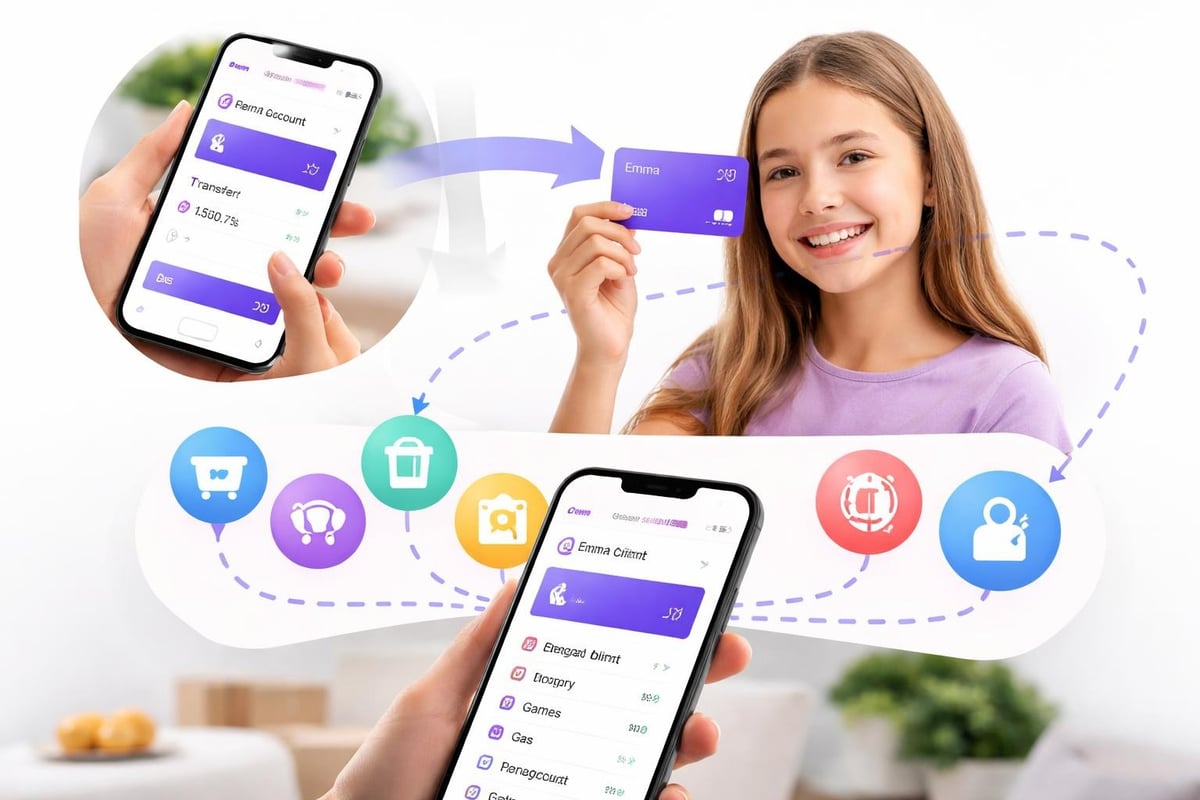
Parents download the Greenlight app and set up accounts for their children. They can then transfer money instantly to their kids' cards and set spending limits for different categories. The system gives families flexibility while maintaining guardrails.
Key features include:
- Instant money transfers from parent to child
- Category-based spending controls (groceries, entertainment, etc.)
- Real-time spending notifications
- Automated allowance scheduling
- Savings goals and interest earnings
- Investing features for older teens
The app shows every transaction immediately. Parents can approve or decline purchases in certain categories. Kids see their balance update in real time, creating an immediate connection between spending and available funds.
The Rise of Youth-Focused Financial Tools
Greenlight cards represent a broader shift in how families approach money education. Previous generations learned through cash allowances and piggy banks. Today's kids grow up watching parents tap phones to pay for everything.
Morgan Stanley highlights that digital payment tools for young people fill a gap in practical financial education. Schools may teach economics concepts, but few provide hands-on experience with real money decisions. These cards bridge that gap by turning everyday purchases into learning opportunities.
The concept isn't entirely new. Visa Buxx cards launched in the early 2000s as prepaid cards for teens. However, modern versions like Greenlight add mobile apps, parental controls, and educational content that weren't possible with earlier technology.
Comparing Prepaid Options
Different prepaid cards serve different purposes. Greenlight's learning center explains how prepaid cards differ from debit cards and traditional checking accounts. Understanding these distinctions helps families choose the right tool.
| Feature |
Prepaid Cards |
Teen Checking |
Cash Allowance |
| Spending Visibility |
Real-time digital tracking |
Bank statements |
Honor system |
| Parental Controls |
App-based category limits |
Limited or none |
Verbal agreements |
| Overspending Risk |
Impossible |
Possible overdraft |
Possible if tracked poorly |
| Online Shopping |
Yes |
Yes |
No |
| Physical Money Skills |
No |
No |
Yes |
Each approach has strengths. Prepaid cards excel at teaching digital money management, which reflects how most adults handle finances today. They also create data that parents and kids can review together to identify spending patterns.
Building Real Money Skills Through Practice
Greenlight cards work best when families treat them as educational tools, not just payment methods. The card becomes meaningful when parents use it to guide conversations about earning, saving, and spending wisely.
Practical applications include:
- Earning and allowance: Parents can tie card deposits to chores or achievements, creating clear links between work and income
- Budgeting practice: Kids learn to divide money across spending, saving, and giving categories
- Goal setting: The app lets kids set savings targets for specific purchases
- Mistake recovery: Small financial errors with limited money teach lessons without serious consequences
Young people need opportunities to make real decisions with real money. A teenager who overspends on entertainment and can't afford a wanted purchase learns budgeting more effectively than through any lecture. The stakes are low enough that mistakes become teaching moments rather than financial disasters.
Age-Appropriate Money Lessons
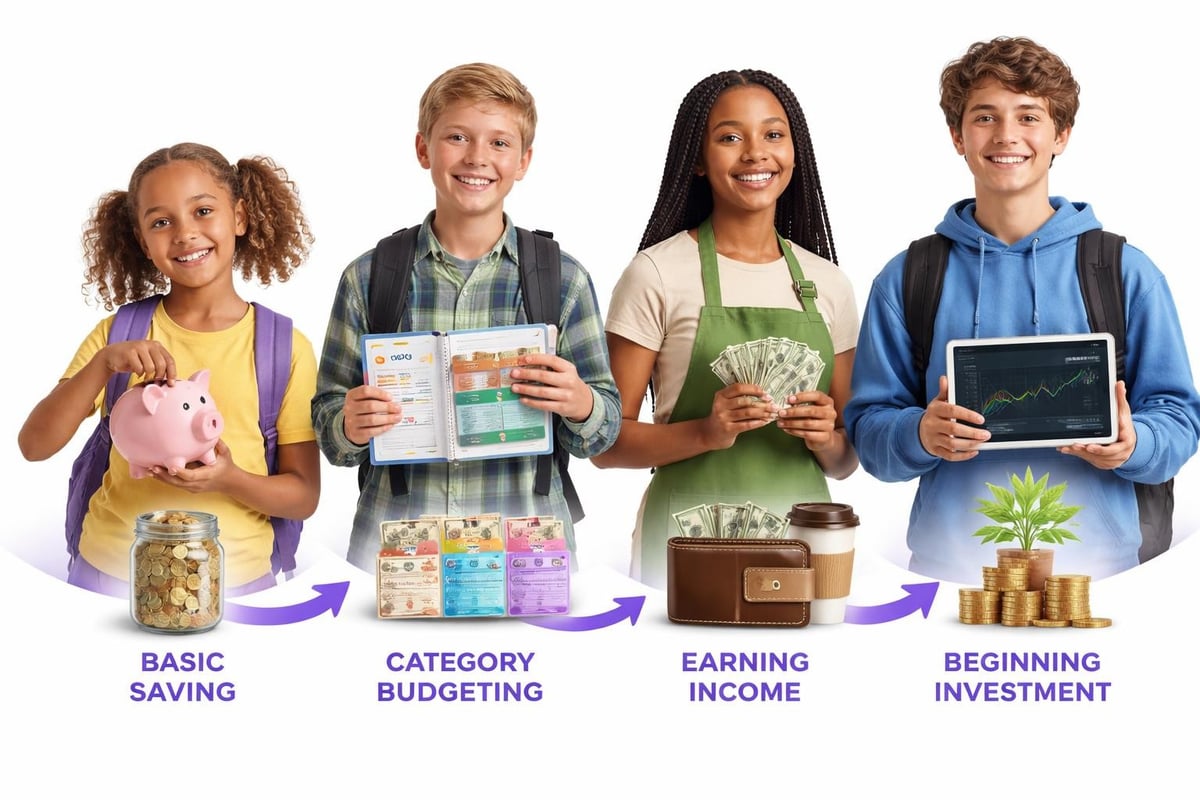
Different ages require different approaches. Younger children (ages six to ten) may focus on basic concepts like saving versus spending. They benefit from simple rules and immediate feedback when they make purchases.
Preteens (ages eleven to thirteen) can handle more complexity. They can track multiple goals simultaneously and understand delayed gratification. Category spending limits help them prioritize wants versus needs.
Teenagers (ages fourteen to eighteen) can explore investing, earning through work, and planning for larger purchases. Some greenlight cards offer investment features that let older teens buy stocks with parental approval, introducing concepts they'll need as adults.
Integrating Cards with Broader Financial Education
Greenlight cards serve as practical tools, but they work best alongside comprehensive financial education. A debit card teaches transaction mechanics, while structured learning builds the reasoning skills behind good financial decisions.
Programs focused on youth financial education combine hands-on money management with lessons about broader concepts. Young people need to understand not just how to use a card, but why budgeting matters, how interest works, and what building credit means for their future.
Connecting Spending to Earning
The most powerful financial lesson connects spending directly to earning. When kids receive money simply as allowance, they may not fully grasp its value. When they earn money through effort, each dollar becomes more meaningful.
Life skills curriculum that includes financial literacy often emphasizes earning as foundational. Young people who complete tasks, contribute to household work, or take on age-appropriate jobs develop different spending habits than those who receive money without effort.
This connection becomes especially clear when learners see their work translate directly to card balances they control. The immediate feedback loop-complete task, receive payment, decide how to allocate funds-builds money management habits that extend into adulthood.
Parental Control Features and Teaching Opportunities
The control features that make greenlight cards safe also create natural teaching moments. When parents set spending limits or decline certain transaction types, these boundaries spark conversations about financial priorities and values.
Control features that enable learning:
- Store restrictions: Blocking certain retailers teaches discrimination in spending choices
- ATM controls: Limiting cash withdrawals encourages digital tracking
- Category limits: Setting entertainment budgets demonstrates need-versus-want prioritization
- Spending notifications: Real-time alerts prompt immediate discussions about purchases
Parents can gradually loosen restrictions as kids demonstrate responsibility. A middle schooler might start with tight controls and limited weekly amounts. By high school, the same young person might manage a monthly budget with minimal restrictions, preparing for college financial independence.
Learning from Financial Mistakes
Controlled failure teaches powerful lessons. When a child spends their entire week's allowance on the first day and must wait six more days for additional funds, they experience the consequences of poor planning in a safe environment.
These experiences build judgment that lectures cannot teach. The emotional impact of wanting something and lacking funds creates memory markers that shape future decisions. Parents who rescue kids from every financial mistake deny them these valuable learning opportunities.
Privacy and Security Considerations
Digital payment tools for minors raise important privacy questions. Parents need to balance oversight with age-appropriate independence. Younger children require close monitoring, while teenagers benefit from growing privacy as they demonstrate responsibility.
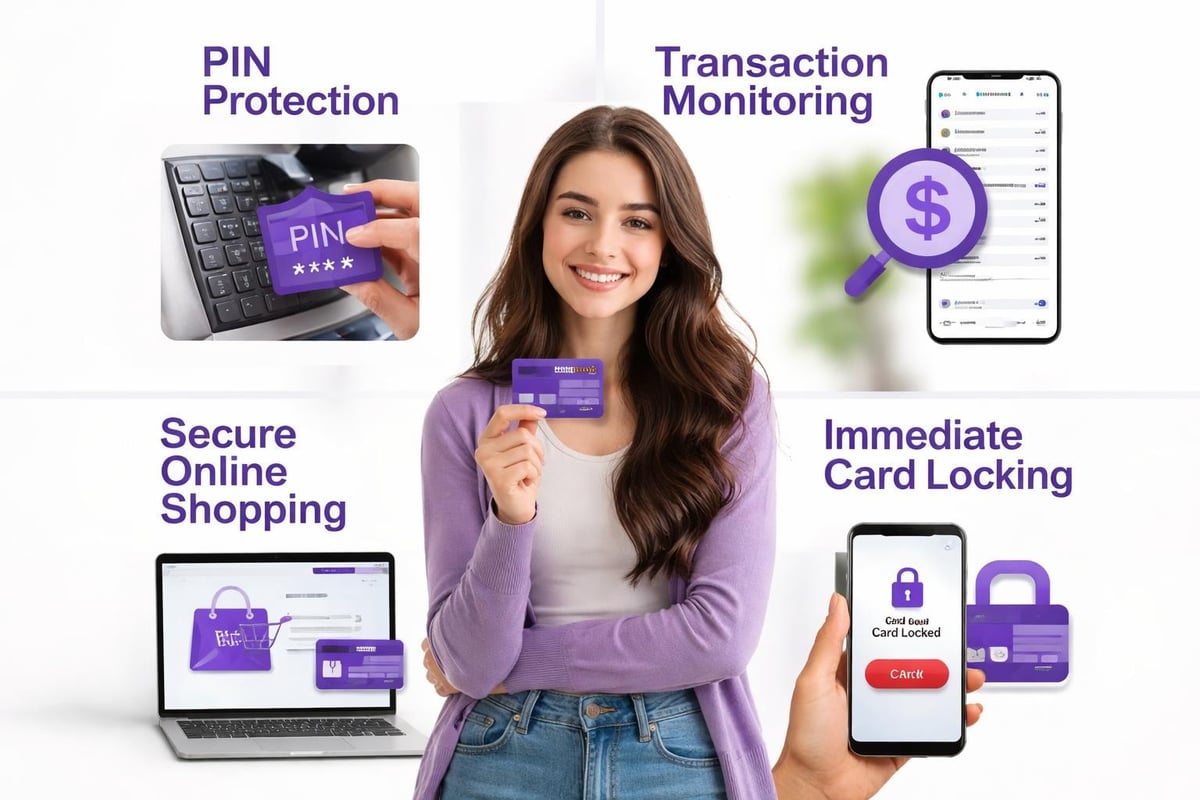
Security features protect both funds and data. Greenlight cards include PIN protection, the ability to lock cards instantly through the app, and fraud monitoring. Parents can see transactions without being physically present, while kids learn to protect their card information.
Security practices to teach:
- Never sharing PIN numbers
- Recognizing secure websites before entering card numbers
- Checking transaction history regularly
- Reporting lost cards immediately
- Understanding how fraud protection works
These habits extend beyond prepaid cards to all financial tools young people will use throughout life. Starting these practices early with limited funds builds security consciousness before mistakes carry serious consequences.
Greenlight Cards Versus Other Youth Banking Solutions
North Shore Bank and other financial institutions have begun offering greenlight cards or similar products, recognizing parent demand for youth financial tools. These partnerships expand access while raising questions about which solution fits different families.
Some families prefer traditional banks with youth accounts. These accounts may offer lower fees but typically provide fewer parental controls and educational features. Others choose standalone prepaid card services that prioritize app features and learning tools.
| Solution Type |
Best For |
Key Advantages |
Potential Drawbacks |
| Greenlight-style cards |
Ages 6-18, active parental involvement |
Strong controls, educational features |
Monthly fees, requires app engagement |
| Bank youth accounts |
Teens 15+, future banking relationship |
Builds credit relationship, often free |
Fewer parental controls |
| Basic prepaid cards |
Occasional use, travel |
Simple, low cost |
Minimal educational value |
| Hybrid bank/prepaid |
Tweens and teens |
Balance of features |
May require maintaining bank relationship |
The right choice depends on family goals. Families prioritizing financial education may value greenlight cards' teaching features. Those focused on building banking relationships might prefer traditional youth accounts. Many families use multiple tools for different purposes.
Beyond Spending: Savings and Investment Features
Modern greenlight cards extend beyond spending management into savings and investing. These features introduce concepts that build wealth over time, not just manage current funds.
Savings features let kids create multiple savings "buckets" for different goals. A child might save simultaneously for a video game, birthday gifts for friends, and a long-term goal like a bicycle. Seeing progress toward each goal reinforces delayed gratification.
Some platforms offer parent-paid interest on savings balances, teaching how money can grow without additional deposits. Even small interest rates demonstrate the time value of money in concrete terms.
Introduction to Investing
Investment features available on some cards let teenagers begin building portfolios with parental approval. Starting with small amounts reduces risk while teaching fundamental investing concepts.
Young investors learn about:
- Stock ownership and company performance
- Diversification across multiple investments
- Market fluctuations and long-term thinking
- Research before buying
- The difference between saving and investing
These early experiences demystify investing before young adults face larger financial decisions. A teen who understands market basics at sixteen approaches college savings, retirement accounts, and other investments with greater confidence.
The Role of Earning in Financial Education
Greenlight cards become more meaningful when kids earn the money they manage. Passive allowances teach less effectively than income tied to effort, achievement, or skill development.
Families can structure earning opportunities in multiple ways. Some tie card funding to household chores, creating clear work-payment connections. Others link deposits to academic achievement, rewarding grade improvements or completed assignments.
Schools and youth organizations increasingly recognize that earning opportunities accelerate financial learning. When young people complete educational tasks and receive payment they control, they develop both knowledge and money management skills simultaneously.
Effective earning structures include:
- Task-based payments for specific completed work
- Achievement bonuses for reaching goals
- Skill-building activities that pay upon completion
- Project-based work that mirrors real employment
- Progressive pay rates that increase with age or skill level
This approach connects effort, learning, and financial reward in ways that pure allowance cannot. Young people begin understanding that income flows from creating value, not from entitlement.
Challenges and Limitations of Card-Based Learning
Greenlight cards offer valuable tools but don't solve every financial education challenge. Families should understand both benefits and limitations when incorporating these cards into broader money teaching strategies.
One limitation involves the abstraction of digital money. Kids who never handle cash may struggle to conceptualize money as finite. Swiping a card feels different than counting bills, potentially disconnecting spending from resource depletion.
Common challenges include:
- Monthly fees that reduce available learning funds
- Technology requirements that exclude some families
- Reduced tangible money interaction
- Dependence on parental engagement
- Limited preparation for credit card management
Parents can address these limitations by combining card use with occasional cash transactions, discussing the real money behind digital numbers, and gradually introducing more complex financial concepts as kids mature.
Balancing Digital and Physical Money Skills
Complete financial education includes both digital payment tools and physical money handling. Young children benefit from seeing and counting coins and bills. The tactile experience of money moving from hand to store to change reinforces scarcity and value.
As kids grow, the balance shifts toward digital tools that reflect adult financial life. By high school, most transactions will likely be digital. However, understanding the connection between plastic cards, digital apps, and actual dollars remains important throughout development.
Setting Families Up for Success
Greenlight cards succeed when families approach them intentionally. Simply handing a child a card teaches little. Active parental involvement transforms the card into an educational tool.
Successful implementation includes regular money conversations. Parents might review weekly spending together, discussing what went well and what the child might do differently next time. These discussions should avoid judgment while encouraging reflection.
Setting age-appropriate expectations matters. A seven-year-old learning to save for a toy needs different guidance than a sixteen-year-old managing a clothing budget. Parents should adjust controls, funding amounts, and oversight levels as kids demonstrate growing capability.
Success practices for families:
- Start with small amounts and simple rules
- Review transactions together weekly
- Celebrate successful savings and smart choices
- Discuss mistakes without rescuing kids from consequences
- Gradually increase complexity and independence
- Connect card management to broader life skills
The goal extends beyond using a specific card. Families aim to build money judgment, decision-making skills, and financial confidence that transfer to adult life regardless of the tools their children eventually use.
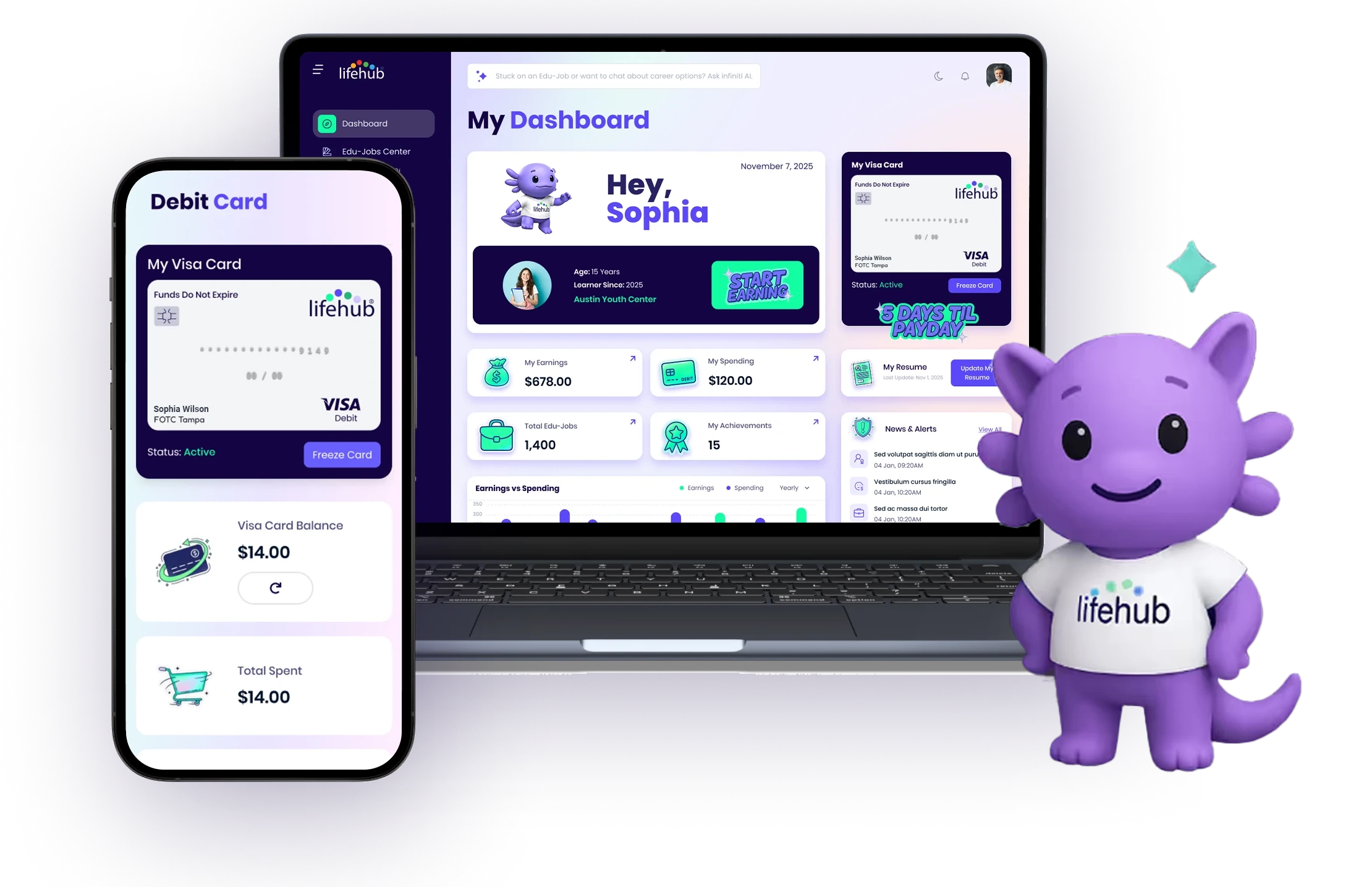
Greenlight cards provide one pathway for teaching kids practical money management through real-world experience. When combined with structured financial education, earning opportunities, and active parental guidance, these tools can help young people develop skills they'll use throughout life. Life Hub takes financial learning further by connecting earning to skill-building through paid educational tasks, giving young people hands-on experience managing real money they've earned while building capabilities across academics, career readiness, and digital literacy. This approach transforms financial education from abstract lessons into lived experience where effort, learning, and financial reward connect naturally.





.avif)














.png)

.svg)

.svg)


.svg)
.svg)

.svg)