Parents and educators face a challenge in 2026: how do you teach money skills when cash barely exists anymore? Young people need to understand budgeting, saving, and spending before they turn 18. The greenlight card offers one approach to this problem. This debit card for kids and teens lets parents transfer money while setting controls and teaching lessons. But is it the right tool for your family's financial education goals?
What the Greenlight Card Offers Families
The greenlight card functions as a prepaid debit card designed specifically for minors. Parents load money onto the card and can divide funds into spending, saving, and giving categories. Young cardholders can make purchases anywhere Visa is accepted.
Parents control the card through a mobile app. You can turn the card on or off instantly, set spending limits at specific stores, and receive notifications when your child makes a purchase. CNBC's coverage introduces the Greenlight Family Cash Card, highlighting its cashback rewards and investment options.
Core Features That Set It Apart
- Spending controls by store category allow parents to block purchases at restaurants or entertainment venues while allowing grocery stores
- Automated allowance transfers money on a schedule you choose
- Chore assignments let you link specific tasks to payment amounts
- Savings goals help kids visualize progress toward something they want
- Investment accounts (on higher-tier plans) introduce stock market concepts
The app shows transaction history in real time. Your teen buys lunch at school, and you see it immediately. This transparency creates natural opportunities for conversations about spending choices.

Comparing Greenlight Plans and Monthly Costs
Greenlight offers three subscription tiers. Each plan includes the core debit card and parental controls, but higher tiers add features.
| Plan |
Monthly Cost |
Key Features |
Best For |
| Greenlight |
$5.99 (up to 5 kids) |
Basic card, spending controls, savings goals |
Families starting financial education |
| Greenlight + Invest |
$9.98 |
Everything in basic plus custodial investment account |
Teens ready to learn about stocks |
| Greenlight Max |
$14.98 |
All features plus identity theft protection, cell phone protection |
Families wanting comprehensive coverage |
These prices apply when you pay monthly. Annual payments reduce the monthly equivalent cost. Each plan allows up to five children on one family account, which makes the per-child cost lower for larger families.
Money Crashers offers an in-depth analysis of the Greenlight card, discussing its advantages and disadvantages. The fees may seem high compared to free checking accounts, but traditional banks don't offer the same parental controls or educational tools.
How Young People Actually Use the Card
Real learning happens when kids make actual spending decisions. The greenlight card puts small financial choices in their hands while parents maintain oversight.
A 12-year-old receives $20 weekly allowance. She decides to save $10 toward new headphones and put $10 in spending. At the mall, she wants a $15 item but only has $10 available. This creates a real consequence and a teaching moment. Should she move money from savings? Wait until next week? Choose something else?
Teaching Moments Built Into Daily Life
Parents can set up "Parent-Paid Interest" on savings. If your child saves $100, you might add 1% monthly. That's $1 in free money just for not spending. This concrete example demonstrates compound interest better than any textbook explanation.
The giving category introduces charitable thinking. Some families require kids to allocate 10% of all money to giving. Others make it optional. Either way, the card makes it easy to donate to causes that matter to your child.
The investment feature (on higher plans) lets teens buy fractional shares of actual stocks. They can invest $5 in a company they know and watch it grow or shrink. This hands-on experience teaches market basics without risking college savings.
Real Parent and User Experiences
Customer feedback reveals both strengths and frustrations. The Better Business Bureau page offers customer reviews and ratings for Greenlight Financial Technology, providing insights into user experiences.
Many parents praise the educational value. One common theme: kids become more thoughtful about purchases when spending their own money (even if parents provided it). The app's transparency helps parents spot teachable moments without nagging.
Complaints often focus on customer service response times and occasional app glitches. Some parents report difficulty reaching support when cards malfunction. Others note that fees add up over time, especially for one-child families where the monthly cost doesn't spread across multiple kids.
What Works Well
- Kids can see their balance instantly and track spending patterns
- Parents receive immediate purchase notifications
- The app interface is intuitive for both generations
- Chore tracking connects work to earnings naturally
Common Frustrations
- Monthly fees never end (unlike paying once for a traditional account)
- Some merchants don't accept prepaid cards
- Customer service can be slow during peak times
- Investment features require the more expensive plan
Alternatives Worth Considering
The greenlight card isn't the only option for teaching financial skills. Several competitors offer similar features with different pricing structures.
FamZoo uses a virtual family bank model where parents act as the bank. It costs less ($5.99 for the whole family annually if you prepay for two years) but offers fewer automated features. GoHenry charges $4.99 per child monthly and focuses on financial education through in-app lessons.
Some families skip specialized cards entirely. They open teen checking accounts at traditional banks once kids reach 13. These accounts typically have no monthly fees but lack the granular parental controls that make the greenlight card appealing for younger children.
Morgan Stanley's page explains their partnership with Greenlight, detailing how wealth management clients can benefit from combining financial services.

Building Money Skills Beyond the Card
A debit card creates opportunities for practice, but financial literacy requires more than just a payment tool. Greenlight's own learning center article discusses the benefits of debit cards, particularly in teaching budgeting and financial responsibility.
Young people need to understand concepts like:
- Opportunity cost - choosing one purchase means not choosing another
- Delayed gratification - saving for bigger goals instead of immediate wants
- Needs versus wants - distinguishing essential from optional spending
- Income and effort - connecting work to earning power
The greenlight card can reinforce these concepts through practice. But parents still need to have conversations, set expectations, and model good financial behavior. The card is a tool, not a complete curriculum.
Connecting Financial Tools to Real Learning
Many families struggle to make financial education stick. Kids hear lectures about saving but don't internalize the lessons. The greenlight card addresses this by making abstract concepts concrete.
When your daughter sees her savings balance grow each week, compound interest becomes real. When your son can't buy something because he already spent his allowance, budgeting consequences feel immediate.
This experiential approach aligns with how micro-learning platforms teach effectively. Short, repeated practice builds skills better than occasional long lessons. Each purchase decision becomes a micro-lesson in financial thinking.
Integrating Cards with Broader Education Goals
Smart families connect their greenlight card use to larger educational objectives. A teen saving for a laptop might research prices, compare features, and calculate how many weeks of allowance she needs. This project touches math, consumer skills, and delayed gratification.
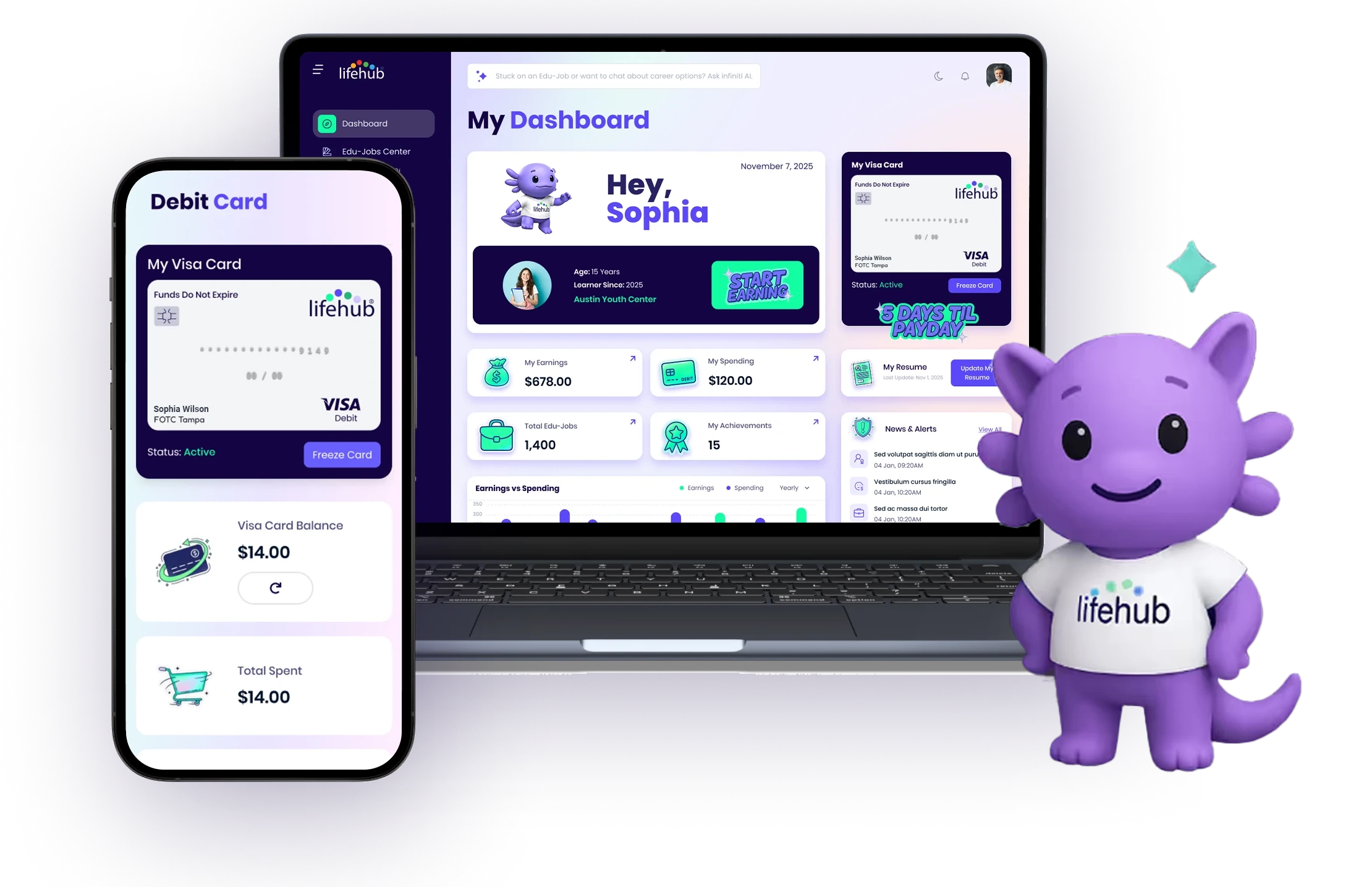
Some parents link card funding to completion of educational tasks. Finish your math homework, earn $5. Complete a career exploration activity, get $10. This creates direct connections between learning and earning, similar to how Life Hub's approach to youth financial education rewards skill-building with real money.
Age-Appropriate Features and Timing
The greenlight card works for kids as young as six, but the right features vary by age. A first-grader doesn't need investment accounts. A high school junior should understand more than just basic spending.
Ages 6-10: Focus on the connection between chores and money. Simple spending decisions at stores. Basic saving toward visible goals like toys.
Ages 11-14: Introduce percentage-based savings. Discuss wants versus needs. Let them experience the consequences of running out of money before allowance day.
Ages 15-18: Add investment features if available. Discuss compound interest and long-term financial planning. Gradually reduce parental controls as they demonstrate responsibility.
Modest Money's review evaluates the Greenlight card's features, offering a balanced perspective on which features matter most at different developmental stages.
What the Reviews Actually Tell Us
Independent reviews provide perspective beyond marketing claims. ConsumerAffairs provides user reviews and ratings for Greenlight, offering firsthand accounts of customer experiences.
The consensus suggests the greenlight card works well for families committed to active financial education. Parents who regularly discuss spending decisions and use the app features report positive outcomes. Their kids develop awareness about money management.
Families who simply load money and hand over the card without discussion see less benefit. The tool itself doesn't teach. It creates opportunities for teaching, which parents must then use.
Sitejabber features customer reviews of Greenlight, presenting various perspectives on the service's effectiveness and user satisfaction. Common praise centers on the control and visibility parents gain. Criticism often relates to fees and occasional technical issues.

Making the Most of Your Greenlight Investment
If you decide the greenlight card fits your family's needs, maximize its educational value through intentional use. The monthly fee becomes worthwhile when the card generates regular learning moments.
Set up weekly money conversations. Review transactions together. Ask your child to explain spending choices. Discuss what they'd do differently next time.
Use the goal-setting feature actively. Help your child identify something meaningful to save toward. Break big goals into milestones. Celebrate progress.
Let natural consequences happen. When your child runs out of money, resist the urge to immediately add more. The discomfort of waiting teaches budgeting better than any lecture.
Gradually expand freedom. As your teen demonstrates good judgment, loosen controls. This builds toward the independence they'll need at 18.
Connect spending to values. Discuss whether purchases align with what matters to your family. Does buying from certain companies support or contradict your principles?
Where Greenlight Fits in the Bigger Picture
The greenlight card represents one approach to youth financial education. It works best as part of a comprehensive strategy that includes conversations, modeling, and varied learning experiences.
Some families combine the greenlight card with life skills curriculum that teaches budgeting, entrepreneurship, and career readiness. Others use it alongside traditional allowance systems that require kids to earn money through work.
The card's real value lies in making financial decisions tangible and immediate. Your teen doesn't just hear about budgeting. She experiences running out of money and having to wait. That lived experience builds understanding that lectures alone cannot create.
For families seeking to build comprehensive money skills, the greenlight card can serve as a practical tool within a broader educational framework. It provides the mechanism for practice while parents provide the guidance and context that turn experiences into lasting lessons.
Teaching financial literacy requires more than just giving young people money. It demands tools that create real decisions with real consequences. The greenlight card offers families one way to make money education concrete and immediate. While monthly fees and occasional technical issues present drawbacks, many parents find value in the control and transparency it provides. For families committed to active financial education, combining hands-on tools like debit cards with structured learning creates powerful skill-building opportunities. Life Hub takes this concept further by connecting financial rewards directly to learning through Edu Jobs, where young people earn real money for completing educational tasks across personal finance, career skills, and academic subjects, giving them both the tools and the knowledge to build lasting money management capabilities.



.avif)














.png)

.svg)

.svg)


.svg)
.svg)

.svg)