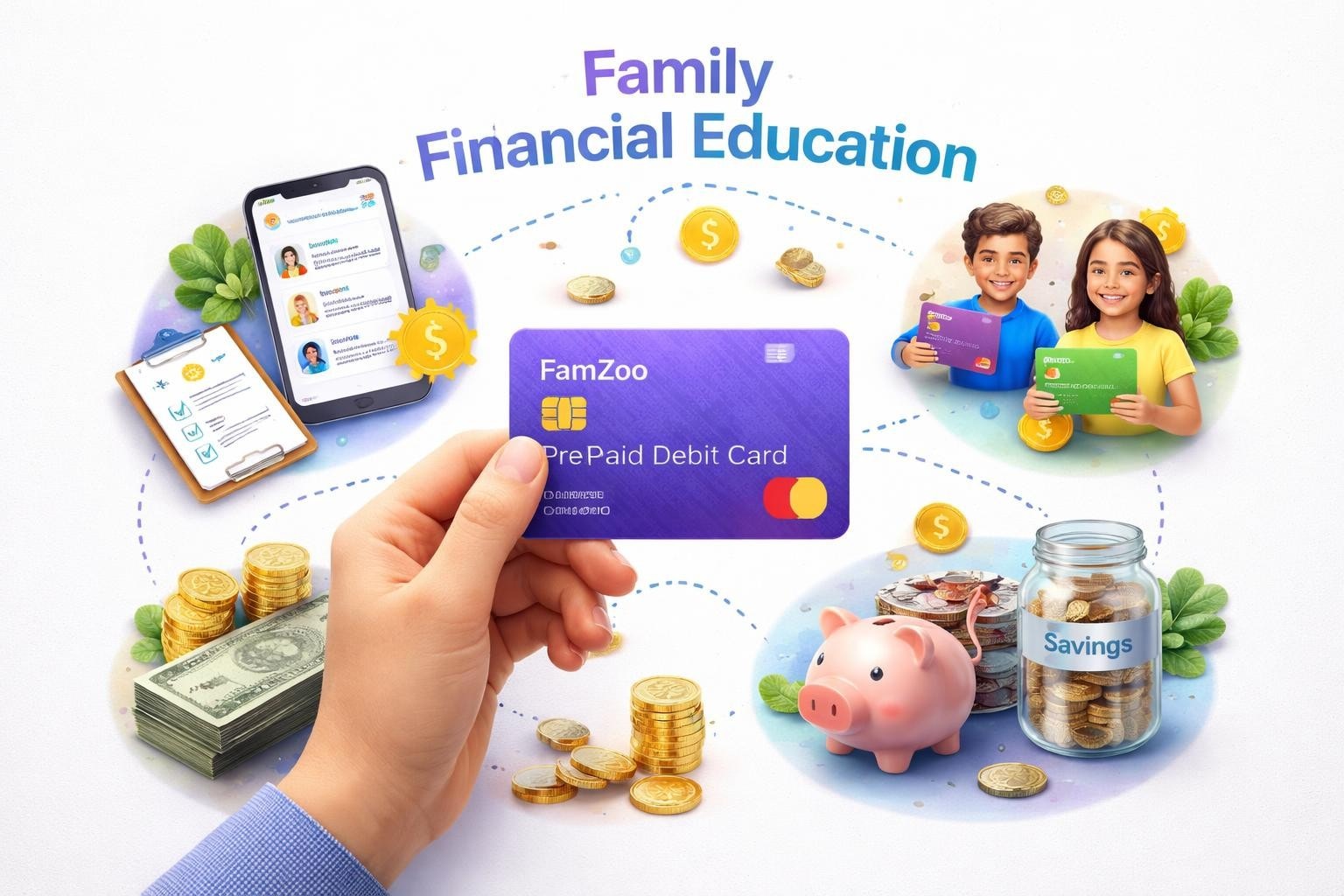
Teaching young people about money management requires more than lectures and worksheets. Real financial literacy develops when learners handle actual funds, make spending decisions, and see the consequences of their choices. The famzoo prepaid debit card serves as a practical tool for families who want to give their children hands-on money experience within a controlled environment. Unlike traditional bank accounts, this system allows parents to maintain oversight while young people practice budgeting, saving, and spending in real-world situations.
What Makes the FamZoo Prepaid Debit Card Different
The official FamZoo website positions their product as a complete family finance platform rather than just a card. Parents create a master account and set up individual subaccounts for each child. This structure mirrors how businesses manage departmental budgets or how families might track different savings goals.
The card itself functions like any prepaid debit card. Young people can use it at stores, online retailers, and ATMs. The difference lies in the parental control features built into every transaction. Parents receive notifications when their child spends money, can set spending limits by category, and can instantly lock or unlock the card from their phone.
Key Features for Family Financial Education
FamZoo offers tools designed specifically for teaching money concepts:
- Allowance automation that deposits funds on a schedule you choose
- Interest payments on savings to demonstrate how compound growth works
- Chore tracking with automatic payments when tasks are completed
- Spending categories that show where money goes each month
- Goal-setting tools for saving toward specific purchases
- IOU tracking for loans between family members
Parents can also create "what-if" scenarios. You might show your child what would happen if they saved 20% of their allowance for six months, or how much faster they'd reach a goal by adding birthday money to their savings.

How Families Use FamZoo for Money Education
Real learning happens when young people make actual financial decisions. The famzoo prepaid debit card creates situations where these decisions matter but mistakes won't cause lasting harm.
One common approach involves dividing allowance into three categories: spending, saving, and sharing. Parents set up three subaccounts within FamZoo, then automatically split each allowance payment. A child receiving $20 per week might have $10 go to spending, $8 to saving, and $2 to charitable giving. This teaches the fundamental budgeting principle of paying yourself first.
Teaching Through Real Transactions
When a 13-year-old wants to buy a video game, they check their spending account balance on the FamZoo app. If they don't have enough, they face real choices. They can wait until their next allowance, move money from savings (if parents allow transfers), or do extra chores to earn more.
Parents can approve or deny these decisions, but the child experiences the planning process. This hands-on approach to financial education creates stronger understanding than any textbook explanation of budgeting.
The platform also handles more complex lessons. Some families use FamZoo to teach about debt by allowing children to borrow against future allowance. The system tracks the loan and automatically deducts payments. A child learns that borrowing means less money available later.
Cost Structure and Account Management
FamZoo charges a monthly fee that covers the entire family. As of 2026, pricing remains competitive with similar services, though families should review current rates since fees may change.
The subscription includes:
- Up to four prepaid cards at no additional cost
- Unlimited subaccounts for tracking different goals or categories
- All parental control and monitoring features
- Automated allowance and chore payment systems
- Text and email alerts for account activity
| Fee Type |
FamZoo Approach |
What It Means |
| Monthly subscription |
One fee for whole family |
More economical for families with multiple children |
| Card replacement |
Small fee per card |
Teaches responsibility for physical items |
| ATM withdrawals |
Standard network fees apply |
Same as adult prepaid cards |
| Reload fees |
No fee for parent transfers |
Easy to add money when needed |
Additional cards cost a small replacement fee if lost or damaged. This policy itself becomes a teaching moment about taking care of valuable items.
Comparing FamZoo to Alternative Approaches
Some families wonder whether they should use a prepaid card system or open a traditional bank account for their child. Each approach offers different benefits.
A standard checking account typically provides:
- Higher transaction limits
- Direct deposit capability for part-time jobs
- Building a relationship with a financial institution
- No monthly subscription fee
The famzoo prepaid debit card offers:
- Detailed parental oversight without being a joint account holder
- Educational tools built into the platform
- Ability to set up multiple "virtual accounts" for different purposes
- Scheduled allowances and automated chore payments
According to comparative reviews, FamZoo works best for younger learners (ages 6-15) who need more structure and guidance. Older teens preparing for college might benefit more from a traditional checking account that they manage independently.
Integration with Broader Financial Learning
The card becomes more powerful when combined with intentional money conversations. Parents might review spending patterns monthly, discussing what went well and what the child would do differently next time.

This review process mirrors what adults do with their own finances. Young people learn to analyze their spending, identify areas where they overspend, and make adjustments for the next month. When paired with structured financial education activities, these reviews build lasting money management skills.
Setting Up Your FamZoo Account
Getting started requires about 15 minutes to create accounts and order cards. Parents begin by registering on the FamZoo platform and entering payment information for the monthly subscription.
Step-by-step setup process:
- Create your parent account and choose a subscription plan
- Set up subaccounts for each child with their name and starting balance
- Order physical prepaid cards (they arrive in 7-10 business days)
- Configure allowance schedules, interest rates, and spending rules
- Download the mobile app for both parent and child devices
- Fund the accounts through bank transfer or debit card
Detailed setup instructions walk parents through each decision point. The platform asks you to set initial allowance amounts, choose whether children can transfer between subaccounts, and decide what types of notifications you want to receive.
Customizing Rules for Your Family
Every family operates differently. FamZoo allows parents to adjust settings based on their values and their child's maturity level.
You might start with strict controls for a younger child:
- Require parent approval for purchases over $10
- Disable ATM access completely
- Prevent transfers between subaccounts
- Block online shopping
As the child demonstrates responsibility, you gradually loosen restrictions. A 14-year-old might have:
- Approval required only for purchases over $50
- ATM access with a $20 daily limit
- Ability to move money between spending and savings
- Online shopping enabled for educational purchases
This progression teaches increasingly complex financial skills. The child experiences growing autonomy as they prove they can handle it.
Teaching Specific Money Skills with FamZoo
The famzoo prepaid debit card supports lessons in different financial concepts. Parents can design activities around each skill they want to develop.
Saving: Set up a high-interest savings account within FamZoo (parents fund the "interest"). Show your child how $100 grows to $105 in a month with 5% monthly interest. Discuss how real savings accounts work similarly but with lower rates.
Budgeting: Create spending categories like food, entertainment, and clothing. Give a monthly amount and require your child to stay within each category. Review together when they overspend in one area.
Earning: Connect specific chores or educational activities to payments. A child might earn $5 for deep-cleaning their room or $10 for completing a financial literacy module.
Delayed gratification: Help your child set a savings goal for a larger purchase. Track progress weekly and celebrate milestones. When they finally buy the item with saved money, the accomplishment feels different than receiving it as a gift.
Addressing Common Parent Concerns
Parents considering the famzoo prepaid debit card often have similar questions about safety, control, and educational value.
Security and Fraud Protection
Prepaid cards carry less risk than credit cards or checking accounts because they only access funds you've loaded. If someone steals the card, they can't overdraw the account or access other family money.
Security features include:
- Instant card locking through the mobile app
- Transaction alerts sent immediately to parent phones
- Zero liability for unauthorized purchases when reported promptly
- No credit checks or impact on credit scores
Parents should still teach basic security practices. Young people need to understand why they shouldn't share their PIN, how to recognize phishing attempts, and when to report suspicious activity.

Balancing Control and Independence
Finding the right level of oversight challenges many parents. Too much control prevents learning. Too little risks poor decisions that discourage the child.
Most families find success with a gradual release model. Start with high oversight and frequent conversations. As your child shows good judgment, reduce monitoring while maintaining the ability to step in if needed.
A 10-year-old might need approval for every purchase. By 14, they may only need approval for purchases over a certain amount. At 16, they might operate independently with monthly review sessions.
Alternative Prepaid Cards for Kids
While FamZoo offers comprehensive family finance tools, other options serve different needs. Some families prefer simpler systems with fewer features. Others want cards that integrate with investment education or offer cash-back rewards.
When comparing options, consider:
- Your child's age and maturity level
- How many children will use the system
- Whether you want investing features or just spending control
- Your budget for monthly fees
- The level of financial education you plan to provide alongside the card
| Feature |
Best For |
Consideration |
| Multiple subaccounts |
Families teaching envelope budgeting |
Helps visualize different savings goals |
| Investment options |
Teens learning about markets |
Adds complexity but valuable experience |
| Chore tracking |
Younger children earning allowance |
Automates the payment-for-tasks system |
| Robust parental controls |
First-time card users |
Provides safety net during learning phase |
The famzoo prepaid debit card excels at teaching foundational money concepts through its subaccount system and parental controls. Families who prioritize hands-on financial education often find its features match their goals.
Creating a Complete Financial Education System
A prepaid card works best as part of broader money education. Young people need context for the skills they're practicing.
Parents can enhance card-based learning by:
- Reading age-appropriate books about money together
- Discussing family financial decisions openly (within appropriate boundaries)
- Visiting a bank to see how financial institutions operate
- Playing budgeting games that simulate real-world choices
- Reviewing your own spending to model financial planning
Some families create a formal curriculum. They might cover one money topic each month, using the FamZoo card to practice that specific skill. January focuses on saving, so they set up a savings goal. February explores comparison shopping, so they research prices before purchases.
Structured learning approaches can combine practical card use with conceptual understanding. A child who knows why budgeting matters makes better choices than one who simply follows parent-imposed rules.
Real-World Impact on Young People's Money Habits
Research on youth financial literacy shows that practical experience shapes long-term behavior more effectively than classroom instruction alone. When young people handle real money, face actual tradeoffs, and experience the satisfaction of reaching savings goals, they develop skills that persist into adulthood.
The famzoo prepaid debit card facilitates this experiential learning. A teenager who has managed a monthly budget since age 12 enters college with practical skills their peers may lack. They've already learned what happens when you overspend, how to prioritize competing wants, and why emergency savings matter.
Parents report that children become more thoughtful about purchases after using the card for several months. The act of checking their balance before buying something creates a habit of conscious spending. Young people start asking themselves whether they really need an item or just want it in the moment.
Building Confidence Through Financial Capability
Managing money successfully builds broader confidence. A child who saves for three months to buy a bicycle learns they can set long-term goals and achieve them. This lesson transfers to academic goals, career planning, and other areas requiring persistence.
Parents can support this confidence building by:
- Celebrating financial milestones, not just academic or athletic achievements
- Allowing natural consequences when children make poor spending choices
- Discussing money topics without shame or judgment
- Sharing age-appropriate information about family finances
- Treating financial skills as learnable rather than innate
When families use tools like FamZoo intentionally, they create an environment where money management becomes a normal part of growing up rather than a stressful topic avoided until adulthood.
Preparing Teens for Financial Independence
The transition from parent-managed finances to independent money management happens gradually. High school years offer an ideal time to expand responsibilities while safety nets still exist.
Older teens using the famzoo prepaid debit card might:
- Manage their own clothing budget entirely
- Pay for their phone bill from earnings
- Save for a car or college expenses
- Track spending in multiple categories independently
- Make investment decisions with guidance
Parents shift from directing to coaching. Instead of approving each purchase, you review monthly statements together. You ask questions that help your teen reflect on their choices rather than telling them what to do.
This progression mirrors how young people develop other capabilities. They start with close supervision, practice skills with decreasing oversight, and eventually operate independently while knowing they can ask for help when needed.
Making the Most of Your FamZoo Experience
Families get the greatest benefit from the famzoo prepaid debit card when they use it as a teaching tool rather than just a payment method. The card enables conversations and experiences that build financial capability.
Weekly money meetings: Spend 10 minutes reviewing transactions, discussing upcoming expenses, and planning for savings goals. Keep these sessions brief and positive.
Goal progress tracking: Help your child visualize progress toward larger purchases. Some families create charts or use apps to show how savings grow over time.
Mistake processing: When your child overspends or makes a poor choice, resist the urge to lecture. Ask what they learned and what they'll do differently next time. Natural consequences teach better than parent criticism.
Incremental responsibility: Add new privileges as your child demonstrates competence. Succeeding at one level before advancing builds both skills and confidence.
Connection to real life: Point out how the budgeting they're doing with their card relates to adult financial management. Show them your own budget or explain how you make spending decisions.
The platform provides data and control features, but parents provide the context and guidance that transform card use into financial education.
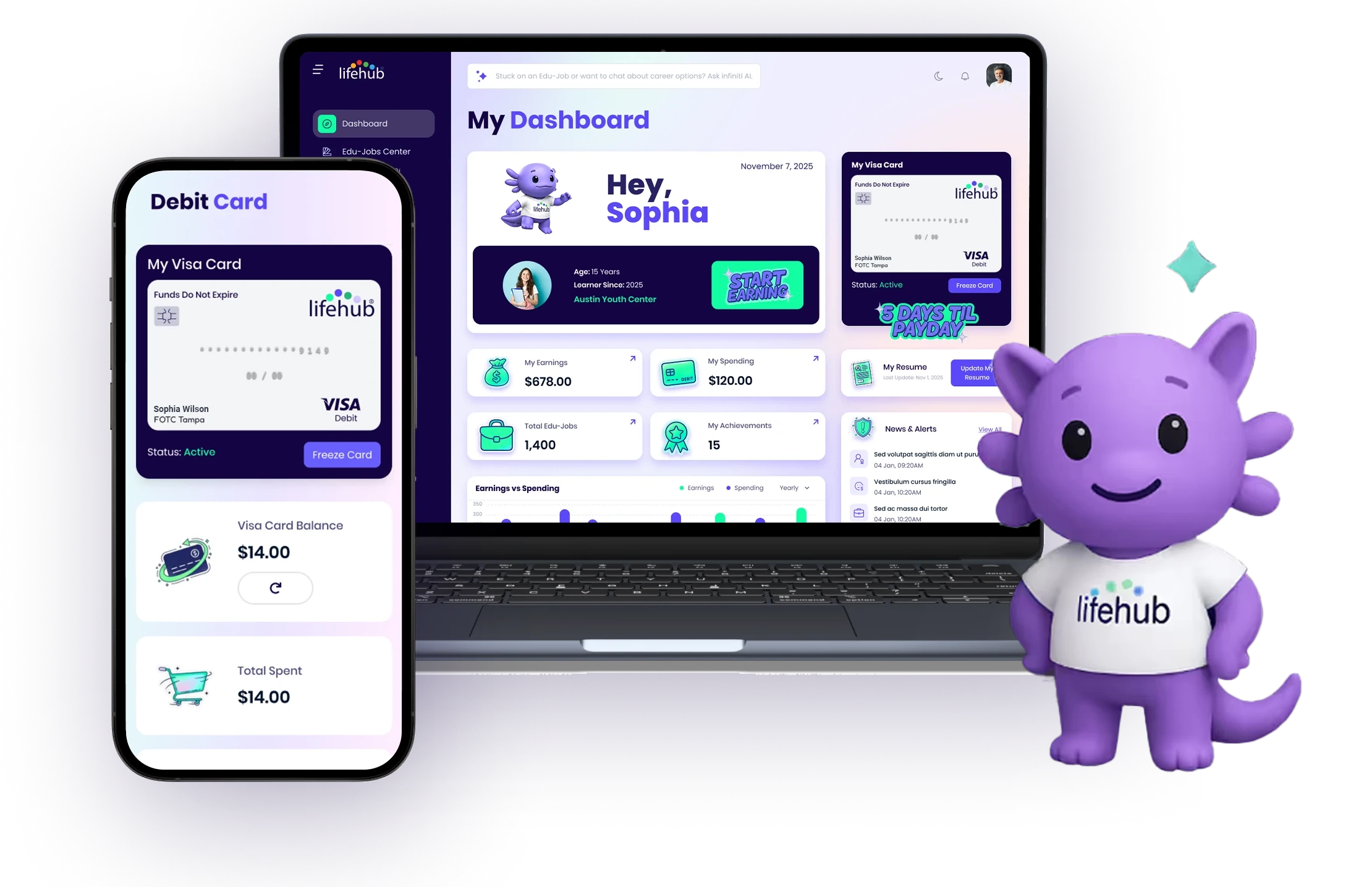
The famzoo prepaid debit card offers families a structured way to teach money management through real-world practice. When young people handle actual funds, make spending choices, and work toward savings goals, they develop skills that will serve them throughout life. Life Hub builds on this hands-on approach by connecting financial capability to broader learning through paid educational tasks. Learners complete practical activities in personal finance, career readiness, and other essential skills while earning real money deposited to their own debit card, creating a direct link between effort, learning, and reward that prepares them for financial independence.





.avif)















.png)

.svg)

.svg)


.svg)
.svg)

.svg)