Educational Pathways: Building Skills That Matter


Educational pathways shape how young people move from classroom learning to real-world capability. These structured routes help learners build skills, explore interests, and prepare for future careers. Unlike traditional education that treats subjects as isolated units, pathways create connections between what you learn and how you'll use those skills in daily life and work.
What Educational Pathways Really Mean
Educational pathways represent more than just course sequences. They're deliberate routes that guide learners through connected experiences, building skills layer by layer.
The Pathways Resource Library defines these routes as comprehensive approaches linking education to career outcomes. Each pathway includes academic content, practical application, and real-world context. Young people don't just study math or writing in isolation. They see how these skills apply to managing money, starting a business, or solving workplace problems.

Traditional education often creates knowledge that stays locked in textbooks. Educational pathways break down those walls. A learner studying financial literacy might apply math skills to budgeting, writing skills to business proposals, and digital skills to tracking expenses. The pathway connects all these pieces into something useful.
The Core Components
Every effective educational pathway includes several key elements:
- Academic foundation that builds core knowledge
- Practical application through hands-on tasks
- Career exploration connecting learning to work
- Skill progression from basic to advanced levels
- Real-world context showing why skills matter
The most effective pathways also include motivation beyond grades. When learners earn tangible rewards for completing tasks, they see the direct link between effort and outcome. This connection helps young people understand how education translates to value in the real world.
Types of Educational Pathways
Different pathways serve different goals. Young people benefit from exploring multiple routes rather than choosing just one direction.
Academic and Career-Technical Pathways
Some pathways focus on traditional academic preparation while others emphasize career-ready skills. Research on educational interventions shows both types can improve outcomes when designed well.
Academic pathways might include:
- STEM tracks building science and technology skills
- Humanities routes developing communication and analysis
- Arts programs fostering creativity and expression
Career-technical pathways often feature:
- Business and entrepreneurship training
- Digital tools and workplace technology
- Skilled trades and technical certifications
The artificial divide between these types is fading. Modern learners need both academic knowledge and practical skills. A pathway in digital marketing requires writing ability, data analysis, creative thinking, and technical platform knowledge.
Skill-Based Learning Routes
Skill-based pathways organize learning around capabilities rather than traditional subjects. A learner might follow a pathway in financial capability that includes:
- Basic money math and budgeting concepts
- Digital banking and payment tools
- Saving strategies and goal setting
- Understanding credit and debt
- Investment basics and wealth building
Each step builds on previous knowledge. Learners progress through practical tasks that develop real capability, not just theoretical understanding. This approach aligns well with how young people actually learn and what they need for adult life.
| Pathway Type | Primary Focus | Example Topics |
|---|---|---|
| Academic | Subject mastery | Math, science, literature, history |
| Career-Technical | Job readiness | Business skills, trades, technology |
| Skill-Based | Practical capability | Financial literacy, digital tools, communication |
| Hybrid | Integrated approach | Problem-solving projects combining multiple skills |
Building Effective Educational Pathways
Creating pathways that work requires more than listing courses. The design must connect learning to meaningful outcomes.
Start With Clear Outcomes
Effective pathways begin by defining what learners should accomplish. Rather than "complete 10 math lessons," a clear outcome might be "create and manage a monthly budget using digital tools."
Learning pathways research emphasizes backward design. Start with the end goal, then map the steps needed to reach it. This approach ensures every task serves a purpose.
For financial education, outcomes might include:
- Open and manage a bank account independently
- Track income and expenses accurately
- Make informed purchasing decisions
- Set and achieve savings goals
- Understand basic investment concepts
Each outcome then breaks down into smaller learning tasks. These tasks build skills progressively while maintaining focus on the final capability.
Make Learning Active and Practical
The best educational pathways emphasize doing over memorizing. Young people learn money skills by handling actual money decisions, not just reading about them.
Active learning tasks might include:
- Comparing prices across stores to find the best value
- Creating a business plan for a small venture
- Researching and presenting career options
- Building a simple website or digital portfolio
- Managing a real budget with consequences
This hands-on approach builds confidence. Learners prove to themselves they can handle real challenges. Success in practical tasks creates motivation to tackle harder problems.

Connect to Real Rewards
Motivation matters. Educational pathways work better when learners see tangible benefits from their effort.
Traditional rewards like grades or certificates have limited power. Young people respond more strongly to rewards they value in daily life. Money represents one of the most practical rewards because it connects directly to the skills being learned.
When a learner completes tasks on financial literacy and earns actual money, the lesson reinforces itself. The pathway teaches money skills while demonstrating why those skills matter. This creates a feedback loop where success builds motivation for further learning.
Educational Pathways in Practice
Real-world applications show how pathways transform learning from abstract to concrete.
Financial Literacy Pathways
A comprehensive financial education pathway might progress through these stages:
Foundation Level
- Understanding money basics and value
- Recognizing coins, bills, and digital payment
- Simple addition and subtraction in money context
- Distinguishing wants from needs
Intermediate Level
- Creating and following a basic budget
- Tracking spending patterns
- Setting short-term savings goals
- Understanding banking services
- Exploring ways to earn money
Advanced Level
- Managing multiple financial goals
- Understanding credit and borrowing
- Exploring investment options
- Planning for major purchases
- Developing entrepreneurial skills
Each level includes tasks that build on previous knowledge. Learners don't just study concepts; they apply skills to real situations. A life skills curriculum might integrate financial capability with decision-making, goal-setting, and digital literacy.
Career Exploration Pathways
Career pathways help young people explore options before committing to directions. These routes typically include:
- Interest discovery through varied short tasks
- Skill assessment identifying strengths
- Industry exploration learning about different fields
- Role shadowing seeing careers in action
- Project completion building portfolio pieces
Rather than choosing a career at 14, learners sample different areas. They might try tasks in healthcare, technology, creative fields, trades, and business. This exploration reveals interests and aptitudes while building transferable skills.
| Career Area | Sample Tasks | Skills Developed |
|---|---|---|
| Healthcare | Research medical roles, create health education content | Research, communication, empathy |
| Technology | Code a simple program, design an app interface | Logic, problem-solving, digital skills |
| Business | Develop a product idea, create marketing materials | Planning, persuasion, creativity |
| Trades | Learn tool safety, calculate materials needed | Precision, math application, hands-on skills |
Digital Literacy Pathways
In 2026, digital capability is foundational to nearly every career and life task. Educational pathways in this area build competencies including:
- Basic computer operation and file management
- Internet research and source evaluation
- Digital communication and collaboration tools
- Productivity software (spreadsheets, documents, presentations)
- Online safety and digital citizenship
- Understanding AI tools and their applications
An AI literacy curriculum might help learners understand how artificial intelligence works, when to use AI tools, and how to evaluate AI-generated content critically. These skills become increasingly important as AI integrates into more aspects of work and daily life.
The Role of Structured Micro-Learning
Breaking educational pathways into small, manageable tasks makes learning less overwhelming and more achievable.
Why Small Tasks Work
Micro-learning tasks typically take 5-20 minutes to complete. This format offers several advantages:
- Fits into busy schedules without disrupting other activities
- Provides quick wins that build confidence
- Reduces procrastination by lowering the barrier to starting
- Allows frequent practice and repetition
- Creates natural stopping points for reflection
Young people juggling school, activities, social life, and family time can rarely dedicate hours to additional learning. Short tasks let them make progress in available moments.
Building Pathways From Micro-Tasks
Individual micro-tasks connect into coherent pathways through careful sequencing. Each task should:
- Build on previous learning
- Introduce one new concept or skill
- Provide immediate feedback
- Lead logically to the next challenge
- Contribute to a larger goal
For example, a pathway on entrepreneurship might include these connected tasks:
- Brainstorm business ideas based on personal interests
- Research one business idea for market demand
- Calculate basic startup costs
- Create a simple business plan outline
- Design marketing materials
- Set pricing for products or services
- Practice a sales pitch
- Track income and expenses for a trial period
Each task takes 10-15 minutes but together they build real business capability. The pathway structure ensures learners gain comprehensive skills rather than disconnected facts.

Motivation and Educational Pathways
Even well-designed pathways fail if learners don't engage. Understanding motivation is key to pathway effectiveness.
Intrinsic Versus Extrinsic Motivation
Intrinsic motivation comes from internal satisfaction with learning and accomplishment. Extrinsic motivation relies on external rewards like money, grades, or recognition.
The best educational pathways tap both types:
Intrinsic motivators include:
- Curiosity about topics that matter to daily life
- Satisfaction from mastering new skills
- Autonomy in choosing learning directions
- Connection to personal goals and interests
Extrinsic motivators include:
- Earning money for completed work
- Recognition from parents, teachers, or peers
- Unlocking new opportunities or privileges
- Building credentials or portfolios
Research shows immediate, tangible rewards can jumpstart engagement, especially for learners who've previously struggled. Once learning begins, intrinsic motivation often grows as competence increases.
Making Effort Visible
Educational pathways work better when progress is clear. Young people need to see how far they've come and what's ahead.
Effective progress tracking includes:
- Visual pathway maps showing completed and upcoming tasks
- Skill badges or certifications for milestones
- Portfolio pieces demonstrating capability
- Earnings or rewards directly tied to effort
- Reflection prompts to recognize growth
When learners can point to specific accomplishments and the skills they've gained, they develop a stronger sense of capability. This confidence motivates continued effort.
Customizing Pathways for Individual Learners
No single pathway fits everyone. Personalization makes educational routes more effective.
Interest-Based Customization
Allowing learners to choose pathways based on their interests increases engagement. A young person fascinated by gaming might explore pathways in:
- Game design and development
- Streaming and content creation
- Competitive gaming and esports
- Gaming industry careers
- Digital marketing for games
The pathway still builds core skills in technology, communication, business, and problem-solving. But the gaming context makes learning relevant and engaging.
Pace and Difficulty Adjustment
Some learners race through content while others need more time and support. Flexible pathways accommodate different paces:
- Allow learners to progress when ready, not on fixed schedules
- Provide additional practice tasks for those who need reinforcement
- Offer advanced challenges for quick learners
- Include help resources and examples throughout
- Let learners revisit earlier content as needed
This flexibility reduces frustration and builds genuine mastery rather than surface-level completion.
Supporting Educational Pathways at Home
Parents and families play crucial roles in helping young people succeed on educational pathways.
Creating the Right Environment
Families can support pathway learning by:
- Setting aside regular time for skill-building tasks
- Showing genuine interest in what learners accomplish
- Connecting pathway skills to family activities
- Celebrating progress and effort, not just outcomes
- Modeling continuous learning themselves
When parents engage with educational pathways, they reinforce the message that learning matters beyond school.
Funding Learning Opportunities
Many families use allowances or rewards to motivate children. Educational pathways can integrate these existing systems while adding purpose.
Rather than giving an allowance for age or chores alone, families might fund completion of educational tasks. This approach:
- Links money directly to skill development
- Teaches that effort and learning create value
- Helps young people see education as productive work
- Builds financial capability while supporting other learning
- Creates conversations about earnings and smart money choices
When young people earn money through learning tasks, they practice the financial skills they're studying. The pathway becomes self-reinforcing.
Educational Pathways Beyond Traditional Subjects
While math, science, and language arts remain important, educational pathways should include broader life skills.
Social and Emotional Learning
Pathways in social-emotional development help young people build capabilities including:
- Recognizing and managing emotions
- Setting and working toward goals
- Showing empathy and understanding others
- Making responsible decisions
- Building healthy relationships
These skills matter in every aspect of life and work. A learner might complete tasks on conflict resolution, stress management, or effective communication as part of their educational journey.
Entrepreneurship and Innovation
Entrepreneurial pathways teach more than business skills. They develop:
- Creative problem-solving
- Resourcefulness and adaptability
- Persistence through challenges
- Understanding customer needs
- Financial planning and management
Young people don't need to start businesses to benefit from entrepreneurial skills. These capabilities apply to any career and to managing life effectively.
Schools and districts increasingly recognize that success requires both traditional academic knowledge and practical life skills. Comprehensive educational pathways integrate both.
Digital Citizenship and Online Safety
As young people spend more time online, pathways teaching responsible digital behavior become essential. Key topics include:
- Protecting personal information and privacy
- Recognizing online scams and manipulation
- Building a positive digital reputation
- Understanding digital footprints
- Practicing respectful online communication
- Balancing screen time with other activities
These pathways protect young people while helping them use digital tools effectively.
Measuring Progress on Educational Pathways
Tracking progress helps learners and supporters understand what's working and where to focus effort.
Beyond Traditional Grades
Educational pathways often use different assessment methods than traditional schooling:
Competency-based measures focus on whether learners can perform specific tasks rather than comparing them to peers. Assessment includes:
- Completing practical projects successfully
- Demonstrating skills in real contexts
- Building portfolios of work
- Passing skill checks or challenges
- Receiving approval from reviewers
Growth measures compare learners to their past performance rather than to others. This approach shows improvement over time and celebrates individual progress.
| Assessment Type | What It Measures | Example |
|---|---|---|
| Task Completion | Ability to finish assigned work | Complete a budgeting exercise |
| Skill Demonstration | Competency in specific capabilities | Create a working budget and explain choices |
| Quality Review | Work meets defined standards | Budget is accurate, realistic, and well-organized |
| Application | Using skills in new contexts | Apply budgeting to a real purchase decision |
Using Data to Improve Learning
When pathways track detailed data about learner progress, it becomes possible to identify patterns and improve outcomes:
- Which tasks do most learners struggle with?
- Where do learners lose motivation?
- Which rewards drive the most engagement?
- What task sequences work best?
- How long does skill mastery typically take?
This information helps refine pathways to be more effective. Youth organizations can use this data to demonstrate impact and improve programs.
The Future of Educational Pathways
Educational pathways will continue evolving as technology advances and work requirements change.
Adaptive Learning Technologies
Artificial intelligence and machine learning are creating pathways that adjust to each learner in real time. These systems:
- Identify knowledge gaps automatically
- Adjust difficulty based on performance
- Suggest next tasks based on goals and progress
- Provide personalized feedback and support
- Predict which learners need intervention
While technology enables this personalization, human judgment remains important. Teachers, parents, and mentors help learners interpret data and make good choices about their learning directions.
Integration With Traditional Education
Rather than replacing schools, educational pathways increasingly complement formal education. Educators and collaborators recognize that classroom learning and practical skill-building work together effectively.
Students might learn math concepts in school, then apply those concepts through pathway tasks involving budgeting, business planning, or data analysis. The pathways make abstract knowledge concrete while reinforcing classroom learning.
Lifelong Learning Models
Educational pathways don't end at graduation. The model of structured, progressive skill-building applies throughout life:
- Career changers use pathways to develop new capabilities
- Workers follow pathways to advance in their fields
- Retirees explore pathways for hobbies and interests
- Everyone needs pathways for adapting to technology changes
Young people who grow up using educational pathways to build skills develop habits of continuous learning. This adaptability becomes increasingly valuable in a rapidly changing world.
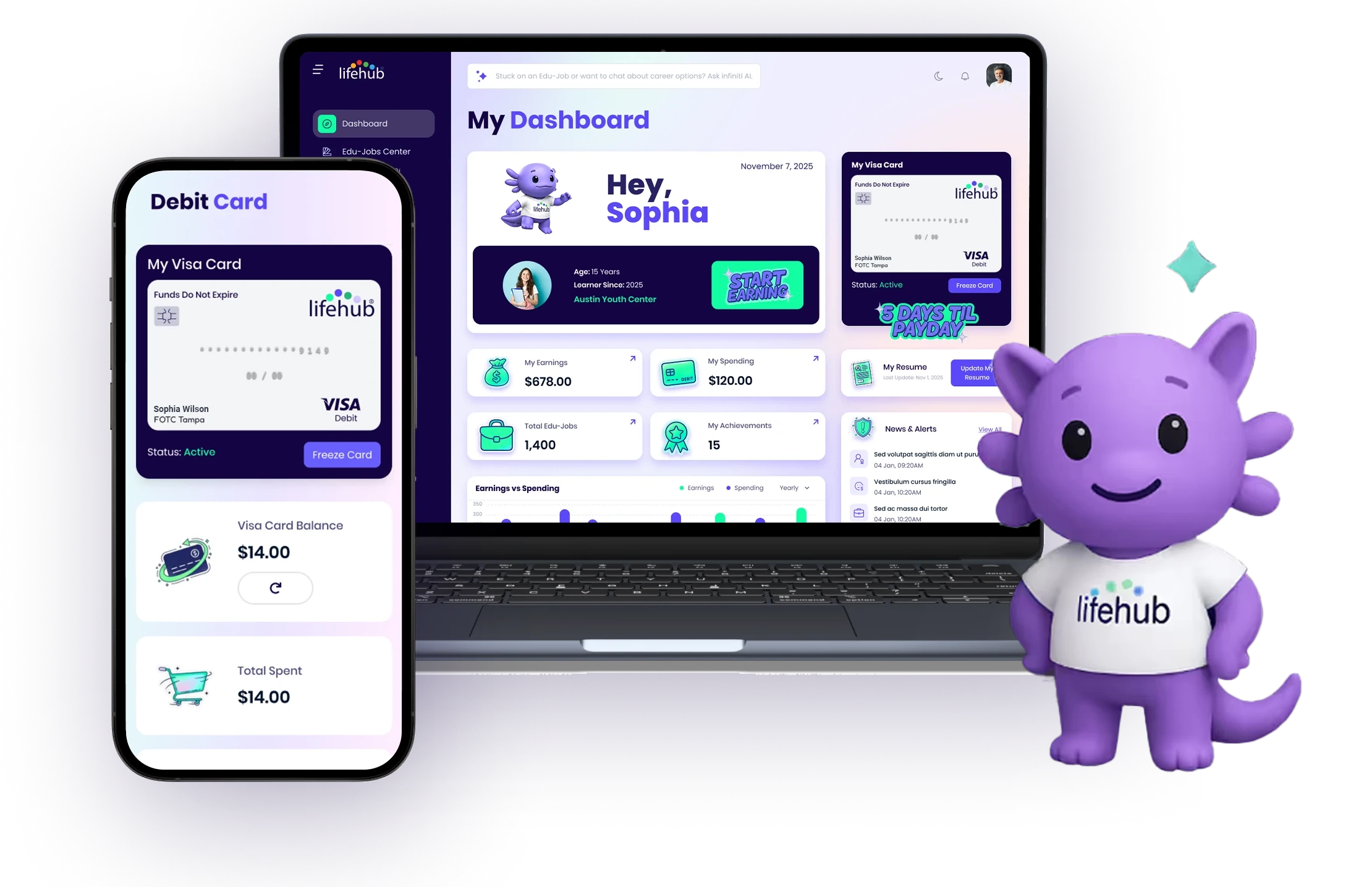
Educational pathways create clear routes from learning to capability, helping young people build skills that matter in real life. By connecting academic knowledge to practical application and providing motivation through tangible rewards, pathways make education more engaging and effective. Life Hub brings this approach to life through paid micro-learning tasks that build money skills, career readiness, and real-world capability while learners earn as they learn.


Related Content
Ready to Chat about Life Hub?
Whether you're parents, or a homeschool family, Life Hub is your partner to help you
raise super strong kids.

.svg)

.svg)


.svg)
.svg)

.svg)