Chatbot Education Guide: Transforming Learning in 2026



Imagine walking into a classroom where every learner has instant access to a virtual tutor, any time of day. This is the reality of chatbot education in 2026. With AI-powered chatbots rapidly changing how learners interact with information, schools and universities are seeing more personalized, engaging, and accessible learning experiences. This guide explores the promise and challenges of chatbot education, offering practical insights into technology, teaching impact, ethics, best practices, and real-world success stories.
The Evolution of Chatbots in Education
Imagine the first chatbots in classrooms. They relied on simple rules, answering basic questions with fixed responses. Over time, chatbot education has transformed. The journey moved from these early systems to smart, conversational AI.
By the early 2020s, breakthroughs in natural language processing and machine learning changed the landscape. Chatbots could now understand context, hold more natural conversations, and adapt to different learning styles.
2026 marks a tipping point. Mainstream adoption is visible in K-12, higher education, and lifelong learning. Over 85% of learners use AI tools daily for schoolwork, according to Faculty Focus (2024). Chatbots are now deeply integrated with Learning Management Systems and classroom tech, making them a key part of digital learning.
Institutions led the way. Georgia State University’s “Pounce” chatbot supports enrollment and advising. Arizona State’s “Sunny” provides round-the-clock help to online learners. These pioneers proved that chatbot education is moving from novelty to necessity.

Historical Overview and 2026 Landscape
Early chatbot education tools acted like digital FAQs, handling simple queries. As technology advanced, chatbots gained the ability to analyze text and recognize speech. Natural language processing allowed them to offer tailored feedback and understand learner intent.
The rise of machine learning made chatbots smarter. They learned from vast datasets, improving their answers and adapting to individual needs. By 2026, the adoption of chatbot education reached a new high. Integration with existing classroom platforms became standard.
Institutions like Georgia State and Arizona State set examples. Their chatbots, “Pounce” and “Sunny,” showed how AI could support both academic and administrative needs. Daily use by learners has become the norm, with chatbot education now considered essential for digital learning environments.
Types of Chatbots and Use Cases
There are two main types in chatbot education: general-purpose AI chatbots and custom, course-specific bots. General tools like ChatGPT or Gemini support a wide range of questions. Custom bots focus on specific subjects or courses, providing targeted help.
Core functions include:
- Tutoring and instant feedback
- Answering FAQs and administrative support
- Adaptive content delivery
- Emotional support through sentiment analysis
In language learning, chatbots help with conversation practice. In STEM, they guide learners through virtual labs. Nursing programs use bots for simulation-based learning.
Advanced features now include accessibility adaptations and personalized feedback. Some chatbots can even adjust tone or simplify content for learners with disabilities.
Despite progress, chatbot education still faces limits. Current bots struggle with grading complex assignments and deep contextual understanding. For a closer look at real-world AI tools in education, see Infiniti AI tools for education.
How Chatbots Are Transforming Teaching and Learning
Imagine a world where every learner has a digital assistant ready to help, day or night. This is now possible with chatbot education, which is changing how people learn and teach. Chatbots provide tailored support, boost engagement, and help both learners and educators manage their tasks more efficiently.

Enhancing Student Engagement and Personalization
Chatbot education offers learners on-demand help, anytime they need it. Instead of waiting for office hours, learners can ask questions, review concepts, or practice skills whenever they want. This 24/7 access supports busy schedules and different learning paces.
Research shows that chatbot education can increase motivation and confidence. Learners get instant, nonjudgmental feedback, which helps them see mistakes as chances to learn. This feedback loop keeps them engaged and organized, making it easier to stay on track.
For learners with disabilities or language barriers, chatbots can adapt explanations, simplify content, or even translate instructions. This makes learning more accessible and less stressful. Many chatbots can summarize lectures or visualize data, which reduces cognitive load and academic pressure.
Chatbots also serve as practice partners for language learning or skills development. For example, a learner can have a conversation in another language or run through a science simulation with a chatbot. Unlike traditional teaching assistants, chatbots offer consistency and scale—they never get tired and can support many learners at once.
| Support Feature | Chatbot Education | Traditional Assistant |
|---|---|---|
| 24/7 Availability | Yes | No |
| Instant Feedback | Yes | Sometimes |
| Personalized Adaptations | Yes | Limited |
| Scalability | High | Low |
Supporting Educators and Course Design
Educators also benefit from chatbot education. Chatbots help with course planning, content repurposing, and reviewing assignments. They can scan instructions to spot vague wording and suggest ways to make tasks clearer for learners.
One big advantage is adaptive learning. Chatbots can analyze data (when privacy rules allow) to spot where learners struggle, then adjust content or recommend extra practice. This helps educators personalize teaching without adding a heavy workload.
When it comes to grading, chatbots can quickly check for main ideas or basic errors. However, they still struggle with tasks that need deep understanding or creative feedback. Human oversight remains important for complex assignments.
For more insights on the benefits and challenges of chatbot education, you can explore research on educational technology.
As chatbot education continues to grow, educators and learners are finding new ways to work together with these digital tools. The balance between instant support and thoughtful guidance is key to making the most of this technology.
Ethical Considerations and Challenges in Chatbot Education
The rise of chatbot education brings new opportunities, but it also raises important ethical questions. As these AI tools become central to learning, educators and learners face challenges that need careful attention.
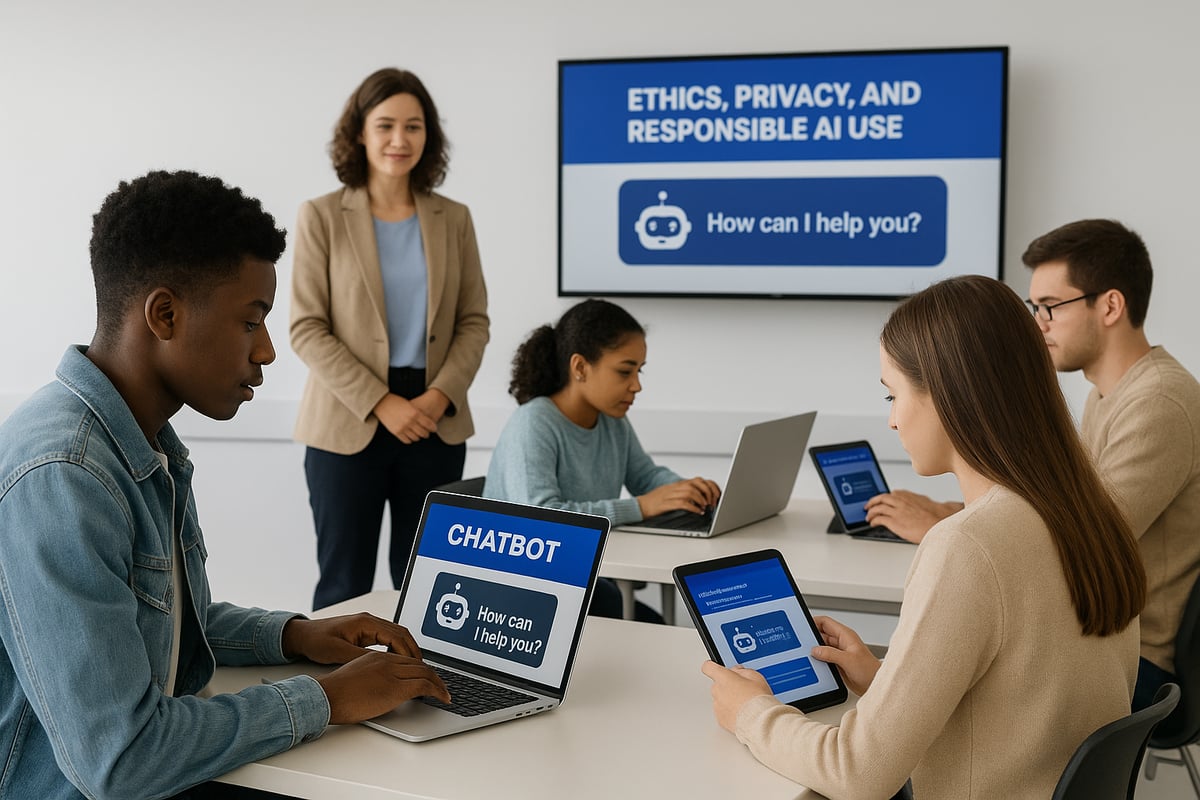
Academic Integrity and Responsible Use
Academic integrity is a top concern in chatbot education. When learners turn to chatbots for quick answers, the risk of bypassing critical thinking and original work increases. Some may use chatbots for plagiarism or to complete assignments with minimal effort.
A recent survey found that 40% of learners think AI writing tools should be allowed, but with clear limits. This reflects a growing need for guidelines in chatbot education to prevent misuse. Institutions are responding by updating codes of conduct and redesigning assignments. Tasks that require personal reflection or real-world connections help reduce shortcuts.
Educators are also using AI detection tools and remote proctoring during assessments. While these methods can catch some cases, they are not foolproof. Creating a culture of responsible AI use is key. Open conversations, support, and ongoing education help learners understand the boundaries.
Data Privacy, Bias, and Transparency
Data privacy is another pressing issue in chatbot education. AI-driven platforms often collect sensitive learner information to personalize support. If not managed carefully, this data can be at risk of leaks or misuse.
Algorithmic bias is a related challenge. Chatbots trained on narrow data may reinforce stereotypes or exclude certain groups. To counter this, developers use diverse input sources and run regular audits. Inclusive design frameworks and feedback from users also play a role in reducing bias.
Transparency is vital. Learners and educators need to understand what chatbots can and cannot do. Communicating the limitations and logic behind chatbot responses builds trust. For a deeper look at these issues, see this AI chatbots in education: challenges and opportunities research paper, which explores data security and ethical concerns in depth.
Ethical challenges in chatbot education are complex, but proactive steps can make AI a safe and positive force in learning.
Implementing Chatbots in Educational Settings: Best Practices
Bringing chatbot education into schools and universities requires careful planning, collaboration, and ongoing support. The following best practices help institutions harness the full potential of chatbots while meeting the needs of every learner.

Steps for Successful Integration
Successful chatbot education begins with aligning your goals to the needs of both learners and educators. Start by identifying what you want to achieve. Is your aim to provide 24/7 homework help, streamline administrative tasks, or offer personalized learning pathways?
Next, select or design chatbot solutions that fit your curriculum. Collaborate with IT teams to embed these tools into your learning management systems or apps, creating a seamless experience for users.
Training is key. Educators and learners need clear guidance on how to use chatbots effectively and ethically. Use analytics and feedback to monitor performance. Regular updates help keep chatbot education relevant and accurate.
Finally, human oversight remains vital. Educators should step in for sensitive or complex queries, ensuring learners receive the right support at the right time.
Case Studies and Institutional Examples
Many institutions have seen real benefits from chatbot education. For example, Georgia State University’s “Pounce” chatbot has helped thousands with enrollment and advising. Arizona State’s “Sunny” provides online support, while California State University Northridge’s “Csunny” assists with registration and financial aid.
Here is a summary of these examples:
| Institution | Chatbot Name | Main Function |
|---|---|---|
| Georgia State | Pounce | Enrollment, Advising |
| Arizona State | Sunny | Online Student Support |
| CSU Northridge | Csunny | Registration, Financial Aid |
These schools report improved learner satisfaction and smoother administration. For more insights on how schools and districts are adopting these solutions, see Solutions for schools and districts.
Addressing Misuse and Cheating Prevention
With the growth of chatbot education, concerns about misuse have increased. Some learners may try to use chatbots to shortcut assignments or avoid critical thinking. To prevent this, educators should design tasks that require personal reflection, real-world application, and creativity.
AI detection tools and remote proctoring can help, but they are not perfect. Building a culture of responsible use is just as important. Regular conversations about academic honesty and the ethical use of AI keep everyone on the same page.
By focusing on thoughtful assignment design and open communication, chatbot education can support learning while protecting integrity.
Impact on Assessment, Feedback, and Student Outcomes
The rise of chatbot education is changing assessment, feedback, and learner outcomes in classrooms worldwide. Chatbots now provide round-the-clock support, making feedback more immediate and personalized than ever.
Rethinking Assessment Models
Chatbot education enables continuous, formative feedback. Learners can submit drafts or questions at any time, receiving instant responses that help them track progress. This ongoing feedback loop encourages autonomy and self-regulated learning, as learners can reflect and improve without waiting for instructor input.
Research shows that chatbots are adept at summarizing main ideas from essays and providing structured feedback. However, they still struggle to interpret nuance, creativity, or complex arguments. According to a case study on AI chatbot in higher education, most chatbots excel at identifying factual errors or organization issues, but may miss deeper insights.
Assessment designs are adapting in response. Instructors now create assignments that require personal reflection, collaboration, or real-world application. For example, learners might connect course theories to local events or personal experiences.
| Feedback Aspect | Chatbot Strengths | Human Instructor Strengths |
|---|---|---|
| Speed | Instant | Delayed |
| Scalability | High | Limited |
| Nuanced Evaluation | Limited | Strong |
| Emotional Support | Basic | Advanced |
While chatbot education offers efficiency and accessibility, it is important to balance automated support with tasks that foster creativity and critical thinking.
Student Perceptions and Learning Experience
Most learners appreciate chatbot education for its convenience and reliability. They find it helpful for routine tasks like organizing study schedules, clarifying instructions, or checking basic understanding. Many report feeling more confident when they can ask questions privately and receive nonjudgmental feedback.
Still, research suggests learners prefer human instructors for complex, emotional, or high-stakes feedback. Chatbots are valued for their consistency, but cannot replace the empathy or deep contextual understanding of a teacher.
Studies indicate that when well-designed, chatbots can support critical thinking and deeper engagement. Learners who interact regularly with chatbots tend to show improved organization and motivation, as long as the tools are integrated thoughtfully.
Chatbot education is most effective when it complements—not replaces—human guidance, blending the strengths of technology and teaching expertise.
The Future of Chatbot Education: Trends and Predictions for 2026 and Beyond
Imagine a future classroom shaped by rapid advances in chatbot education. As technology evolves, learners and educators alike will see new opportunities and challenges. Here is what the next chapter may hold.
Advancements in AI and Personalization
By 2026, chatbot education will benefit from smarter, more responsive AI. Natural language understanding will improve, helping chatbots grasp complex questions and respond with greater accuracy. Adaptive feedback will allow bots to adjust explanations based on each learner's strengths and needs.
Emotional intelligence features will become more common, supporting social-emotional learning. Specialized course bots will offer deeper, context-aware help in subjects like science or languages. Integration with AR, VR, and gamified experiences will make learning more interactive.
Educators are also adopting AI tools for grading and curriculum support, as highlighted in Educators' AI adoption trends. There will be a growing emphasis on privacy, ethical design, and making chatbot education inclusive for all.
Preparing Learners for an AI-Driven World
As chatbot education grows, digital and AI literacy will become essential skills for every learner. Educators will take on new roles as designers, facilitators, and guides, helping learners use AI tools thoughtfully. Lifelong learning and adaptability will be key, preparing people for jobs that may not exist yet.
Institutions are beginning to weave AI into every part of the curriculum. For practical strategies, see AI curriculum integration strategies. Evidence-based chatbot education will focus on transparency, user feedback, and continuous improvement.
Schools and universities will also teach responsible AI use, helping learners understand the strengths, limits, and ethics of these tools.
Real-World Capability Building
Chatbot education is not just about academic content. It is also a bridge to real-world skills. Learners may practice job interviews with AI bots, complete financial literacy modules, or work together on collaborative projects guided by virtual assistants.
These experiences help connect classroom learning to daily life and future careers. Chatbots can simulate workplace scenarios, offer instant feedback, and adapt to different learning needs. As a result, chatbot education will play a larger role in helping learners succeed in both school and life.
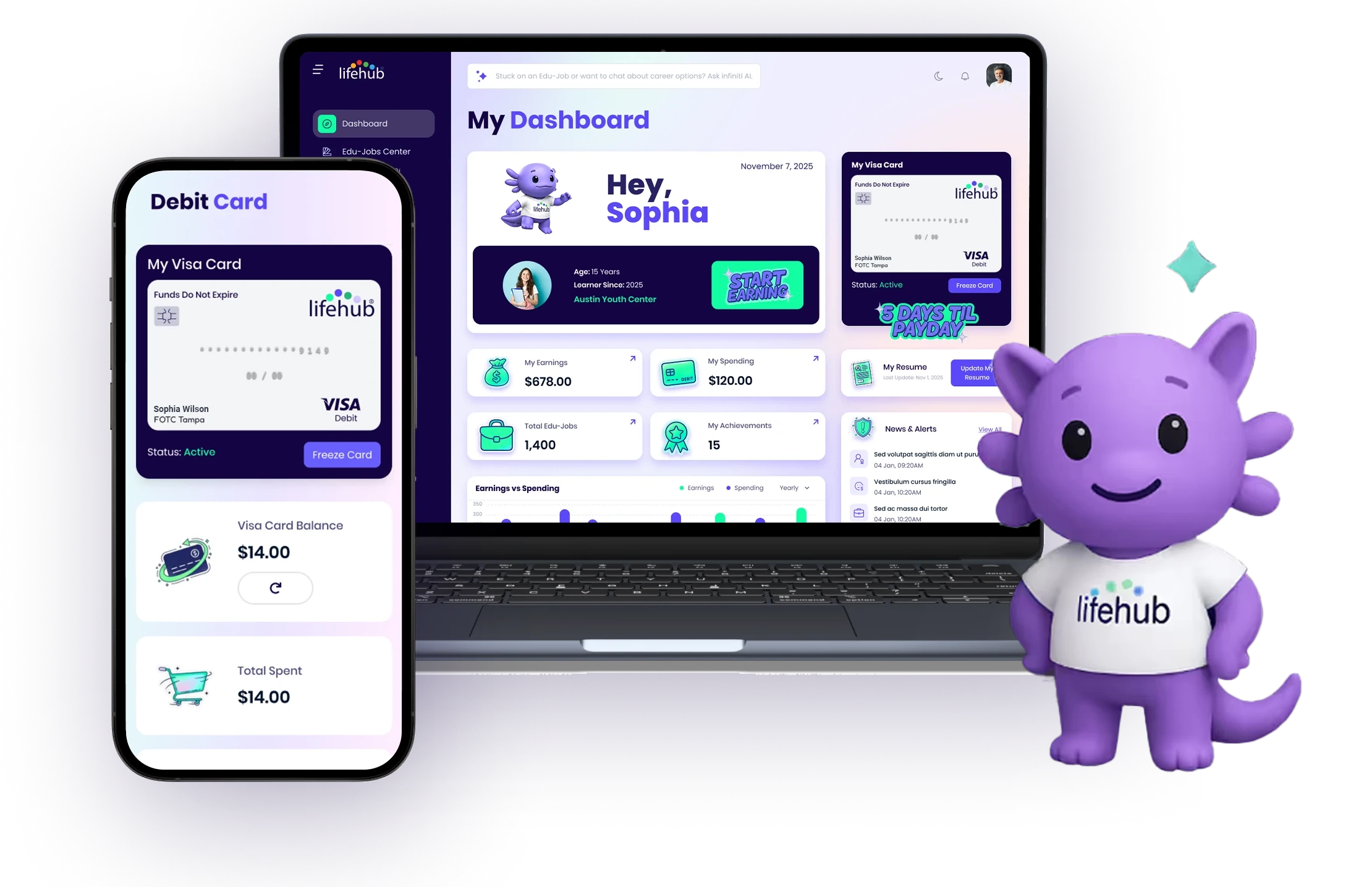
As we look at how chatbots are changing learning, it’s clear that practical skills and real experiences matter more than ever. If you want learners to build real-world capability while exploring topics like AI, personal finance, or creative projects, there are ways to make it happen. Life Hub gives kids and young people a chance to earn, grow, and learn by doing through micro learning tasks that go beyond the classroom. If you’re curious how this can work for your family, See Life Hub for Kids and Families.


Related Content
Ready to Chat about Life Hub?
Whether you're parents, or a homeschool family, Life Hub is your partner to help you
raise super strong kids.

.svg)

.svg)


.svg)
.svg)

.svg)