Arizona Homeschool: Laws, Resources, and Financial Skills


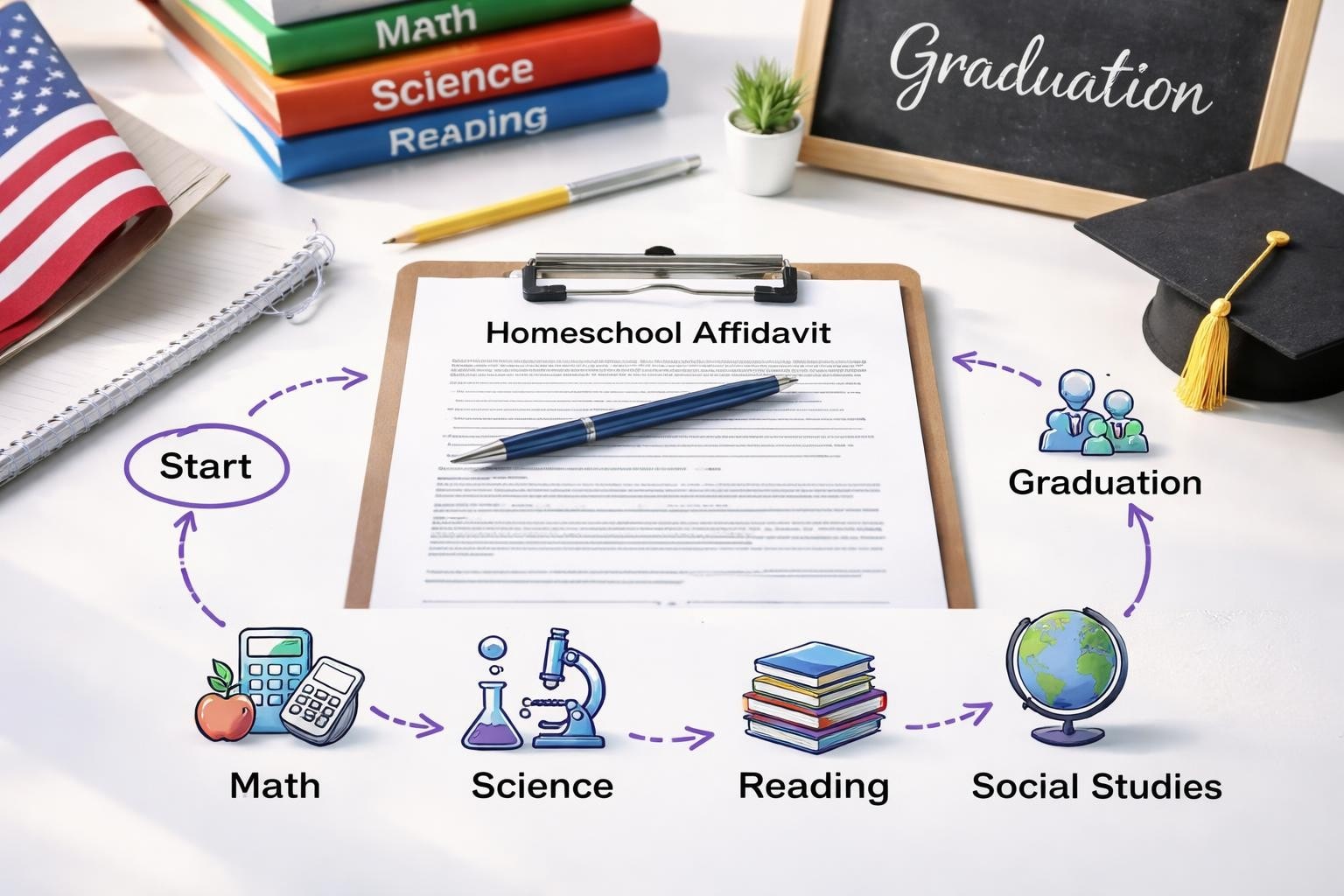

Arizona families choose homeschooling for many reasons, including flexible schedules, personalized learning, and the ability to focus on real-world skills. The state offers some of the most parent-friendly homeschool laws in the country, with minimal regulations and strong educational freedom. Whether you're new to homeschooling or looking to enhance your current approach, understanding Arizona's requirements and available resources helps you create an effective learning environment. This guide covers the legal steps, curriculum options, and practical strategies to help your learners thrive academically and financially.
Understanding Arizona Homeschool Legal Requirements
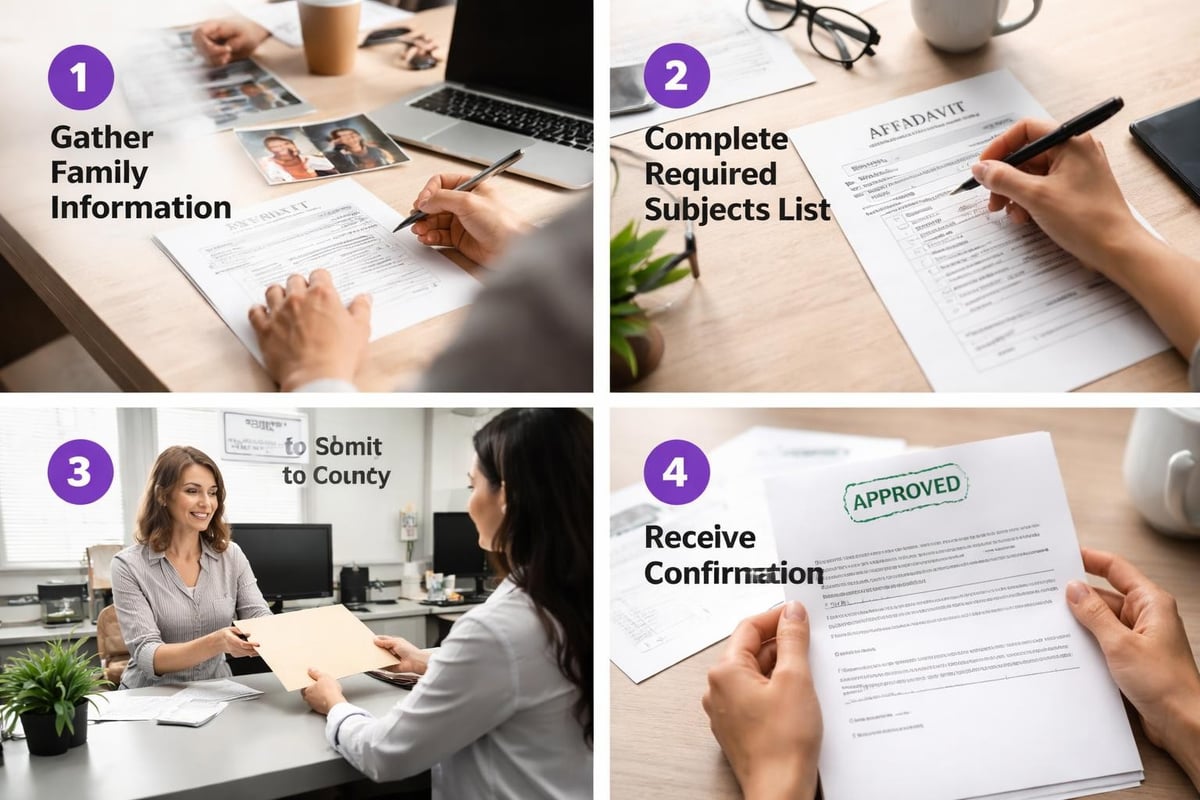
Arizona homeschool law operates under a straightforward framework. Parents who choose to homeschool must file an affidavit with their county school superintendent. This simple notification process does not require approval or review.
The U.S. Department of Education outlines Arizona's homeschool regulations, which define a homeschool as a non-public school conducted primarily by parents or guardians. You must teach the required subjects, but the state does not mandate specific curriculum choices, textbooks, or teaching methods.
Filing Your Affidavit
The affidavit must include basic information about your homeschool. You'll provide your name, address, and the names and birth dates of your children. The document also requires your signature affirming that you are providing instruction in the required subjects.
Key affidavit details:
- File with your county school superintendent
- Submit within 30 days of starting homeschool
- No fee required in most counties
- Valid until you move or stop homeschooling
You can find affidavit forms through resources like Mohave County's homeschooling information page, which provides downloadable forms and county-specific guidance. Each county may have slightly different submission procedures, so check with your local superintendent's office.
Required Curriculum Subjects
Arizona law requires instruction in reading, grammar, mathematics, social studies, and science. The state does not specify grade levels, testing requirements, or minimum hours of instruction. This flexibility allows parents to tailor education to each child's needs and learning style.
According to Arizona Families for Home Education, you have complete freedom to choose your teaching methods and materials. You can use traditional textbooks, online programs, project-based learning, or any combination that works for your family.
| Subject Area | Required | Examples of Approaches |
|---|---|---|
| Reading | Yes | Literature circles, phonics programs, independent reading |
| Grammar | Yes | Writing workshops, language arts workbooks, editing practice |
| Mathematics | Yes | Manipulatives, online math programs, real-world applications |
| Social Studies | Yes | History projects, geography studies, current events |
| Science | Yes | Experiments, nature studies, STEM activities |
Exploring Educational Freedom Options in Arizona
Arizona offers additional educational options beyond traditional homeschooling. The Empowerment Scholarship Account (ESA) program provides funding for eligible families to cover education expenses. Understanding these choices helps you make the best decision for your situation.
Empowerment Scholarship Accounts
The ESA program, detailed by the Center for Arizona Policy, provides state funding deposited into an account for qualified educational expenses. Families can use these funds for curriculum, tutoring, therapies, and other approved education costs.
ESA eligibility categories include:
- Children with disabilities
- Children attending D or F-rated schools
- Children in foster care
- Children of active-duty military members
- Prior year ESA participants
- Universal eligibility (expanded in recent years)
The ESA operates differently from traditional arizona homeschool. Families using ESA funds must meet additional requirements, including standardized testing and financial accountability. Some families choose traditional homeschooling for the complete autonomy it provides.
Accessing Public School Resources
Arizona law allows homeschool learners to participate in public school classes, extracurricular activities, and sports programs. The Coalition for Responsible Home Education notes that individual school districts set their own policies for homeschool participation.
Contact your local school district to learn about available opportunities. Some districts welcome homeschool learners in band, art, physical education, or specialized courses. Sports participation typically follows Arizona Interscholastic Association guidelines.
Building Financial Literacy in Your Arizona Homeschool
Money skills form a critical part of real-world education. Teaching your learners about budgeting, earning, saving, and investing prepares them for independent adulthood. Arizona homeschool families can integrate financial education throughout their curriculum.
Practical Money Management Skills
Financial literacy goes beyond classroom theory. Learners benefit from hands-on experience with real money, decisions, and consequences. Start with age-appropriate concepts and gradually introduce more complex topics.
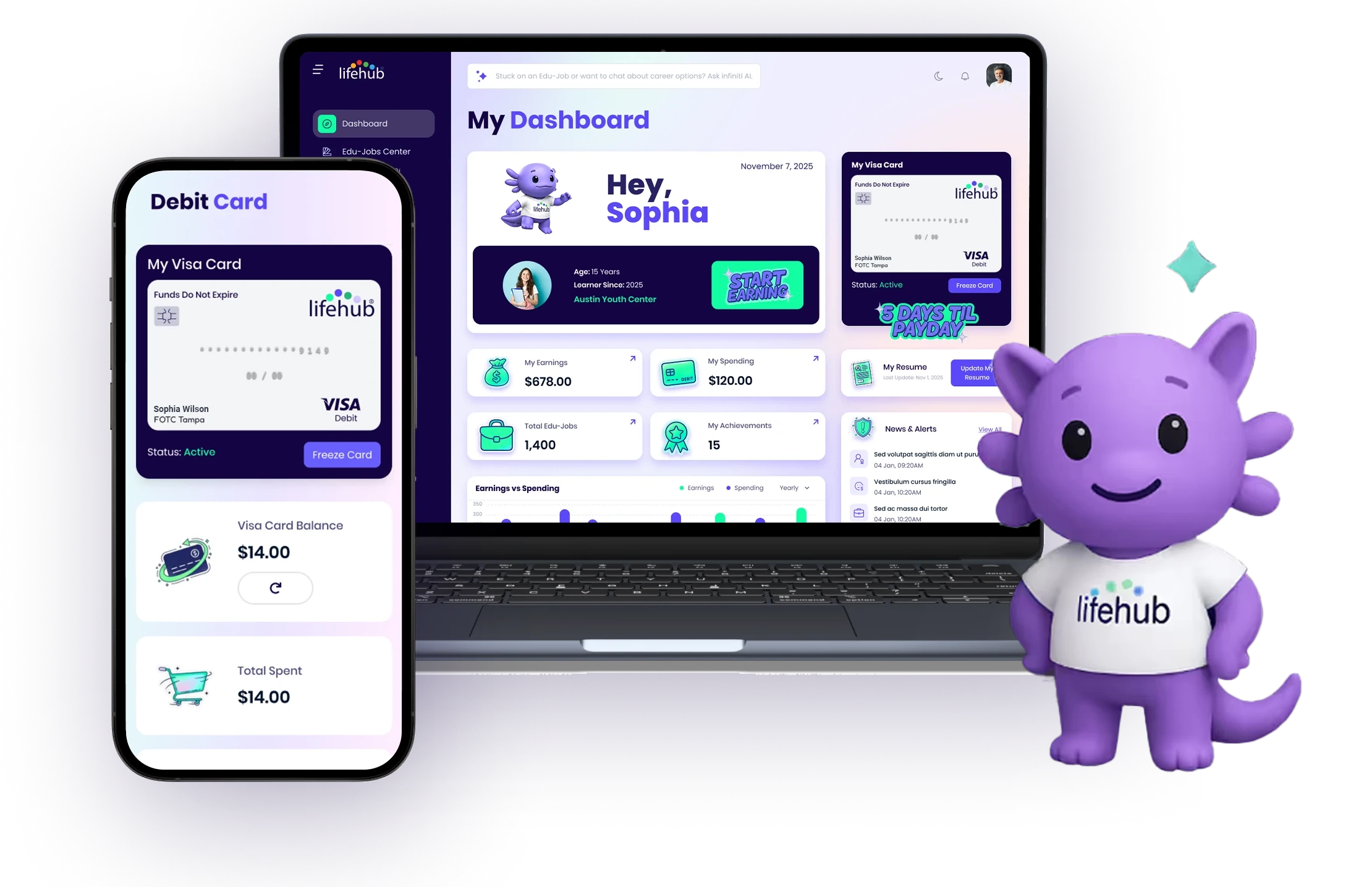
Young children can learn to count money, understand prices, and make simple purchasing decisions. Older learners can explore budgeting, banking, credit, and investment basics. The Life Hub micro-learning platform offers structured financial education through Edu Jobs that connect learning with earning.
Financial literacy topics by age:
- Elementary years: Counting money, needs vs. wants, saving for goals
- Middle school: Budgeting, comparison shopping, earning through work
- High school: Banking, credit, taxes, career income planning
- Advanced: Investing, entrepreneurship, financial goal setting

Connecting Learning to Earning
Traditional education often separates academic work from financial reward. Real-world jobs provide immediate feedback through paychecks, creating a direct link between effort and compensation. Arizona homeschool families can create similar connections.
Assign value to completed work, whether through allowances tied to chores, payment for special projects, or participation in programs that compensate learners for educational achievement. This approach teaches work ethic, quality standards, and money management simultaneously.
The Life Hub life skills curriculum integrates financial education with academic subjects, allowing learners to earn real money while building knowledge. Each completed Edu Job provides both skill development and compensation, making abstract concepts concrete.
Designing Your Arizona Homeschool Curriculum
Curriculum choice represents one of the biggest advantages of arizona homeschool. You can select materials that match your educational philosophy, your child's learning style, and your family's values. No single approach works for everyone.
Choosing Resources and Materials
Consider your learner's interests, strengths, and challenges when selecting curriculum. Some children thrive with structured workbooks, while others learn better through projects, discussions, or digital programs. Most homeschool families use a combination of approaches.
Popular curriculum types:
- Traditional textbook programs with teacher guides
- Online courses with video instruction
- Unit studies that integrate multiple subjects
- Literature-based learning centered on books
- Unschooling that follows child-led interests
- Classical education with emphasis on logic and rhetoric
AFHE's getting started resources provide curriculum recommendations and reviews from experienced Arizona homeschool families. Local support groups often host curriculum fairs where you can examine materials before purchasing.
Integrating Technology and Digital Skills
Digital literacy matters more every year. Arizona homeschool learners need skills in word processing, spreadsheets, research, online safety, and emerging technologies like artificial intelligence.
Incorporate technology naturally throughout your curriculum. Use word processors for writing assignments, spreadsheets for math projects, and presentation software for reports. Teach internet research skills, fact-checking, and source evaluation.
The AI literacy curriculum from Life Hub introduces learners to artificial intelligence concepts through practical applications. Understanding AI, digital tools, and workplace technology prepares young people for future careers and entrepreneurship opportunities.
| Skill Area | Elementary | Middle School | High School |
|---|---|---|---|
| Word Processing | Typing practice, simple documents | Essay formatting, editing tools | Research papers, advanced features |
| Spreadsheets | Basic data entry | Simple formulas, charts | Budget planning, data analysis |
| Research | Guided searches, kid-safe sites | Source evaluation, citations | Academic research, fact-checking |
| AI & Emerging Tech | Introduction to concepts | Practical applications | Ethics, creation, advanced use |
Building Career Readiness and Real-World Skills
Academic knowledge provides a foundation, but real-world capability requires additional skills. Arizona homeschool families can emphasize career exploration, work ethic, communication, problem-solving, and practical competencies that prepare learners for employment and entrepreneurship.
Exploring Career Interests Early
Career readiness begins with exposure. Help learners explore different fields through reading, videos, conversations with professionals, job shadowing, volunteering, and internships. Early exposure helps young people understand work environments and identify interests.
Career exploration activities:
- Interview professionals in fields of interest
- Tour businesses and workplaces
- Complete online career assessments
- Try short-term projects in different areas
- Shadow workers for a day
- Volunteer in community organizations
The homeschool networks connected through Life Hub provide opportunities for learners to explore careers through Edu Jobs in various fields. This exposure helps young people make informed decisions about their future paths.
Teaching Professional Skills
Professional skills matter as much as academic knowledge. Communication, time management, responsibility, and quality work apply to every career. Arizona homeschool provides opportunities to develop these competencies through daily practice.
Assign projects with deadlines, quality standards, and revision requirements. Teach professional email writing, phone etiquette, and respectful disagreement. Practice scheduling, prioritization, and following through on commitments.
Social and emotional learning supports career success. Self-awareness, relationship skills, responsible decision-making, and self-management help learners navigate workplace challenges. These soft skills often determine long-term career outcomes more than technical abilities alone.

Navigating Record-Keeping and Documentation
Arizona homeschool law does not require specific record-keeping, testing, or portfolio reviews. However, maintaining good records serves your family's interests. Documentation helps you track progress, identify learning gaps, plan future instruction, and provide transcripts when needed.
Creating Useful Records
Keep records that help you teach effectively. Track completed work, books read, field trips, projects, and skills mastered. Your record-keeping system should work for you, not create unnecessary burden.
According to LegalClarity's Arizona homeschool requirements guide, you are not required to keep records for state compliance, but colleges, employers, and military recruiters may request transcripts or documentation of completed coursework.
Helpful records to maintain:
- Daily or weekly attendance logs
- Curriculum materials used
- Completed assignments and projects
- Reading lists
- Field trip and activity logs
- Skills assessments or progress notes
- Samples of written work
Preparing High School Transcripts
High school learners need transcripts for college applications, scholarships, and employment. Create transcripts that clearly show courses completed, grades earned, and credits awarded. Follow standard formatting to help admissions officers and employers understand your learner's preparation.
List courses by subject area and grade level. Include course titles, credits (typically 0.5 for semester courses, 1.0 for year-long courses), and letter grades or narrative evaluations. Add standardized test scores, honors, awards, volunteer work, and extracurricular activities.
Veritas Homeschoolers Support Group provides sample transcripts and guidance on credit calculation. Many Arizona homeschool graduates successfully enter college and careers with parent-created transcripts.
Connecting with Arizona Homeschool Support
Homeschooling works better with community support. Arizona offers numerous groups, co-ops, field trip organizations, and online communities where families share resources, encouragement, and practical help.
Finding Local Support Groups
Local support groups provide social opportunities for learners and practical assistance for parents. Groups organize field trips, park days, co-op classes, and social events. Parents exchange curriculum advice, teaching strategies, and emotional support.
Search online for groups in your area. Many Arizona cities and regions have multiple options with different educational philosophies, meeting schedules, and membership requirements. Visit several groups before committing to find the best fit for your family.
Types of homeschool groups:
- Inclusive groups welcoming all families
- Faith-based groups sharing religious values
- Classical education co-ops
- Unschooling networks
- Special needs support groups
- Teen and high school groups
Online Resources and Communities
Online communities extend support beyond geographic boundaries. Facebook groups, forums, and websites connect Arizona homeschool families for advice, encouragement, and resource sharing. These communities provide 24/7 access to experienced parents who understand your challenges.
Numa's Arizona homeschool laws guide offers comprehensive information about legal requirements, ESA programs, and curriculum options. Online resources complement local support by providing detailed information and diverse perspectives.
Measuring Progress Without Standardized Testing
Arizona does not require standardized testing for traditional homeschool learners. This freedom allows you to assess progress through methods that match your educational approach and provide useful information about your child's development.
Alternative Assessment Methods
Effective assessment focuses on growth, not comparison to arbitrary standards. Watch for skill mastery, increasing independence, growing confidence, and the ability to apply knowledge to new situations.
Assessment approaches to consider:
- Portfolio reviews showing work samples over time
- Project completion and quality improvement
- Oral presentations and discussions
- Real-world application of skills
- Self-assessment and goal setting
- Parent observation and documentation
Some families choose to use standardized tests for their own information, college preparation, or to track grade-level performance. Testing remains optional unless you participate in the ESA program or want comparative data.
Setting and Tracking Goals
Goal setting helps learners develop self-direction and accountability. Work together to establish clear, achievable objectives for each subject or skill area. Break large goals into smaller steps that provide regular success and feedback.
Review progress regularly and adjust goals as needed. Celebrate achievements and analyze challenges to improve future performance. This process teaches learners to manage their own development, a skill that transfers to career and life success.
The approach used by Life Hub through Edu Jobs demonstrates this goal-oriented learning. Each task has clear completion criteria, immediate feedback, and tangible reward, helping learners understand the connection between effort, quality, and results.
Arizona homeschool families enjoy remarkable educational freedom paired with practical support resources. By understanding legal requirements, choosing curriculum that fits your learners, and emphasizing real-world skills like financial literacy and career readiness, you create a rich learning environment that prepares young people for successful, independent lives. Life Hub enhances your arizona homeschool by connecting academic learning with practical money skills through paid Edu Jobs that build knowledge while teaching work ethic, quality standards, and financial management in one integrated experience.


Related Content
Ready to Chat about Life Hub?
Whether you're parents, or a homeschool family, Life Hub is your partner to help you
raise super strong kids.

.svg)

.svg)


.svg)
.svg)

.svg)