Homeschool Science Guide: Inspiring Exploration in 2026


Science shapes the world we live in, from the food we eat to the technology we use every day. For homeschoolers in 2026, this creates a unique chance to make learning come alive with hands-on projects and real-world discovery. This guide to homeschool science will help families spark curiosity, nurture critical thinking, and build skills learners can use for life. Inside, you will find the latest trends, practical strategies, favorite curriculum picks, creative activities, tips for using technology, and ways to prepare learners for the future. Get ready to make science both fun and meaningful, step by step.
Why Science Matters in Homeschooling
Science shapes how we understand the world, from the food we eat to the technology we rely on. For homeschoolers, science is more than just a subject. It is a way to nurture curiosity and connect learning to real life. Homeschool science offers a unique chance to build critical thinking skills and set a strong foundation for future success.

The Role of Science in Modern Education
Science is at the heart of modern learning. It helps learners develop critical thinking and problem-solving skills they will use for life. In a world driven by technology, scientific literacy is essential. According to the Bureau of Labor Statistics, 70% of STEM jobs in 2026 will require advanced problem-solving skills.
Homeschool science connects experiments to everyday life, making lessons practical and memorable. Baking bread becomes a chemistry lesson. Observing plants in the backyard sparks questions about biology. This real-world relevance encourages curiosity and a love for lifelong learning.
For families seeking to build a strong foundation, Homeschool Science for Every Student explores why a flexible science approach benefits learners of all ages.
Unique Advantages of Homeschool Science
Homeschool science stands out because it adapts to the learner’s interests and pace. Families can spend more time on topics that spark excitement, or move quickly through material that comes easily. This flexibility means deeper exploration, not just memorizing facts for a test.
Science at home blends with math, reading, and even art. Nature walks become lessons in observation and journaling. Kitchen chemistry and field trips bring concepts to life. Hands-on activities make learning stick and help learners see the value of science in daily routines.
These unique benefits help foster a genuine love of discovery. Homeschool science is not just about content. It is about inspiring curiosity and confidence in every learner.
Overcoming Common Homeschool Science Challenges
Many families worry about teaching homeschool science without a formal lab or expensive equipment. Others face the challenge of teaching multiple ages or finding high-quality resources that match their values. Some parents may feel unsure about covering complex topics.
Solutions exist for each of these concerns. Online labs and virtual field trips offer safe ways to explore experiments. Local co-ops and support groups can provide community and shared resources. High-quality secular and faith-based options are available for every family’s needs.
With creativity and support, parents can guide learners through even the toughest science topics. Homeschool science is about making exploration possible for every family.
Top Homeschool Science Curriculum Trends for 2026
Homeschool science continues to evolve in 2026, offering learners new ways to explore, experiment, and connect with the world. Families now have more flexibility than ever to choose approaches that fit their unique needs. Let’s look at the top trends shaping homeschool science and what they mean for your learner.

Rise of Interdisciplinary and Project-Based Learning
Homeschool science is moving beyond textbooks. Many families blend science with history, art, and language arts for a richer experience. For example, a Charlotte Mason-inspired approach uses living books and narration. This method helps learners connect scientific ideas to stories and real life.
Project-based units are also on the rise. Learners might build models, design experiments, or create presentations. These projects encourage deeper comprehension and retention. They also allow for exploration based on a learner’s own interests.
Working across subjects helps learners see science in everyday life. It’s not just about facts, but about understanding how the world works. This trend makes homeschool science more engaging and memorable.
Digital and Interactive Curriculum Innovations
Technology is transforming homeschool science. More families are choosing online platforms with video lessons, simulations, and interactive labs. In fact, 60% of homeschool families now use digital resources for science (NHERI, 2025).
Popular programs like Science Shepherd and Apologia’s Exploring Creation series offer digital lessons that fit different learning styles. Many platforms include quizzes, virtual labs, and support for parents.
Here’s a quick comparison:
| Curriculum | Format | Key Features |
|---|---|---|
| Science Shepherd | Digital, self-paced | Video, quizzes, labs |
| Apologia Exploring Creation | Book + online | Hands-on labs, Biblical view |
| No Sweat Nature Study | Live online | Nature journaling, interactive |
Choosing the right digital curriculum can help make homeschool science accessible and exciting for all abilities. Explore options in the Homeschool Science Curriculum Choices Guide to find programs with hands-on experiments and nature-based activities.
Emphasis on Nature Study and Outdoor Exploration
Nature study is gaining popularity in homeschool science. Families are heading outdoors for nature journaling, citizen science projects, and backyard investigations. These activities build observation skills and support mental well-being.
Programs like No Sweat Nature Study offer live, interactive classes that guide learners through real-world exploration. Citizen science projects let learners contribute to research by observing birds, weather, or plants.
Outdoor science encourages curiosity and helps learners see connections between their studies and the natural world. It’s a trend that supports both academic growth and a love for learning.
Personalized and Self-Paced Science Learning
Personalized learning is a key trend in homeschool science. Many platforms now adapt to a learner’s progress, offering challenges or support as needed. Self-guided experiments and notebooking let learners work at their own pace.
Sabbath Mood Homeschool, for example, provides open-and-go lessons that fit different schedules. Learners can dive deep into topics they love or revisit concepts until they feel confident.
Personalized approaches help learners build independence and confidence in science. They also make homeschool science flexible for different needs and interests.
Essential Strategies for Inspiring Exploration
Bringing homeschool science to life means making it active, personal, and relevant. These essential strategies help every learner, at any age, become a curious explorer. Let’s look at hands-on methods, ways to spark curiosity, building community, and learning together as a family.

Making Science Hands-On and Experiential
Homeschool science becomes memorable when learners dive in and get their hands dirty. Try using household items for simple experiments, like testing plant growth or making a homemade volcano. Encourage learners to document what they see with photos or in a science journal.
Some ideas to boost engagement:
- Build models from clay or recycled materials.
- Use “Try This!” challenges from your curriculum.
- Solve real-world problems, like testing water from the garden.
Hands-on activities help learners understand concepts instead of just reading about them. This approach makes homeschool science both fun and practical.
Cultivating Scientific Curiosity at Home
Curiosity is the heartbeat of homeschool science. Set up a simple investigation space with basic tools, like magnifying glasses or jars for collecting samples. Invite questions and let learners test their own ideas.
You might:
- Ask learners to guess what will happen before an experiment.
- Let them choose topics, like bugs, weather, or stars.
- Capture discoveries in a shared notebook or on a wall chart.
Supporting curiosity means following the learner’s interests and giving time to explore. This freedom helps build a lifelong love for homeschool science.
Leveraging Community Resources and Co-Ops
Homeschool science grows even richer when families connect with others. Join local groups, science clubs, or online communities to share experiments, attend field trips, or join science fairs.
Look for:
- Museum workshops and nature center events.
- Virtual field trips and group challenges.
- Co-op classes for hands-on labs.
To find more opportunities, check out Homeschool networks and support for information on groups in your area. Community connections make homeschool science more social and inspiring.
Integrating Family and Multi-Age Learning
Teaching homeschool science to learners of different ages can be rewarding. Adapt experiments so everyone can join in, and use group read-alouds or science biographies for shared learning.
Try these strategies:
- Assign roles, like note-taker, photographer, or team leader.
- Discuss results together and compare observations.
- Use open-ended projects that allow for different skill levels.
Family-based homeschool science can spark collaboration and excitement. Siblings learn from each other, and everyone shares in the discovery.
Choosing the Right Homeschool Science Curriculum
Selecting a homeschool science curriculum can feel like navigating a maze. With so many choices, it helps to focus on what matters most to your family and your learner’s unique needs. This section breaks down practical steps and options to make your decision more manageable.

Key Criteria for Curriculum Selection
When choosing a homeschool science program, start by clarifying your educational philosophy. Decide if you want a secular or faith-based approach, or if you prefer a style like Charlotte Mason.
Next, consider your learner’s age and grade level. Some curricula offer multi-age options, while others are more structured.
Look for a balance between academic rigor and creativity. A strong homeschool science curriculum supports curiosity and critical thinking, not just memorization.
Support for parent-teachers is key. Check for clear guides, lesson plans, and online help.
- Match curriculum to your learner’s interests and pace.
- Consider hands-on options for active learners.
- Review sample lessons before committing.
A thoughtful start makes the rest of your homeschool science journey smoother.
Popular Homeschool Science Programs in 2026
A variety of homeschool science programs stand out in 2026. Sabbath Mood Homeschool blends living books, nature study, and notebooking, ideal for families who enjoy literature-based learning. Apologia Exploring Creation offers story-driven lessons, hands-on labs, and a Biblical worldview.
Science Shepherd provides a digital, self-paced approach for all grade levels, making it easy to adjust to your learner’s needs. No Sweat Nature Study features live online classes and nature journaling, perfect for families who like interactive and outdoor experiences.
For a broader overview, you can explore Award Winning Science Curriculum, which highlights top choices for different learning styles and family needs.
With so many options, you can find a homeschool science curriculum that fits your goals and your learner’s curiosity.
Comparing Curriculum Features and Costs
It helps to compare features and costs side by side when selecting a homeschool science resource. Some programs are hands-on, while others rely on textbooks or digital lessons. Lab kits and online supplements add variety and depth.
Most families budget between $200 and $500 per year for science materials. Pricing can vary by format, with subscription models, one-time purchases, and even free resources available.
| Program | Format | Lab Kits | Cost Range |
|---|---|---|---|
| Sabbath Mood Homeschool | Books/Notebook | Optional | $$ |
| Apologia | Textbook/Lab | Yes | $$-$$$ |
| Science Shepherd | Digital | Yes | $$ |
| No Sweat Nature Study | Online/Live | No | $-$$ |
Choosing the right homeschool science curriculum means weighing convenience, cost, and your learner’s style.
Tips for Mixing and Matching Resources
Mixing resources can make homeschool science more flexible and engaging. Combine structured programs with documentaries, podcasts, or citizen science projects to keep learning fresh.
- Use hands-on kits to supplement textbook lessons.
- Try new topics when interests change.
- Adapt activities for different ages in your family.
By blending various materials, you can customize homeschool science to fit your learner’s growth and changing curiosity.
Integrating Technology and Future-Ready Skills in Science
Technology is transforming homeschool science, making it more interactive and accessible than ever. Digital tools open doors to exploration, help learners build future-ready skills, and prepare them for advanced studies.
Using Digital Tools for Science Exploration
Digital resources have changed how homeschool science is taught. Virtual labs let learners conduct experiments safely, even with limited space or equipment. Interactive simulations bring abstract concepts like chemical reactions or planetary motion to life.
Augmented reality apps make topics like biology and astronomy immersive. For example, scanning a diagram with a tablet can reveal a 3D beating heart or the phases of the moon. These tools give every learner a chance to experiment, try new things, and repeat processes without the fear of making mistakes.
If you want to learn more about integrating technology in learning, check out Technology in education for practical tips and resources.
Building STEM and Digital Literacy
STEM skills are central to homeschool science in 2026. Coding projects, simple robotics kits, and engineering challenges are now common in many households. These activities build logic, problem-solving, and digital confidence.
Resources range from free coding websites to subscription kits that deliver experiments to your door. According to NCES, learners with STEM experience are better prepared for college and careers. Even basic programming, like creating a simple weather tracker, boosts digital literacy.
Families can choose activities that match their learner’s age and interest, making homeschool science both fun and skill-building.
Encouraging Real-World Problem Solving
Homeschool science encourages learners to tackle real-world challenges. Environmental projects, like water testing or local wildlife surveys, connect science to daily life.
Citizen science platforms let families contribute data to global studies, such as bird counts or pollution tracking. These hands-on experiences foster a sense of responsibility and curiosity about the world.
For more on project-based trends and virtual labs in homeschooling, see Homeschooling in 2025: Trends to Watch.
Preparing for High School and Beyond
As learners approach high school, homeschool science becomes a key part of college and career planning. Meeting lab science requirements is important for transcripts and admissions.
Options like dual enrollment, advanced placement, and online courses help learners gain deeper knowledge. Documenting experiments in science portfolios can showcase skills and achievements.
By integrating technology and future-ready skills, homeschool science equips every learner for success beyond the home classroom.
Creative Science Activities and Experiments for Homeschoolers
Looking for ways to make homeschool science memorable and fun? The right activities can turn any day into a discovery adventure. Here are some creative ideas to help every learner explore, question, and experiment.
Nature-Based Investigations
Nature is an open classroom for homeschool science. Learners can track weather patterns, sketch local plants, and record animal sightings.
- Go on outdoor scavenger hunts for leaves or insects.
- Keep a daily nature journal with sketches and notes.
- Try a backyard biodiversity survey. Count how many different species you find in your garden or local park.
These activities encourage careful observation and curiosity. They also help connect scientific ideas to the world just outside your door.
Kitchen Science and Everyday Experiments
The kitchen is a natural lab for homeschool science. Everyday items become tools for hands-on discovery.
- Explore chemistry by baking bread or making homemade ice cream.
- Investigate physics with ramps and homemade bridges.
- Test reactions with baking soda and vinegar volcanoes.
With common supplies, learners can safely try experiments and see real science in action. This approach keeps learning affordable and accessible.
DIY Science Projects and Challenges
Building and inventing are at the heart of homeschool science. Simple projects can spark creativity and teamwork.
- Construct solar system models from clay or paper.
- Engineer an egg drop container and test it from different heights.
- Organize a family science night or themed challenge.
For more inspiration, explore Kids and family learning resources which offers ideas for multi-age projects and activities that families can do together.
Integrating Art and Storytelling in Science
Blending art and stories makes homeschool science come alive. Learners might illustrate their favorite experiment or write a creative story about a famous scientist.
- Draw and label diagrams of plants or animals.
- Create comics or short videos about scientific discoveries.
- Read living books that weave science facts into engaging narratives.
Art and storytelling help deepen understanding while making science more personal and engaging.
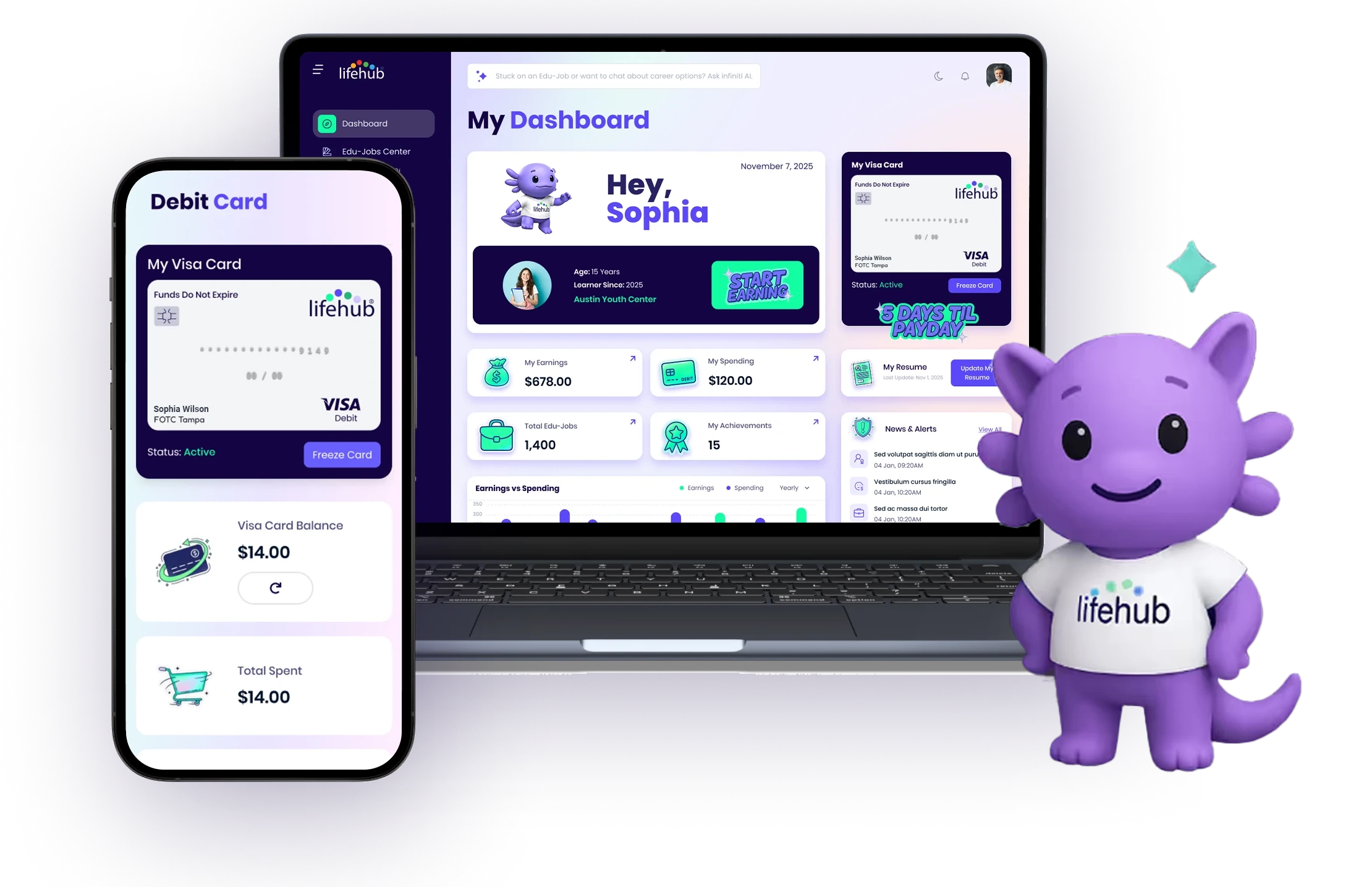
If you’re excited to help your learner dive into science, there’s a practical way to keep the spark alive. With all the hands-on activities, digital tools, and real-world skills we’ve explored, it helps to have resources that connect learning to daily life—and make it fun. Life Hub gives homeschool families a way to explore science and other subjects through bite-sized, paid learning tasks. Learners can try experiments, solve problems, and build confidence while earning real rewards. If you’re curious about how this could work for your family, take a look at Explore Life Hub for Homeschool Families.


Related Content
Ready to Chat about Life Hub?
Whether you're parents, or a homeschool family, Life Hub is your partner to help you
raise super strong kids.

.svg)

.svg)


.svg)
.svg)

.svg)