Homeschool Arizona Guide: Everything You Need to Know in 2026


Arizona is one of the most homeschool-friendly states in the nation, making homeschool arizona an appealing choice for many families. In recent years, the number of homeschooled learners has grown, with 5.4% of K-12 learners homeschooled and a jump to 13% during 2020.
Families in Arizona enjoy flexibility, access to funding, and the chance to shape a personalized education. Still, understanding state laws and best practices is key to a successful experience.
This guide walks you through everything you need for 2026: legal requirements, step-by-step setup, curriculum options, funding through ESA, support networks, and answers to common questions.
Arizona Homeschool Laws and Requirements
Arizona makes it simple for families who want to homeschool arizona learners. The state defines homeschooling as parent-directed education in the home, separate from public or private schools. Compulsory attendance applies to learners ages 6 to 16, but parents have broad rights to direct their child’s learning.
To begin, parents must file an affidavit of intent with the county superintendent within 30 days of starting to homeschool arizona. This legal document declares your intent and must be accompanied by proof of birth. There are no required subjects, and Arizona does not mandate standardized testing for homeschool arizona families.
Immunization records are not required for homeschool arizona learners, but it is wise to keep academic records for transitions or college planning. Homeschooling, private schooling, and ESA-funded options each have unique rules. For the most current legislative details, visit the Arizona Homeschool Laws Overview.

Overview of Arizona’s Homeschool Legislation
Arizona law makes it clear that parents can direct their child’s education at home. The affidavit of intent, filed with the county superintendent, is the main legal step. This process gives families flexibility, but it is important to meet deadlines and keep documents safe.
There are no curriculum or subject mandates, so families can tailor learning to each homeschool arizona learner. Arizona does not require annual testing, but some families choose to assess progress for personal records. Immunization records are not needed for homeschool arizona, unlike in public schools.
Homeschooling is distinct from private schooling and ESA-funded options. Each path has its own requirements for notification, oversight, and reporting. The Arizona Department of Education and local county offices offer guidance for new and experienced families.
Step-by-Step Guide: How to Legally Start Homeschooling in Arizona
- Decide your approach and confirm eligibility for homeschool arizona.
- Within 30 days of starting, file an affidavit of intent with your county superintendent.
- Attach a copy of your child’s birth certificate or other proof of birth.
- Keep records of instruction and any withdrawal forms if returning to public school.
- There are no required annual reports or standardized tests for homeschool arizona families.
- Avoid common pitfalls by double-checking deadlines and saving official documents.
A typical timeline starts with planning, followed by filing paperwork and receiving acknowledgment from the county. Once approved, you are officially recognized as a homeschool arizona family. Staying organized helps ensure smooth transitions if your learner returns to a traditional school.
Homeschooling vs. ESA: Key Legal Differences
Arizona’s Empowerment Scholarship Account (ESA) program is separate from traditional homeschool arizona rules. ESA participants must follow specific guidelines, such as using approved vendors and tracking expenses. In contrast, traditional homeschool arizona families have more curriculum freedom and less oversight.
Table: Key Legal Differences
| Homeschool Arizona | ESA Participant | |
|---|---|---|
| Oversight | Minimal | State monitoring |
| Curriculum | Parent choice | Must meet ESA guidelines |
| Reporting | None required | Expense reports, renewals |
| Public Access | Some activities | May have more restrictions |
An ESA family may have access to additional funding for therapies or classes, but must comply with stricter rules. Both options offer educational flexibility, but legal requirements differ. Knowing these differences helps families choose the best path for their homeschool arizona learner.
Choosing the Right Homeschool Curriculum in Arizona
Finding the right fit for your homeschool arizona journey can feel overwhelming at first. Arizona’s flexible laws give families the freedom to shape learning in ways that work best for each learner. Let’s explore how to choose a curriculum that matches your goals and needs.

Types of Homeschool Curriculum Available
Homeschool arizona families can explore many curriculum paths. Options include:
- Traditional textbooks with teacher guides.
- Online programs offering interactive lessons.
- Blended learning that mixes print and digital.
- Eclectic approaches where you pick materials from different sources.
Popular providers serve diverse needs, from faith-based packages to secular and STEM-focused tracks. Arizona’s homeschool laws do not require specific subjects or a set curriculum, so you can choose what fits your learner. If college is a goal, you might want to look for accredited programs. Accreditation can help with credit transfers and admissions.
Here’s a quick comparison:
| Program Type | Usually Accredited | Recognized by Colleges? |
|---|---|---|
| Traditional School | Yes | Yes |
| Some Online Programs | Sometimes | Varies |
| Parent-Designed | No | Case-by-case |
Choosing the right curriculum starts with knowing your family’s learning style.
Customizing Education for Your Child’s Needs
Homeschool arizona allows you to tailor lessons for every learner. Some families adapt for special needs, using hands-on projects or visual tools. Others support gifted learners with advanced courses. Arizona’s law lets you teach beyond core subjects, so you can add art, coding, or life skills.
Many families blend online classes with local enrichment programs. For example, a family might use an online math course, attend a local science co-op, and join a library reading club. This mix keeps learning fresh and personal.
Support is available through community groups and co-ops. These groups often share teaching, organize field trips, and offer social activities. Adapting your curriculum means you can meet your learner where they are.
Evaluating Curriculum Quality and Support
Before choosing a program for homeschool arizona, check reviews and feedback from other families. Look for proven results, clear lesson plans, and access to support staff or academic advisors. Community input can help you avoid programs that might not deliver.
Be cautious with new programs that appeared after 2020. Ask local homeschool groups about their experiences. Consider joining online forums or attending curriculum fairs.
For more tools and research to support your curriculum choice, visit Resources and research for homeschoolers. This can help you find trusted materials and connect with experienced families.
The best curriculum is one that supports your goals, fits your learner, and keeps learning enjoyable.
Arizona ESA (Empowerment Scholarship Account) and Homeschool Funding
Arizona’s Empowerment Scholarship Account (ESA) program has changed how many families approach homeschool arizona. For those seeking more flexibility or financial support, the ESA offers unique opportunities. Understanding how the program works, its requirements, and its limits is crucial for homeschool arizona families to make informed decisions.

Understanding ESA and Its Role in Homeschooling
The ESA program gives eligible families in homeschool arizona access to public funds for educational use. Any K-12 learner not enrolled in a public or charter school can qualify, including those with special needs or military families. ESA funds cover curriculum, educational materials, therapies, and even extracurriculars.
Families can choose their own curriculum, hire tutors, or pay for online courses. The flexibility helps tailor learning for each homeschool arizona learner. For a deeper look at eligibility and program details, visit the ESA program details for Arizona.
Funds are distributed quarterly. While ESA offers freedom, it also brings added oversight and rules. ESA participants must follow spending guidelines and submit expense reports, unlike traditional homeschool arizona families.
Step-by-Step: Applying for and Using ESA Funds for Homeschooling
Getting started with ESA in homeschool arizona involves several steps:
- Check eligibility based on your child’s enrollment status.
- Complete the online application during open enrollment.
- Submit required documentation, such as proof of residency and birth certificate.
- Wait for approval and access to your ESA account.
Once approved, you can use ESA funds for approved expenses. Always keep receipts and track purchases, as you’ll need to submit them for review. Annual renewal is required to continue receiving funds.
Many families in homeschool arizona find the paperwork manageable with routine record-keeping. For example, one parent created a folder for receipts and used a spreadsheet to track expenses. Staying organized helps avoid compliance issues and ensures continued access to ESA support.
ESA Funding Limits, Restrictions, and Best Practices
ESA funding amounts for homeschool arizona vary by grade and needs. For 2026, typical awards range from around $7,000 to over $30,000 for learners with special needs. Funds can be used for:
- Curriculum and textbooks
- Online classes and tutoring
- Therapies and educational services
- Technology and supplies
However, there are restrictions. Prohibited purchases include food, clothing, and unapproved vendors. All vendors must be ESA-approved, and random audits may occur.
| Do’s | Don’ts |
|---|---|
| Keep detailed records | Buy from unapproved vendors |
| Submit receipts on time | Forget renewal deadlines |
| Check allowable expenses | Assume all items qualify |
Avoiding common mistakes, such as missing deadlines or improper purchases, helps families in homeschool arizona maximize ESA benefits and maintain eligibility.
Homeschool Support Networks and Community Resources in Arizona
Finding the right support is crucial for a thriving homeschool arizona experience. Families have a wealth of networks and resources across the state, offering connection, enrichment, and guidance at each stage of the journey.

Local Homeschool Groups and Co-Ops
Local groups form the heart of the homeschool arizona community. Academic co-ops, enrichment clubs, faith-based, and secular groups are found in every corner of the state. These groups offer regular meetups, shared teaching, and field trips. Benefits include socialization for learners, support for parents, and access to specialized classes.
To find a group, check online directories, Facebook, or statewide organizations. Many families start by visiting Arizona homeschool networks to see what’s available nearby. Joining is usually simple—submit a request or attend an open house. For example, a thriving Phoenix co-op offers science labs, art workshops, and family events, with a welcoming membership process for newcomers.
Statewide and Online Communities
Homeschool arizona families also benefit from broader networks. Organizations like Arizona Families for Home Education (AFHE) and the Homeschool Legal Defense Association (HSLDA) Arizona chapter offer legal support, conferences, and resource fairs. Online forums and social media groups connect families statewide, making it easy to swap curriculum, find used books, or share advice.
During the COVID homeschooling surge, many turned to virtual support for connection and problem-solving. These communities remain active, helping families adapt and grow. With so many options, homeschool arizona families can always find guidance and inspiration, whether in person or online.
Extracurriculars, Sports, and Public School Access
The homeschool arizona landscape extends far beyond academics. State law allows homeschoolers to join public school sports, clubs, and activities. Community centers, public libraries, and museums often run homeschool programs, opening doors to robotics clubs, art classes, and more.
A common example is a learner joining a local robotics team or participating in city sports leagues. These activities help learners build confidence, relationships, and real-world skills. With so many resources, homeschool arizona families can create a balanced, enriching experience for every learner.
Practical Tips for Homeschool Success in Arizona
A successful homeschool arizona experience depends on more than just academics. Creating the right setting, tracking progress, and facing challenges head-on can make all the difference. Here are practical tips to help you thrive on your homeschool arizona journey.
Creating a Productive Homeschool Environment
A dedicated learning space helps learners focus during homeschool arizona lessons. Choose a spot with natural light, comfortable seating, and limited distractions. Personalize the area with maps, art supplies, or a whiteboard.
Establishing a predictable routine provides structure and flexibility. Here’s a sample daily schedule many families use:
| Time | Activity |
|---|---|
| 8:30-9:00 | Morning reading |
| 9:00-10:30 | Math and science |
| 10:30-11:00 | Break/outdoor time |
| 11:00-12:30 | Language arts |
| 12:30-1:30 | Lunch and chores |
| 1:30-3:00 | Projects/enrichment |
Adjust your schedule to fit your learner’s needs. Include hands-on activities and regular breaks. Remember, homeschool arizona allows you to blend structure with freedom, so experiment until you find what works best.
Tracking Progress and Record-Keeping
Good records are vital for homeschool arizona families, especially when preparing transcripts or planning for college. Use simple tools like spreadsheets, apps, or a paper portfolio. Track assignments, attendance, and completed work.
Some parents create digital portfolios to showcase projects, essays, and photos of learning moments. This helps when applying for scholarships or transitioning back to traditional school.
Be sure to understand legal requirements for documentation. For guidance on state forms and ESA compliance, check out State licensing and ESA guidance, which explains what records to keep and how to stay organized.
Avoiding Common Homeschool Challenges
It’s normal for homeschool arizona families to worry about socialization. Join local co-ops, clubs, or sports teams to help your learner build friendships and explore interests. Community centers and libraries often offer homeschool meetups, too.
Burnout can affect both parents and learners. Schedule downtime, rotate teaching responsibilities, and connect with support groups for encouragement. If you’re facing unique challenges like special needs or mental health concerns, seek professional help or explore state resources.
Parent support groups and online communities can provide advice, resources, and a sense of belonging. Remember, homeschool arizona is a journey—embrace its ups and downs, and celebrate your learner’s growth.
Frequently Asked Questions About Homeschooling in Arizona
Curious about the basics of homeschool arizona? Here are answers to the questions families ask most.
Do I need to be a certified teacher to homeschool?
No, Arizona does not require parents to be certified teachers to homeschool.Are there state testing requirements?
Homeschoolers are not required to take state standardized tests.Can homeschooled learners join public school activities?
Yes, Arizona law allows homeschoolers to participate in public school classes and extracurriculars.How do I withdraw my child from public school?
File an Affidavit of Intent with your county superintendent. The Arizona Families for Home Education Affidavit Guide explains the steps.What are the graduation requirements for homeschoolers?
Homeschooling families set their own graduation criteria and issue diplomas.Where can I find legal advice or more help?
Visit the Arizona Department of Education or local homeschool organizations for guidance.
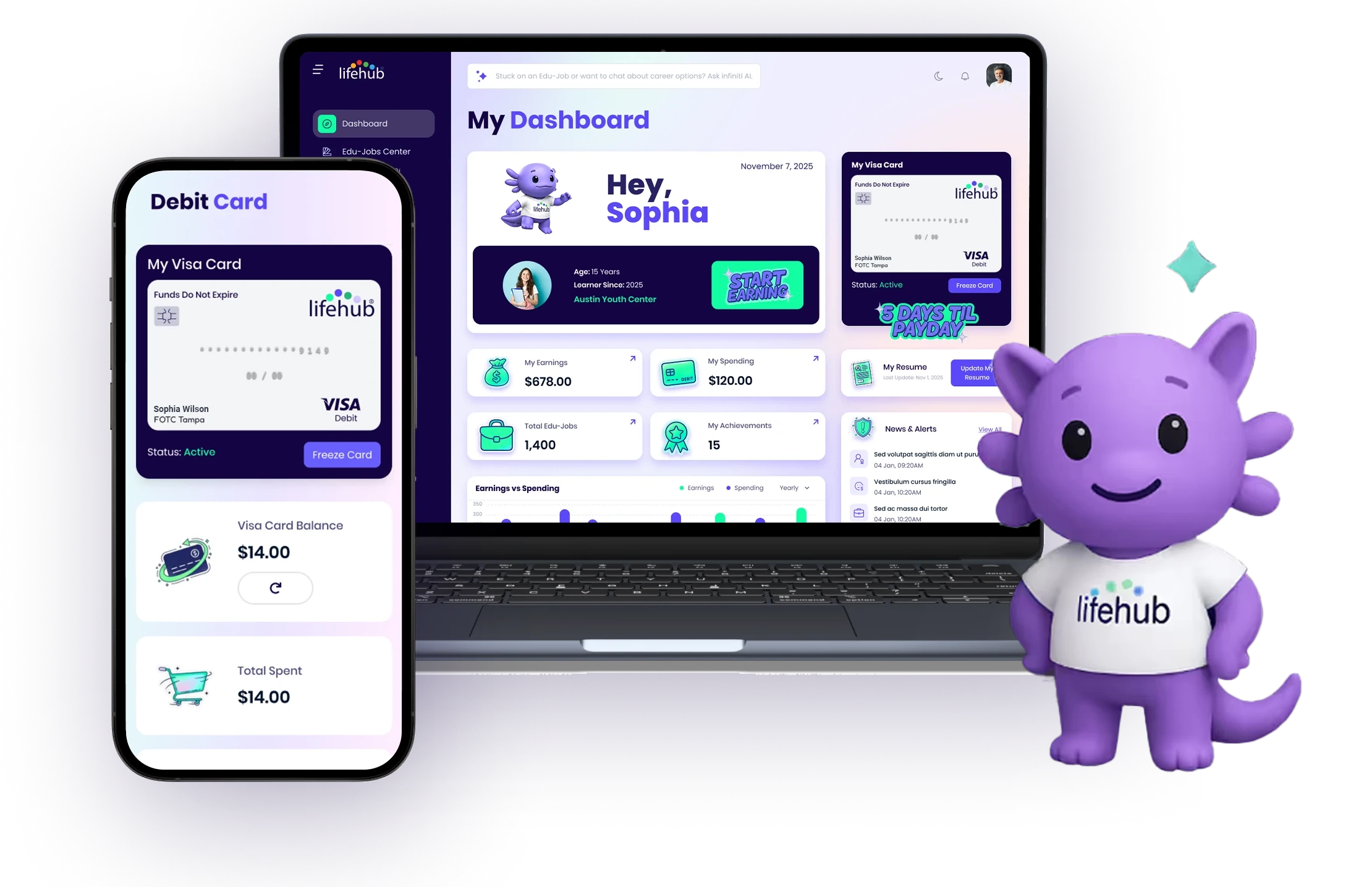
You’ve just explored what it takes to homeschool in Arizona, from legal steps and ESA funding to building a curriculum that fits your learner’s needs. If you’re looking for ways to make real skills part of your routine—like money management, digital tools, or creative projects—there are resources that can help. Life Hub offers paid micro learning tasks called Edu Jobs, so your learner can try out new subjects, build confidence, and even earn cash for their efforts. Want to see how this could fit into your homeschool journey?
Explore Life Hub for Homeschool Families


Related Content
Ready to Chat about Life Hub?
Whether you're parents, or a homeschool family, Life Hub is your partner to help you
raise super strong kids.

.svg)

.svg)


.svg)
.svg)

.svg)