Curriculum Life Skills: Building Real-World Readiness


Young people today face a complex world that demands more than traditional academic knowledge. They need practical abilities to manage money, navigate careers, communicate effectively, and make sound decisions. A comprehensive curriculum life skills approach bridges the gap between classroom learning and real-world success, giving learners the tools they need to thrive as adults.
What Makes Life Skills Essential for Young Learners
Life skills education goes beyond memorizing facts or passing tests. These abilities help young people handle everyday challenges, from opening a bank account to resolving conflicts with peers. Research shows that learners who develop strong life skills early demonstrate better decision-making, financial stability, and career success throughout their lives.
Many traditional educational systems focus heavily on academic subjects while overlooking practical capabilities. This creates a gap when young people enter adulthood unprepared for basic tasks like budgeting, job searching, or understanding credit. A well-designed life skills curriculum addresses these gaps by teaching competencies that directly apply to daily life.
The most effective programs integrate life skills naturally into existing educational frameworks. Rather than treating these topics as separate add-ons, educators can weave practical learning into math lessons, social studies, and other subjects. This approach helps learners see immediate relevance and builds confidence through hands-on practice.

Core Components of an Effective Curriculum Life Skills Program
Financial Literacy and Money Management
Understanding money forms the foundation of adult independence. Young learners need to grasp concepts like budgeting, saving, and the difference between needs and wants. These skills prevent future financial struggles and build long-term wealth.
Effective financial education includes:
- Creating and maintaining a personal budget
- Understanding checking and savings accounts
- Learning about credit scores and responsible borrowing
- Exploring investment basics and compound interest
- Practicing real transactions with actual money
The curriculum developed by youth development programs emphasizes hands-on money management activities that give learners direct experience with financial decisions. When young people handle real earnings, even small amounts, the lessons stick better than theoretical discussions.
Career Exploration and Workplace Readiness
Career readiness encompasses more than choosing a job. It involves understanding workplace expectations, developing professional communication skills, and building a career path aligned with personal interests and strengths.
| Career Skill Area | Practical Applications | Learning Activities |
|---|---|---|
| Professional Communication | Email etiquette, phone skills, presentations | Mock interviews, business correspondence practice |
| Resume Building | Creating compelling work histories | Portfolio development, achievement documentation |
| Industry Research | Understanding career paths and requirements | Informational interviews, job shadowing |
| Workplace Technology | Microsoft Office, collaboration tools | Real project completion, digital skills practice |
Young learners benefit from exploring multiple career options before committing to a single path. Exposure to diverse industries and roles helps them make informed choices based on real experience rather than assumptions.
Digital Literacy and Technology Skills
In 2026, digital competence is no longer optional. Young people must navigate online environments safely while using technology productively. AI literacy curriculum has become particularly important as artificial intelligence reshapes how we work and learn.
Digital literacy covers several key areas. Online safety teaches learners to protect personal information, recognize scams, and maintain healthy digital boundaries. Productivity skills include using common workplace software, managing digital files, and collaborating through online platforms. Understanding AI tools and their appropriate use prepares learners for future workplaces where these technologies will be commonplace.
Social and Emotional Development
Strong social-emotional skills help young people build healthy relationships, manage stress, and navigate conflicts. These capabilities directly impact academic success, career advancement, and personal wellbeing.
Critical social-emotional competencies include:
- Self-awareness and emotional regulation
- Empathy and perspective-taking
- Effective communication in diverse situations
- Conflict resolution and negotiation
- Goal-setting and self-motivation
Programs like Room to Read's life skills curriculum emphasize collaboration, resilience, and decision-making as foundational skills that support all other learning areas.
Implementing Curriculum Life Skills in Different Settings
Schools and Districts
Schools implementing curriculum life skills face the challenge of fitting new content into already packed schedules. The most successful approaches integrate these topics across existing subjects rather than creating entirely separate courses.
Math classes can incorporate budgeting projects and financial calculations. English courses might include resume writing and professional communication. Social studies naturally lends itself to career exploration and civic engagement. This integration approach respects time constraints while ensuring learners encounter life skills regularly.
Schools and districts can also partner with external programs to provide specialized content and real-world connections. These partnerships bring expert knowledge and authentic experiences that classroom teachers may not be able to offer alone.

Youth Organizations and Community Programs
Community-based organizations often have more flexibility to deliver focused life skills programming. After-school programs, mentorship initiatives, and youth development organizations can dedicate specific time to hands-on practice without competing for classroom hours.
These settings excel at experiential learning. Young people can participate in mock job interviews, run small businesses, or complete service projects that build real capabilities. The informal environment often helps learners who struggle in traditional academic settings to discover strengths and build confidence.
The Winning Futures life skills curriculum demonstrates how mentor-facilitated programs can effectively combine group discussions with practical activities, helping learners set goals and develop leadership abilities through consistent support and guidance.
Homeschool Networks and Family-Based Learning
Homeschooling families can integrate curriculum life skills naturally into daily routines. Shopping trips become budgeting lessons, household tasks teach responsibility and planning, and family discussions explore career options and decision-making strategies.
Parents teaching life skills at home benefit from structured resources that provide age-appropriate activities and learning progressions. Free, adaptable life skills lessons help families customize content to match their learners' interests and developmental stages while maintaining educational rigor.
Measuring Success in Life Skills Education
Assessment Approaches That Work
Traditional testing doesn't capture life skills mastery effectively. These competencies require demonstration through real-world application rather than multiple-choice answers.
Performance-Based Assessment Methods:
- Portfolio development showing completed projects and achieved goals
- Practical demonstrations like conducting mock interviews or creating budgets
- Self-reflection exercises where learners articulate growth and learning
- Real-world outcomes such as securing employment or managing actual finances
- Peer and mentor feedback on collaboration and communication
The most meaningful assessment happens when learners apply skills in authentic situations. A young person who successfully manages earnings from part-time work demonstrates financial literacy more convincingly than one who simply passes a written test about budgeting concepts.
Long-Term Impact Tracking
Effective curriculum life skills programs track outcomes beyond immediate completion. Follow-up surveys, longitudinal studies, and ongoing engagement help educators understand which approaches produce lasting benefits.
Key indicators of successful life skills education include:
- Employment rates and job retention among program graduates
- Financial stability measures like savings rates and debt levels
- Educational persistence and completion rates
- Self-reported confidence in handling adult responsibilities
- Career advancement and earning progression over time
Organizations that fund life skills education increasingly want evidence of measurable impact. Programs that can demonstrate concrete outcomes through data collection and analysis secure better support and reach more learners.
Adapting Life Skills Content for Diverse Learners
Young people come from varied backgrounds with different needs, experiences, and starting points. Effective curriculum life skills programming recognizes this diversity and offers multiple pathways to skill development.
Cultural responsiveness matters significantly. Financial practices, communication styles, and career expectations vary across communities. Programs designed for refugees and immigrants, like the REWA life skills curriculum, specifically address the unique challenges of adapting to new cultural contexts while building essential capabilities.
Age-Appropriate Progression
Life skills education should begin early and build complexity over time. Elementary learners can start with basic money concepts, simple goal-setting, and foundational social skills. Middle school brings opportunities to explore careers, practice budgeting with real money, and develop digital literacy.
High school learners need deeper engagement with workplace readiness, advanced financial topics like investing and credit, and sophisticated decision-making scenarios. The Texas Tech University curriculum provides evidence-based lessons specifically tailored for grades 7-12, recognizing the developmental progression needed for effective learning.
Learning Style Variations:
- Visual learners benefit from infographics, videos, and demonstration
- Kinesthetic learners need hands-on practice and experiential activities
- Auditory learners thrive with discussions, podcasts, and verbal instruction
- Reading/writing learners prefer written materials and reflection exercises

Making Life Skills Learning Actionable and Rewarding
The gap between knowing what to do and actually doing it remains a persistent challenge in education. Young learners may understand budgeting principles but never actually create or follow a budget. They might learn about career planning without taking concrete steps toward their goals.
Action-based learning addresses this gap by requiring learners to complete real tasks rather than just consuming information. When young people write actual resumes, apply for real positions, or manage genuine money, the learning becomes concrete and memorable.
Motivation plays a crucial role in whether learners engage deeply with life skills content. Traditional grades may not inspire the same commitment as tangible rewards connected to effort. Some programs address this by linking skill development to real earnings, creating a direct connection between learning and financial benefit.
This approach mirrors how the adult world operates. Employees earn money for applying skills and completing tasks. Entrepreneurs generate income by solving problems and creating value. When young learners experience this same connection between capability and compensation, they develop intrinsic motivation to build competencies that have clear value.
Programs offering youth-oriented organizations the ability to provide both education and tangible rewards help learners understand the direct link between developing abilities and achieving goals. This connection strengthens engagement and persistence, particularly for learners who struggle with traditional academic motivation.
Building Sustainable Life Skills Programs
Creating a curriculum life skills program requires more than selecting good content. Sustainable initiatives need clear implementation plans, adequate resources, trained facilitators, and ongoing evaluation.
Essential Program Elements:
- Clear learning objectives that define specific skills and knowledge
- Engaging materials that connect to learners' lives and interests
- Trained educators who understand both content and effective teaching methods
- Assessment systems that measure real skill development
- Continuous improvement based on feedback and outcome data
Funding remains a persistent challenge for many programs. Schools face budget constraints, community organizations compete for limited grants, and families may lack resources for premium educational tools. Successful programs often develop diverse funding streams including grants, sponsorships, family contributions, and partnerships with businesses that benefit from better-prepared young workers.
Technology can reduce costs while expanding reach. Digital platforms deliver content efficiently, track progress automatically, and provide personalized learning paths. Mobile accessibility ensures learners can engage anywhere, not just in formal classroom settings.
The most effective programs balance structure with flexibility. While comprehensive frameworks ensure important topics get covered, adaptability allows educators to respond to learner needs, incorporate current events, and customize content for specific communities. Resources like the detailed framework from the U.S. Department of Education provide solid foundations that educators can modify for their contexts.
The Future of Life Skills Education
As we move through 2026 and beyond, curriculum life skills will continue evolving to address emerging challenges and opportunities. Artificial intelligence, changing work patterns, economic uncertainty, and social shifts all demand new competencies from young people.
Future-ready life skills programs will emphasize adaptability, continuous learning, and comfort with change. Young people need skills that transfer across contexts rather than narrow training for specific jobs that may not exist in five years. Critical thinking, creativity, collaboration, and communication remain valuable regardless of technological changes.
Financial education will need to address cryptocurrency, digital payments, and new forms of value exchange. Career readiness must prepare learners for gig work, remote collaboration, and portfolio careers rather than traditional single-employer pathways. Digital literacy will expand to include AI ethics, data privacy, and responsible technology use.
The integration of practical learning with tangible rewards creates powerful motivation for skill development. When young people see direct benefits from their efforts, they engage more deeply and persist through challenges. This connection between learning and real-world outcomes prepares them not just with knowledge, but with the confidence and experience to apply that knowledge effectively.
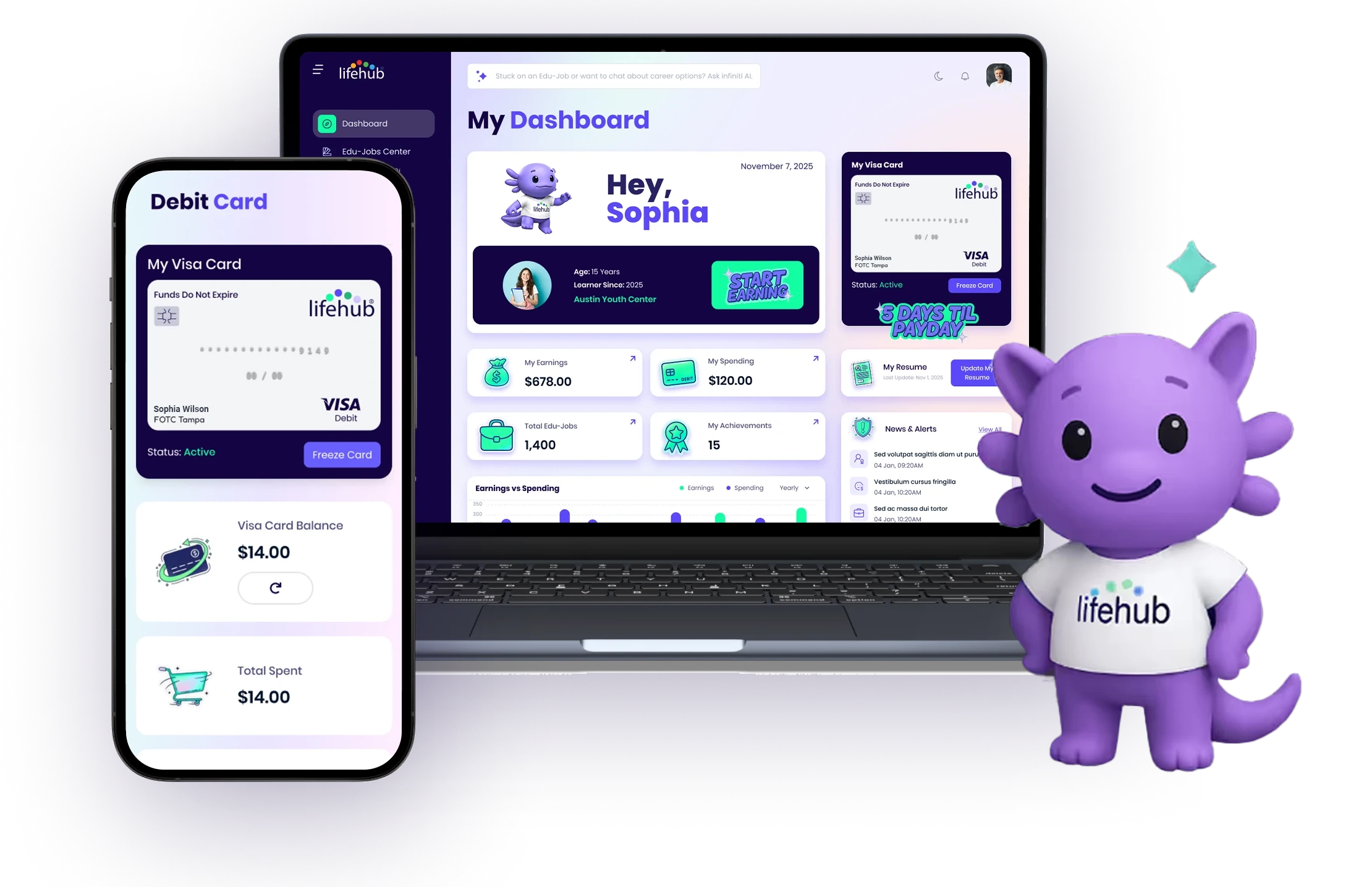
Building strong life skills in young people prepares them for successful, independent adulthood while creating more capable, confident individuals today. Whether you're an educator, parent, or youth organization leader, investing in comprehensive curriculum life skills development pays dividends throughout learners' lives. Life Hub makes this connection tangible by offering paid micro-learning tasks that build money skills, career readiness, and real-world capabilities while learners earn actual cash for completing educational activities, creating immediate motivation and proving impact through measurable outcomes.


Related Content
Ready to Chat about Life Hub?
Whether you're parents, or a homeschool family, Life Hub is your partner to help you
raise super strong kids.

.svg)

.svg)


.svg)
.svg)

.svg)